
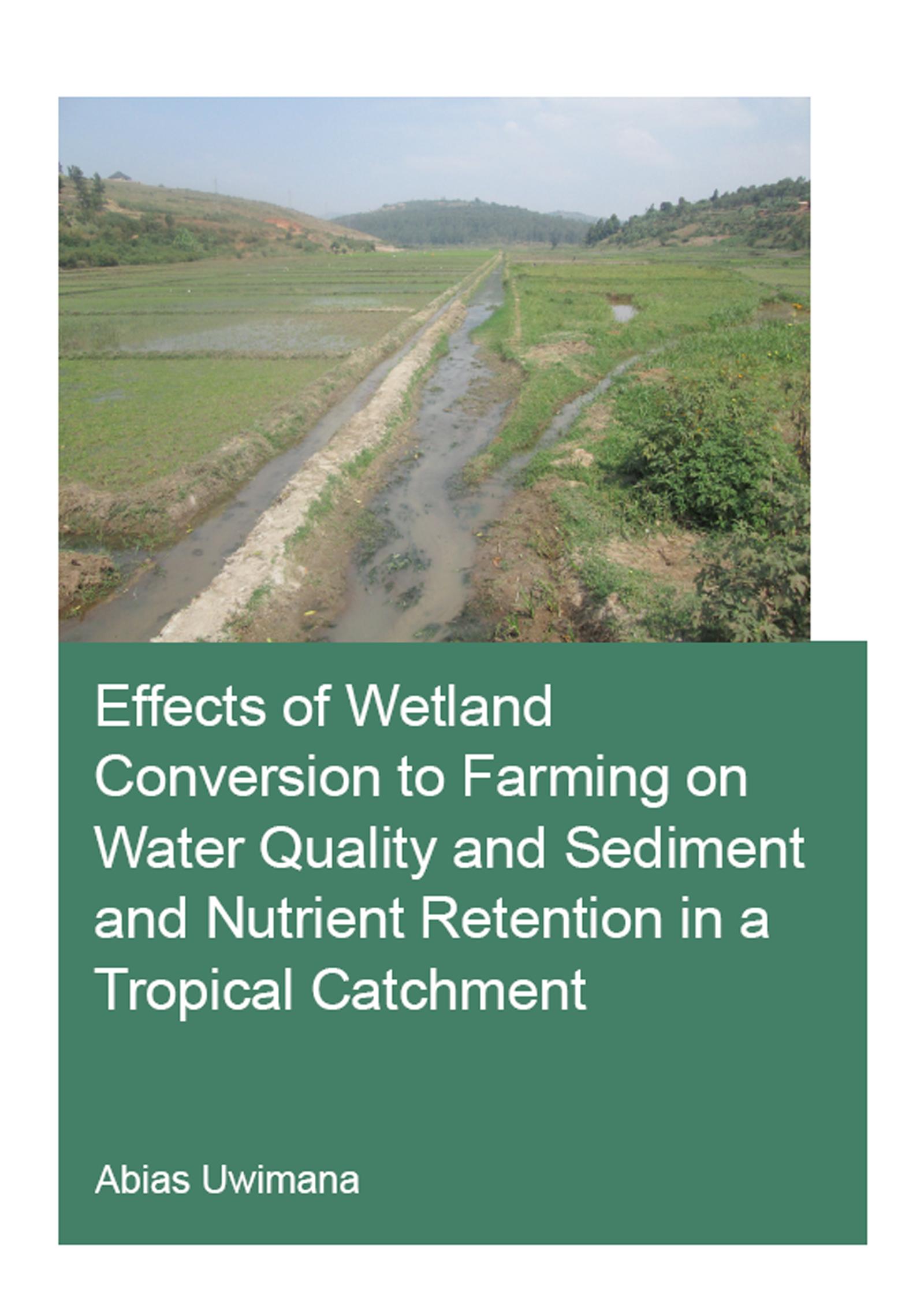
The study used a combination of landscape-scale synoptic surveys (catchment, reaches) and mesocosm surveys (experimental plots) to assess the impacts of conversion of natural valley-bottom wetlands to farming land on the water quality and retention of sediment and nutrients. The results showed that temperature, pH, electrical conductivity and dissolved oxygen concentration decreased, and total suspended solids (TSS) increased with storm water increase. Nitrogen (TN) and phosphorus (TP) accumulated in the catchment during the dry season and washed into the water courses during the early stages of the higher flows, with subsequent lower concentrations at the end of the rains due to dilution. Large proportions of the annual loads of TSS, TP and TN (93%, 60% and 67%, respectively) were transported during rainfall events that occurred in 115 days. Fishponds acted as temporal traps of TSS, TN and TP at the early stages of farming, and were a source of and TN and TP at the end of the farming period, in contrast to rice farming that generated sediments and nutrients early in the farming period and trapped them at the end of the farming season. Wetlands mostly acted as sinks but sometimes as a source of sediment and nutrients.
Betal nemt med kort, Klarna, Apple Pay eller Google Pay. Ikke tilfreds? Du har altid 14 dages fortrydelsesret. Læs mere i vores vilkår. Har du spørgsmål, så send os en mail på hello@memmo.org.
Memmo gør det nemmere at studere – uanset hvor du er i verden. Hos os samler du dine kursusbøger og smarte studieværktøjer ét sted: resuméer, quizzer, podcasts og flashcards. Og så er der Ted, din studieven, der svarer på alt, du undrer dig over. Over 50 000 studerende studerer allerede her – bygget til at hjælpe dig med at lære hurtigere og stresse mindre.