
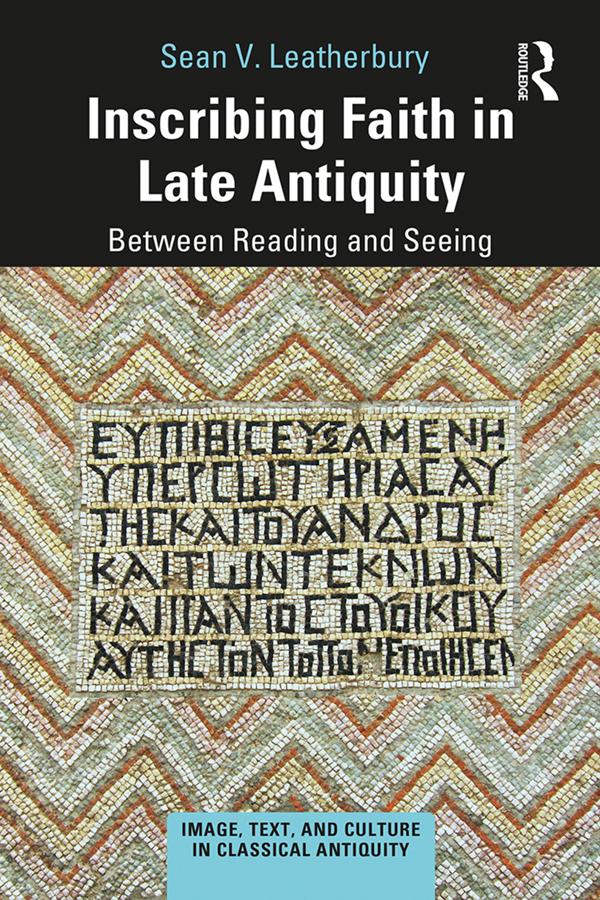
Inscribing Faith in Late Antiquity considers the Greek and Latin texts inscribed in churches and chapels in the late antique Mediterranean (c. 300–800 CE), compares them to similar texts from pagan, Jewish, and Muslim spaces of worship, and explores how they functioned both textually and visually.
These texts not only recorded the names and prayers of the faithful, but were powerful verbal and visual statements of cultural values and religious beliefs, conveying meaning through their words as well as through their appearances. In fact, the two were intimately connected. All of these texts – Christian, Jewish, Muslim, and pagan – acted visually, embracing their own materiality as mosaic, paint, or carved stone. Colourful and artfully arranged, the inscriptions framed human relationships with the divine, encouraged responses from readers, and made prayers material. In the first in-depth examination of the inscriptions as words and as images, the author reimagines the range of aesthetic, cultural, and religious experiences that were possible in spaces of worship.
Inscribing Faith in Late Antiquity is essential reading for those interested in Roman, late antique, and Byzantine material and visual culture, inscriptions and other texts, and religious life in the ancient Mediterranean.
Betal nemt med kort, Klarna, Apple Pay eller Google Pay. Ikke tilfreds? Du har altid 14 dages fortrydelsesret. Læs mere i vores vilkår. Har du spørgsmål, så send os en mail på hello@memmo.org.
Memmo gør det nemmere at studere – uanset hvor du er i verden. Hos os samler du dine kursusbøger og smarte studieværktøjer ét sted: resuméer, quizzer, podcasts og flashcards. Og så er der Ted, din studieven, der svarer på alt, du undrer dig over. Over 50 000 studerende studerer allerede her – bygget til at hjælpe dig med at lære hurtigere og stresse mindre.