
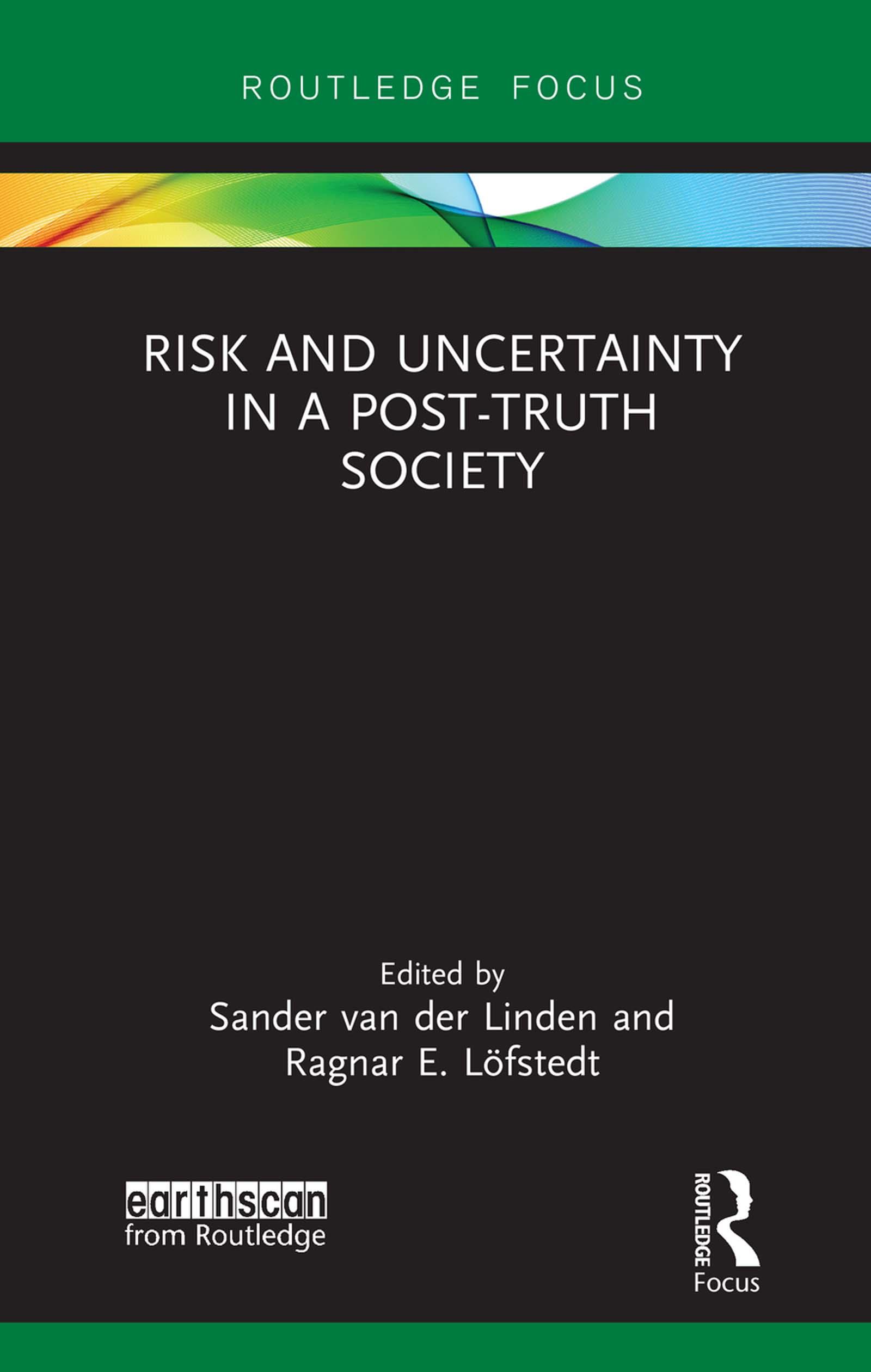
This edited volume looks at whether it is possible to be more transparent about uncertainty in scientific evidence without undermining public understanding and trust.
With contributions from leading experts in the field, this book explores the communication of risk and decision-making in an increasingly post-truth world. Drawing on case studies from climate change to genetic testing, the authors argue for better quality evidence synthesis to cut through the noise and highlight the need for more structured public dialogue. For uncertainty in scientific evidence to be communicated effectively, they conclude that trustworthiness is vital: the data and methods underlying statistics must be transparent, valid, and sound, and the numbers need to demonstrate practical utility and add social value to people’s lives.
Presenting a conceptual framework to help navigate the reader through the key social and scientific challenges of a post-truth era, this book will be of great relevance to students, scholars, and policy makers with an interest in risk analysis and communication.
Betal nemt med kort, Klarna, Apple Pay eller Google Pay. Ikke tilfreds? Du har altid 14 dages fortrydelsesret. Læs mere i vores vilkår. Har du spørgsmål, så send os en mail på hello@memmo.org.
Memmo gør det nemmere at studere – uanset hvor du er i verden. Hos os samler du dine kursusbøger og smarte studieværktøjer ét sted: resuméer, quizzer, podcasts og flashcards. Og så er der Ted, din studieven, der svarer på alt, du undrer dig over. Over 50 000 studerende studerer allerede her – bygget til at hjælpe dig med at lære hurtigere og stresse mindre.