
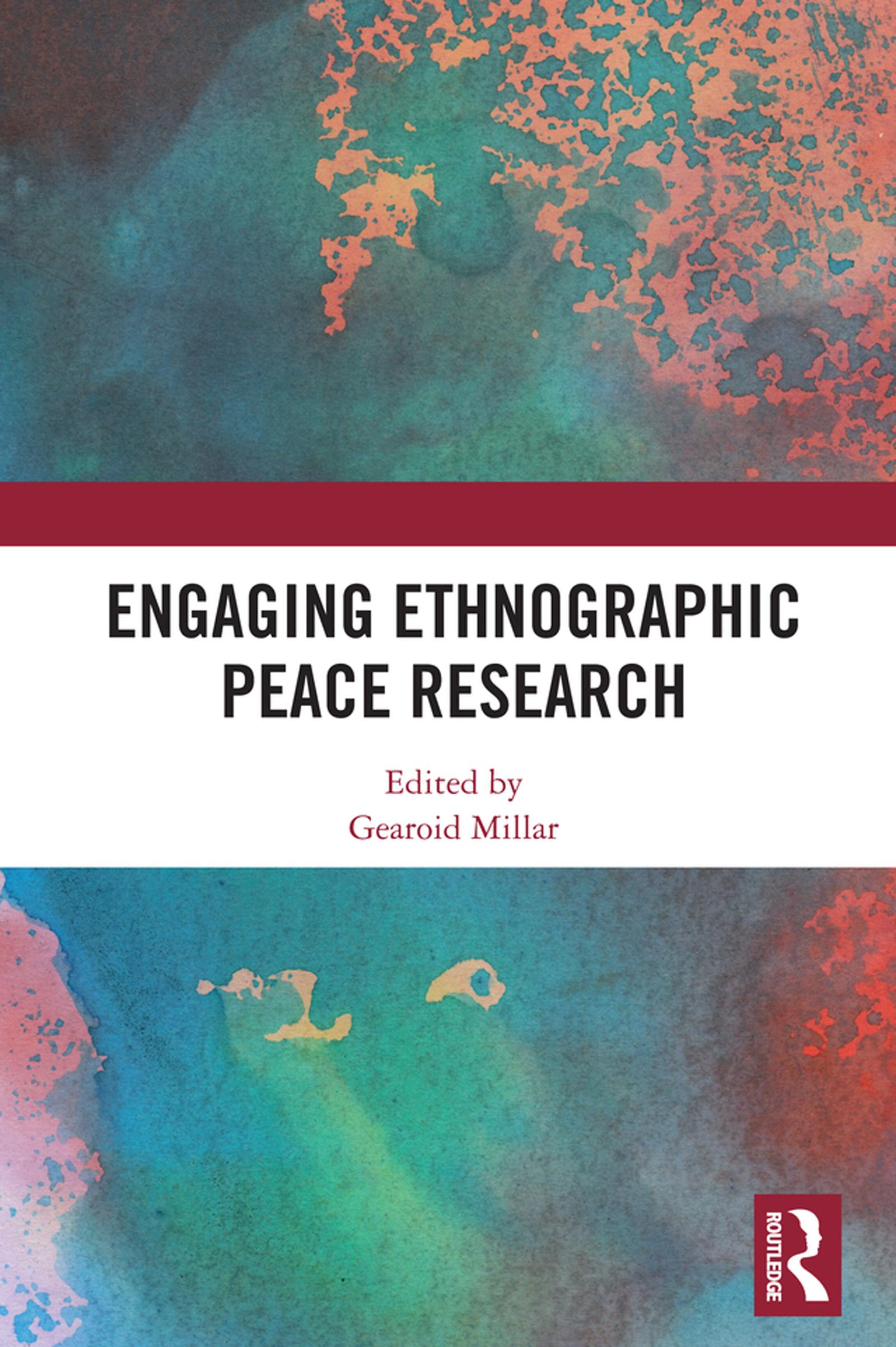
While many have argued in the past decade that peace and conflict studies must engage more with local actors and communities, and scholars regularly describe the importance of local context and culture for building sustainable peace, there are substantial challenges methodologically to fulfilling this ‘local turn’. Many peace and conflict studies scholars are inexperienced with methods appropriate for engaging with local communities, contexts and cultures, and many of the important institutions in the field, from key journals to important funders, exhibit a continuing preference for quantitative studies.
The Ethnographic Peace Research (EPR) agenda has recently been developed in response to these challenges and is one of the key avenues to providing a methodological complement to the more theoretically-focused local turn literature. This volume explores the application of the EPR approach in a number of post-conflict and conflict-affected societies around the world. While some chapters take a largely theoretical approach, most consider the practical application and the different kinds of methods that may be useful components of an EPR project. Together, the authors provide new insights into the benefits, challenges, and ethics of the emerging EPR agenda.
This book was originally published as a special issue of the journal International Peacekeeping.
Betal nemt med kort, Klarna, Apple Pay eller Google Pay. Ikke tilfreds? Du har altid 14 dages fortrydelsesret. Læs mere i vores vilkår. Har du spørgsmål, så send os en mail på hello@memmo.org.
Memmo gør det nemmere at studere – uanset hvor du er i verden. Hos os samler du dine kursusbøger og smarte studieværktøjer ét sted: resuméer, quizzer, podcasts og flashcards. Og så er der Ted, din studieven, der svarer på alt, du undrer dig over. Over 50 000 studerende studerer allerede her – bygget til at hjælpe dig med at lære hurtigere og stresse mindre.