
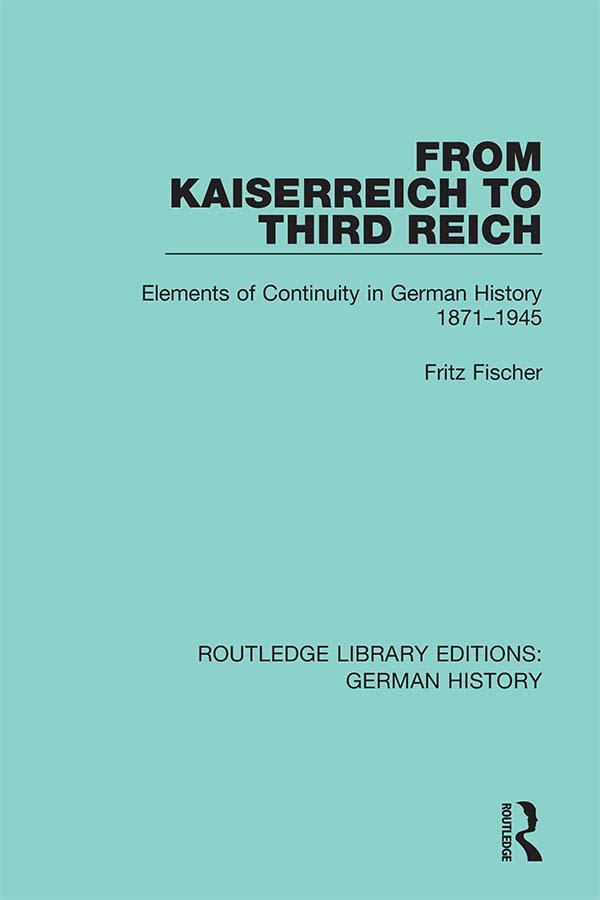
Originally published in English in 1986, this book offers a concise summary of the contribution Fritz Fischer and his school made to German historiography in the 20th century and in particular draws attention to continuity in the development and power structures of the German Reich between 1871 and 1945. After 1866 the traditional elites wanted to avoid fundamental changes in society, expecting a victorious war to secure their own position at home and to broaden the European base of the German Reich. Even as the Blitzkrieg expectations foundered, these ambitions persisted beyond 1918. In the face of working-class hostility, these elites were unable to mobilize mass support for their interests, but Hitler fashioned a mass party. The alliance between these unequal partners led to the Third Reich but with its collapse in 1945 the Prusso-German Reich came to an end. Only with the German Federal Republic did the liberal-democratic traditions of German history again come into their own.
Betal nemt med kort, Klarna, Apple Pay eller Google Pay. Ikke tilfreds? Du har altid 14 dages fortrydelsesret. Læs mere i vores vilkår. Har du spørgsmål, så send os en mail på hello@memmo.org.
Memmo gør det nemmere at studere – uanset hvor du er i verden. Hos os samler du dine kursusbøger og smarte studieværktøjer ét sted: resuméer, quizzer, podcasts og flashcards. Og så er der Ted, din studieven, der svarer på alt, du undrer dig over. Over 50 000 studerende studerer allerede her – bygget til at hjælpe dig med at lære hurtigere og stresse mindre.