
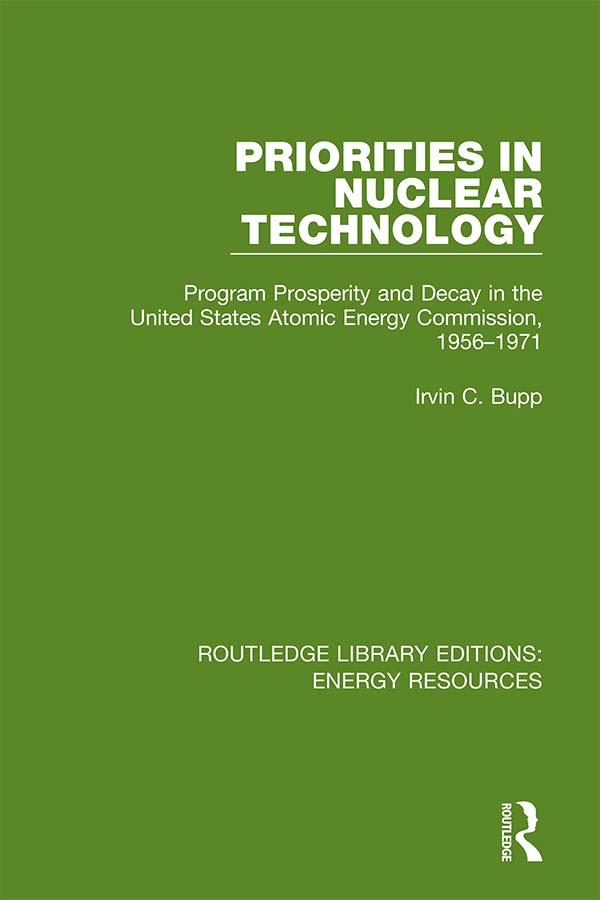
Originally published in 1988. This book considers why some public policies succeed and others do not. It looks at the entrepreneurial process that creates public policies and examines whether they prosper or falter because of their political consequences. The programs and personnel of the Atomic Energy Commission are the empirical foundation for these arguments. The data generated by that agency's annual budget-making cycles, collected over time and organised by program, are used as evidence to test some propositions about policy formation within the executive branch of government. The author's concern is with questions of where and how priorities are established in a complex institutional environment. To answer the more fundamental causal question of why some programs prosper while others wither or die, use is made of more historical analysis and comparison of the fortunes of several of AEC's efforts to develop applied nuclear technology.
Betal nemt med kort, Klarna, Apple Pay eller Google Pay. Ikke tilfreds? Du har altid 14 dages fortrydelsesret. Læs mere i vores vilkår. Har du spørgsmål, så send os en mail på hello@memmo.org.
Memmo gør det nemmere at studere – uanset hvor du er i verden. Hos os samler du dine kursusbøger og smarte studieværktøjer ét sted: resuméer, quizzer, podcasts og flashcards. Og så er der Ted, din studieven, der svarer på alt, du undrer dig over. Over 50 000 studerende studerer allerede her – bygget til at hjælpe dig med at lære hurtigere og stresse mindre.