
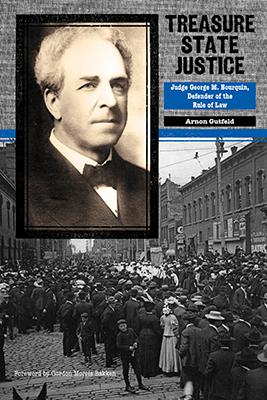
Few works reveal anything about the role of federal judges in the early twentieth-century American West. Arnon Gutfeld fills that void by analyzing the major issues and dilemmas those judges faced as the West moved rapidly from frontier justice to twentieth-century legal realities. George M. Bourquin served as Federal District judge in Montana from 1912 to 1934. He dared to issue rulings that captured national attention and aroused the ire of the Department of Justice. During the mass fear and hysteria of World War I and the Red Scare, he was one of very few judges to defend individual liberty. His decision in the Ves Hall Case elicited a knee-jerk reaction from Washington--the notorious Anti-Sedition Act of 1918. A Jeffersonian conservative-libertarian—in the tradition of Edmund Burke—Bourquin believed the Constitution to be the sole barrier between civilization and barbarism. Especially important were his decisions in labor, Native American, and immigration issues. Coinciding with the federal government’s largest role over the destiny of the American West, Bourquin’s judicial career provides a unique opportunity to examine the great impact that the legal system and a very unusual judge had in the post-territorial frontier period.
Betal nemt med kort, Klarna, Apple Pay eller Google Pay. Ikke tilfreds? Du har altid 14 dages fortrydelsesret. Læs mere i vores vilkår. Har du spørgsmål, så send os en mail på hello@memmo.org.
Memmo gør det nemmere at studere – uanset hvor du er i verden. Hos os samler du dine kursusbøger og smarte studieværktøjer ét sted: resuméer, quizzer, podcasts og flashcards. Og så er der Ted, din studieven, der svarer på alt, du undrer dig over. Over 50 000 studerende studerer allerede her – bygget til at hjælpe dig med at lære hurtigere og stresse mindre.
Du kan måske også lide
Køb bogen0