
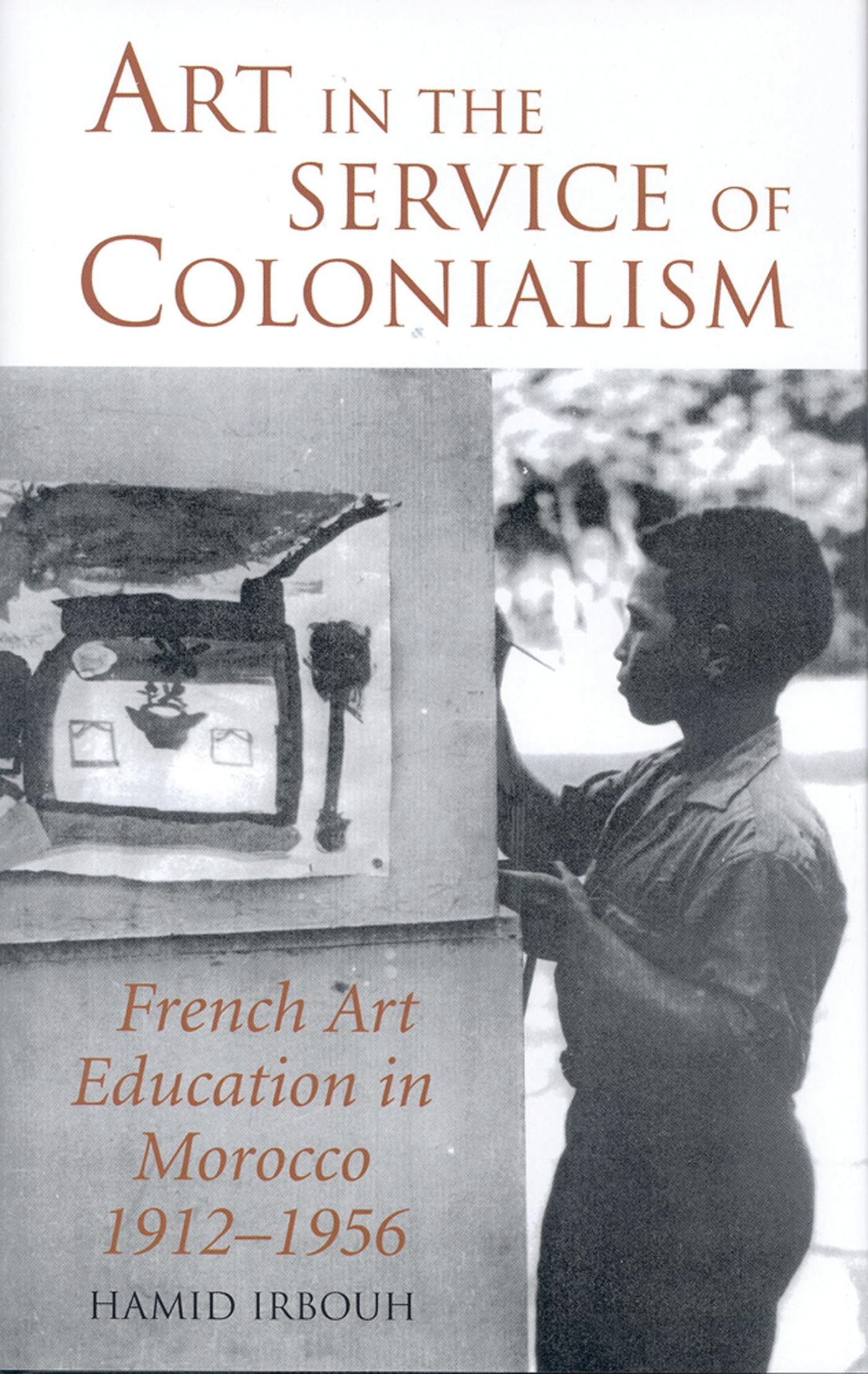
In the Moroccan French Protectorate (1912-1956), the French established vocational and fine art schools, imposed modern systems of industrial production and pedagogy and reinvented old traditions. Hamid Irbouh argues that the French used this systematic modernisation of local arts and crafts regulation to impose their control. He looks in particular at the role and place of women in the structures of art production and education created by the French- that transformed and dominated Moroccan society during the colonial period. French women infiltrated the Moroccan milieu, to buttress colonial ideology, yet at critical moments, Moroccan women rejected traditional roles and sabotaged colonial plans. Meanwhile, the contradictions between reformist goals and the old order added to social dislocations and led to rebellion against French hegemony. Irbouh examines and analyses these processes and demonstrates how Moroccan artists have struggled to exorcise French influences and rediscover an authentic visual culture since decolonisation. This book reveals that the weight of colonial history continues to weigh heavily on artistic practice and production.
Betal nemt med kort, Klarna, Apple Pay eller Google Pay. Ikke tilfreds? Du har altid 14 dages fortrydelsesret. Læs mere i vores vilkår. Har du spørgsmål, så send os en mail på hello@memmo.org.
Memmo gør det nemmere at studere – uanset hvor du er i verden. Hos os samler du dine kursusbøger og smarte studieværktøjer ét sted: resuméer, quizzer, podcasts og flashcards. Og så er der Ted, din studieven, der svarer på alt, du undrer dig over. Over 50 000 studerende studerer allerede her – bygget til at hjælpe dig med at lære hurtigere og stresse mindre.