
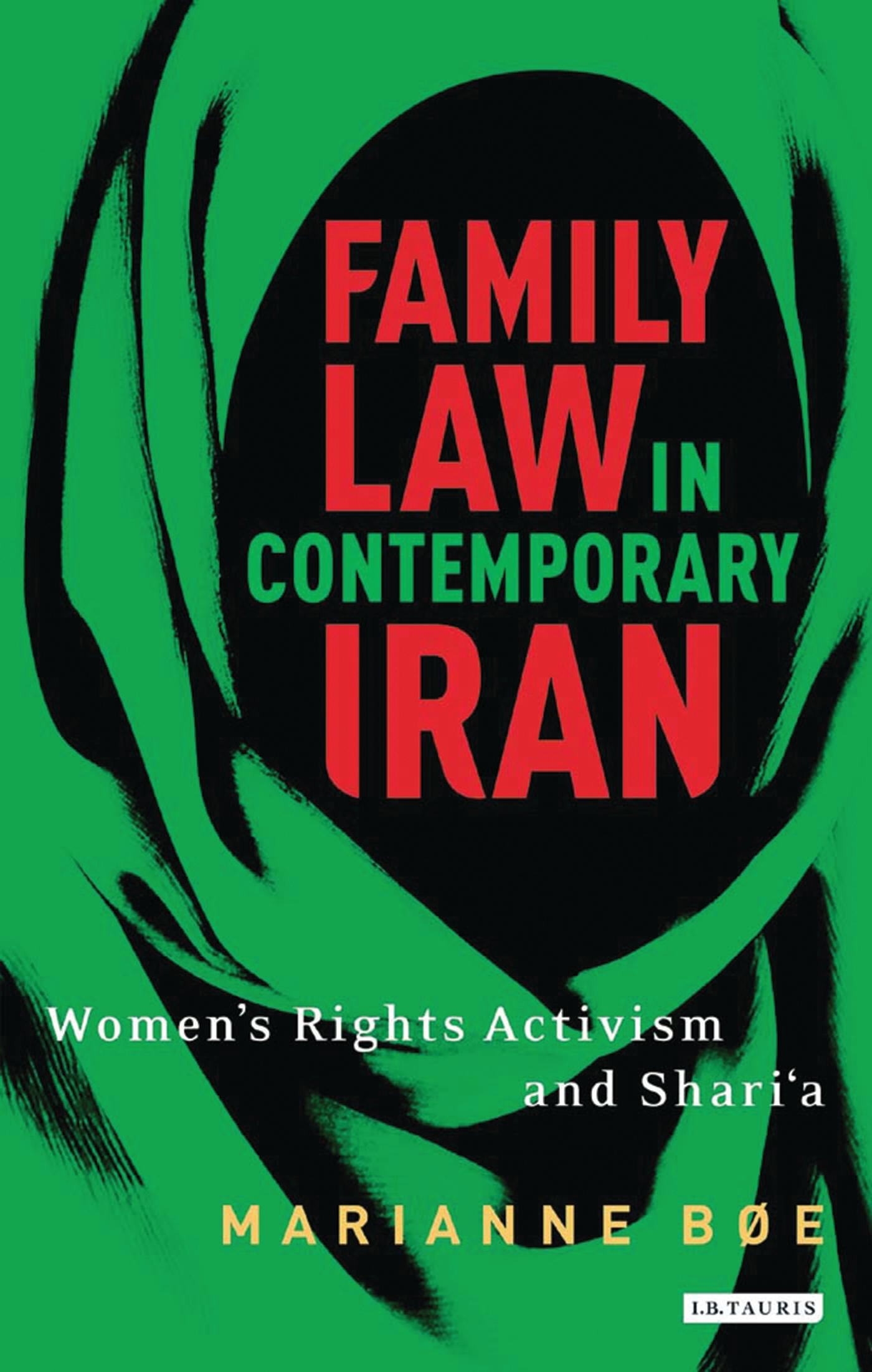
Passed into law over a decade before the Revolution, the Family Protection Law quickly drew the ire of the conservative clergy and the Ayatollah Khomeini in 1979. In fact, it was one of the first laws to be rescinded following the revolution. The law was hardly a surprising target, however, since women's status in Iran was then - and continues now to be - a central concern of Iranian political leaders, media commentators, and international observers alike. Taking up the issue of women's status in a modern context, Marianne Boe offers a nuanced view of how women's rights activists assert their rights within an Islamic context by weaving together religious and historical texts and narratives. Through Her substantial fieldwork and novel analysis, Boe undermines both the traditional view of 'Islamic Feminism' as monolithic and clears a path to a new understanding of the role of women's rights activists in shaping and synthesizing debates on the shari'a, women's rights and family law. As such, this book is essential for anyone studying family law and the role of women in contemporary Iran.
Betal nemt med kort, Klarna, Apple Pay eller Google Pay. Ikke tilfreds? Du har altid 14 dages fortrydelsesret. Læs mere i vores vilkår. Har du spørgsmål, så send os en mail på hello@memmo.org.
Memmo gør det nemmere at studere – uanset hvor du er i verden. Hos os samler du dine kursusbøger og smarte studieværktøjer ét sted: resuméer, quizzer, podcasts og flashcards. Og så er der Ted, din studieven, der svarer på alt, du undrer dig over. Over 50 000 studerende studerer allerede her – bygget til at hjælpe dig med at lære hurtigere og stresse mindre.