
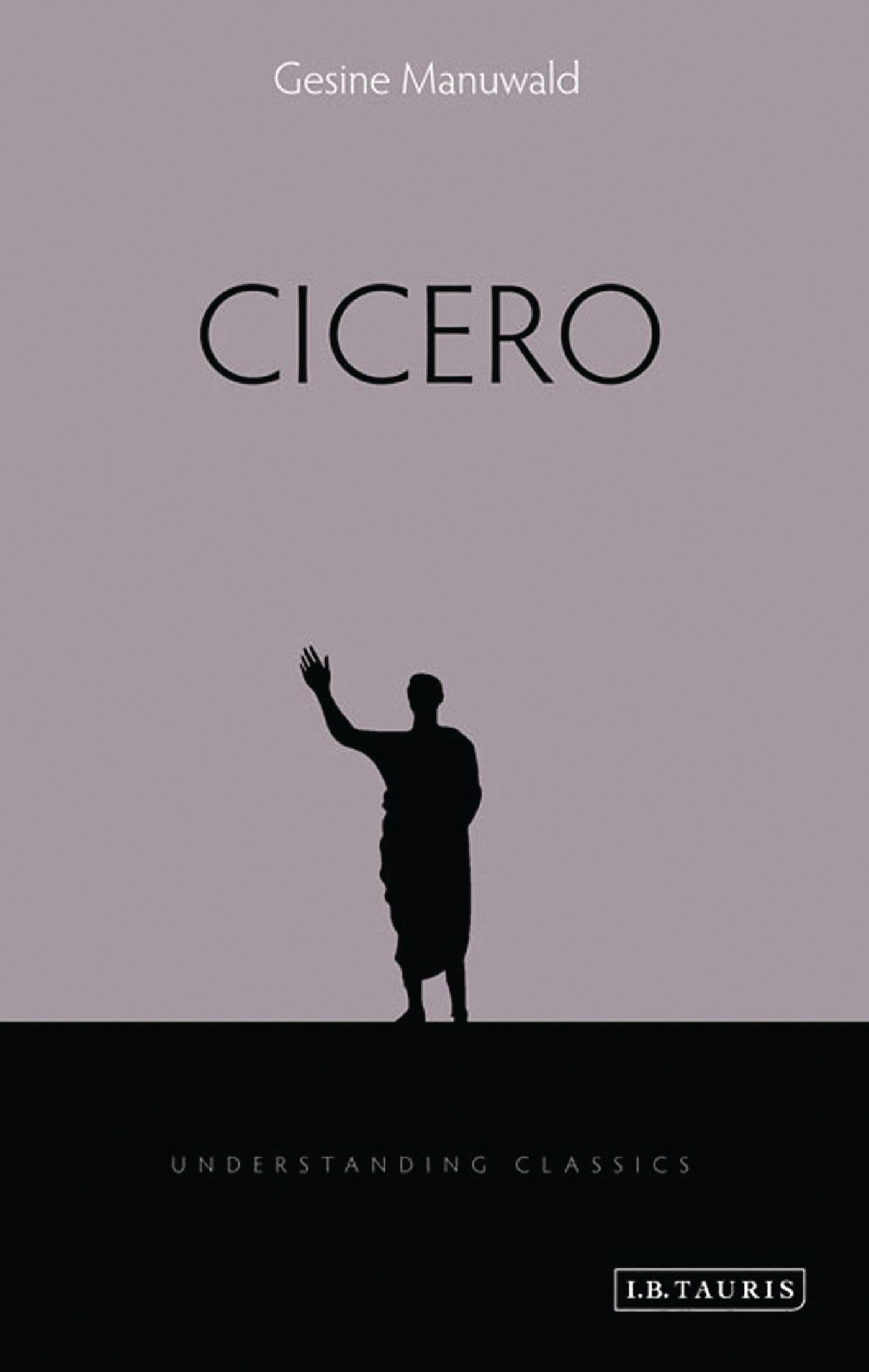
Marcus Tullius Cicero (106-43 BCE) introduced Romans to the major schools of Greek philosophy, forging a Latin conceptual vocabulary that was entirely new. But for all the sophistication of his thinking, it is perhaps for his political and oratorical career that Cicero is best remembered. He was the nemisis of Catiline, whose plot to overthrow the Republic he famously denounced to the Senate. He was the selfless politician who turned down the opportunity to join Julius Caesar and Pompey in their ruling triumvirate with Crassus. He was briefly Rome's leading man after Caesar's assassination in 44 BCE.And he was the great political orator whose bitter coflict with Mark Antony led to his own violent death in 43 BCE. In her authoritative survey, Gesine Manuwald evokes the many faces of Cicero as well as his complexities and seeming contradictions. She focuses on his major works, allowing the great writer to speak for himself. Cicero's rich legacy is seen to endure in the works of Quintilian and the Church Fathers as well as in the speeches of Harry S. Truman and Barack Obama.
Betal nemt med kort, Klarna, Apple Pay eller Google Pay. Ikke tilfreds? Du har altid 14 dages fortrydelsesret. Læs mere i vores vilkår. Har du spørgsmål, så send os en mail på hello@memmo.org.
Memmo gør det nemmere at studere – uanset hvor du er i verden. Hos os samler du dine kursusbøger og smarte studieværktøjer ét sted: resuméer, quizzer, podcasts og flashcards. Og så er der Ted, din studieven, der svarer på alt, du undrer dig over. Over 50 000 studerende studerer allerede her – bygget til at hjælpe dig med at lære hurtigere og stresse mindre.