
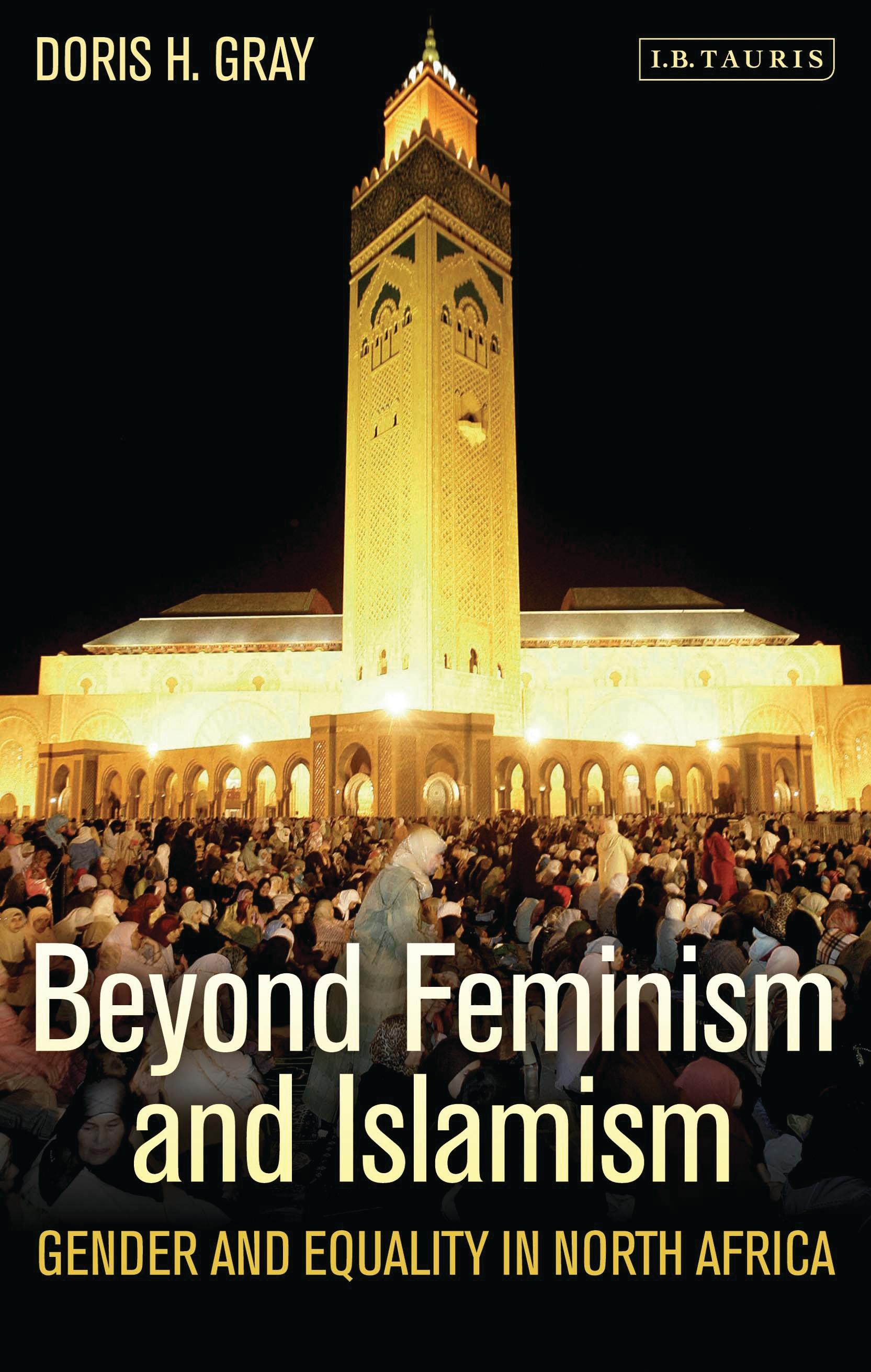
Are women in North Africa and the Middle East 'feminist'? Or is being a Muslim incompatible with feminism? Is there such a thing as 'Islamic feminism'? Through interviews with Moroccan activists and jurists - both male and female - and by situating these interviews within their socio-political and economic contexts, Doris Gray addresses these questions. By doing so, she attempts to move beyond the simple bifurcation of 'feminist' and 'Islamist' to look at the many facets of internal gender discourse within one Muslim country, allowing for a more nuanced understanding of the discussion on women's rights in the Muslim world in general.
By marking out a 'third way' that looks beyond 'feminism' and 'Islamism', Gray presents religion and faith not as blocking gender equality but as a source of inspiration to explore new ways of conceiving modernity. While Western models are taken into consideration, within Morocco the men and women involved in this 'third way' of understanding gender and equality inevitably negotiate internal tensions between what has been dubbed 'tradition' and 'modernity', thus incorporating national and cultural identity, post-colonialism and religious principles into their gender discourse. Examining issues such as gender equality, gender justice, abortion and gay rights, Gray explores the nexus of gender, religion and democracy in modern Morocco, and the ways in which different groups understand these ideas.
Many of the world's pressing twenty-first century problems are embodied within Morocco's borders:tensions between the West and the Muslim world, minority rights, migration, the role of religion in a modern society and the issue this book is chiefly concerned with - women's rights. The status and the role of women is one of the most hotly debated topics throughout the Middle East and North Africa, and this is particularly visible through this discussion of what it means to engage with and promote feminist thought and actions in the region.
By marking out a 'third way' that looks beyond 'feminism' and 'Islamism', Gray presents religion and faith not as blocking gender equality but as a source of inspiration to explore new ways of conceiving modernity. While Western models are taken into consideration, within Morocco the men and women involved in this 'third way' of understanding gender and equality inevitably negotiate internal tensions between what has been dubbed 'tradition' and 'modernity', thus incorporating national and cultural identity, post-colonialism and religious principles into their gender discourse. Examining issues such as gender equality, gender justice, abortion and gay rights, Gray explores the nexus of gender, religion and democracy in modern Morocco, and the ways in which different groups understand these ideas.
Many of the world's pressing twenty-first century problems are embodied within Morocco's borders:tensions between the West and the Muslim world, minority rights, migration, the role of religion in a modern society and the issue this book is chiefly concerned with - women's rights. The status and the role of women is one of the most hotly debated topics throughout the Middle East and North Africa, and this is particularly visible through this discussion of what it means to engage with and promote feminist thought and actions in the region.
Betal nemt med kort, Klarna, Apple Pay eller Google Pay. Ikke tilfreds? Du har altid 14 dages fortrydelsesret. Læs mere i vores vilkår. Har du spørgsmål, så send os en mail på hello@memmo.org.
Memmo gør det nemmere at studere – uanset hvor du er i verden. Hos os samler du dine kursusbøger og smarte studieværktøjer ét sted: resuméer, quizzer, podcasts og flashcards. Og så er der Ted, din studieven, der svarer på alt, du undrer dig over. Over 50 000 studerende studerer allerede her – bygget til at hjælpe dig med at lære hurtigere og stresse mindre.