
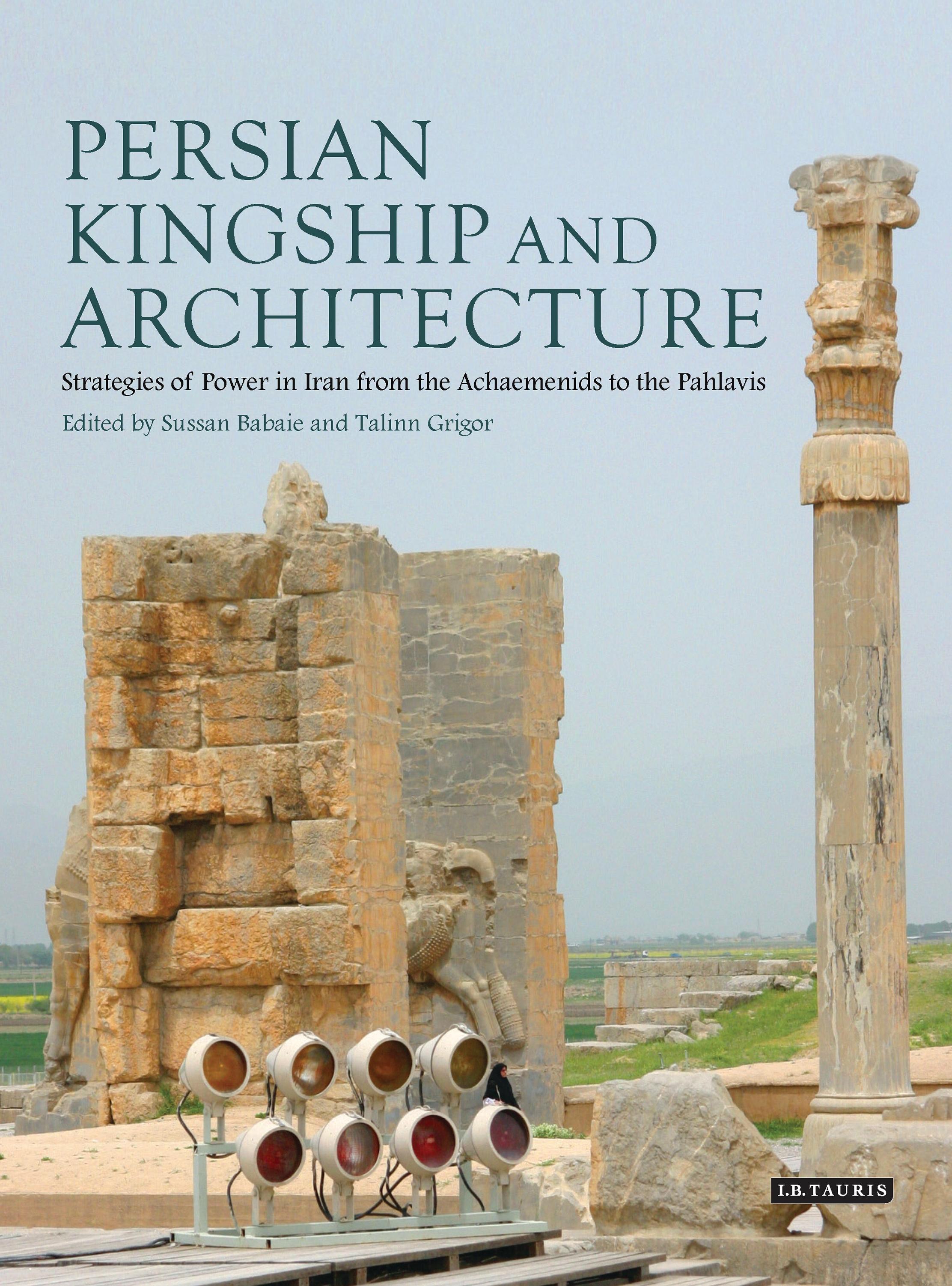
Since the Shah went into exile and the Islamic Republic was established in 1979 in the wake of the Iranian Revolution, the very idea of monarchy in Iran has been contentious. Yet, as Persian Kingship and Architecture argues, the institution of kingship has historically played a pivotal role in articulating the abstract notion of 'Iran' since antiquity. These ideas surrounding kingship and nation have, in turn, served as a unifying cultural force despite shifting political and religious allegiances. Through analyses of palaces, mausolea, art, architectural decoration and urban design the authors show how architecture was appropriated by different rulers as an integral part of their strategies of legitimising power. They refer to a variety of examples, from the monuments of Persepolis under the Achamenids, the Sassanian palaces at Kish, the Safavid public squares of Isfahan, the Qajar palaces at Shiraz and to the modernisation and urban agendas of the Pahlavis. Drawing on archaeology, ancient, medieval, early and modern architectural history, both Islamic and secular, this book is indispensable for all those interested in Iranian studies and visual culture.
Betal nemt med kort, Klarna, Apple Pay eller Google Pay. Ikke tilfreds? Du har altid 14 dages fortrydelsesret. Læs mere i vores vilkår. Har du spørgsmål, så send os en mail på hello@memmo.org.
Memmo gør det nemmere at studere – uanset hvor du er i verden. Hos os samler du dine kursusbøger og smarte studieværktøjer ét sted: resuméer, quizzer, podcasts og flashcards. Og så er der Ted, din studieven, der svarer på alt, du undrer dig over. Over 50 000 studerende studerer allerede her – bygget til at hjælpe dig med at lære hurtigere og stresse mindre.