
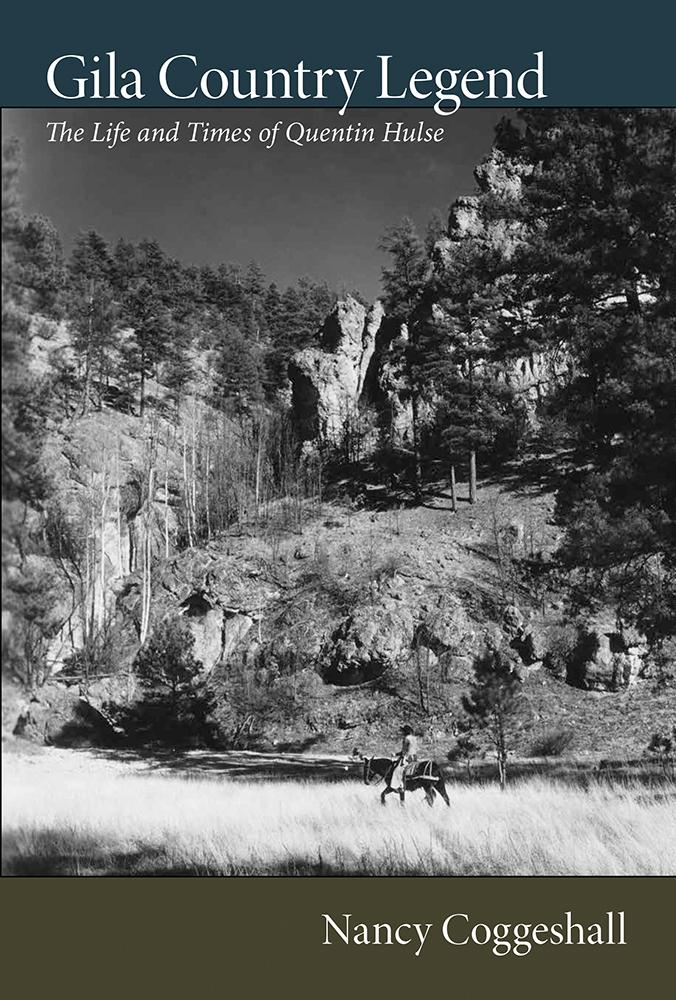
If there was ever a "ring-tailed roarer" of the backwoods of New Mexico, he was Quentin Hulse (1926-2002). Hulse lived and worked most of his life at the bottom of Canyon Creek in the Gila River country of southwestern New Mexico, but his reputation spread far and wide. His western image appeared on a tourist postcard and souvenir license plate in the 1950s. Footage of a lion hunt led by Hulse and his hounds appeared on the Men's Channel in 2005, three years after his passing.
Hulse grew up primarily in western New Mexico when that ranch and mining country was still remote and raw. At the age of ten he witnessed a point-blank shooting, the culmination of an old-fashioned frontier feud. He followed his parents between mines and towns until his father established a ranch at Canyon Creek. While serving in the navy during World War II, he landed on the bloody beach at Okinawa. After returning from the war, he was shot in a bar near Silver City during a night of carousing.
Hulse was most at home in the rugged Gila Wilderness, in which he ranched and guided for fifty years. With compassion and nuance, Nancy Coggeshall tells the compelling biography of a unique western rancher constantly adjusting to the inroads of modernity into his traditional way of life. Drawing on oral history, archival sources, and her personal association with Hulse and the Gila, she brings this unique westerner, and New Mexican, to life.
Betal nemt med kort, Klarna, Apple Pay eller Google Pay. Ikke tilfreds? Du har altid 14 dages fortrydelsesret. Læs mere i vores vilkår. Har du spørgsmål, så send os en mail på hello@memmo.org.
Memmo gør det nemmere at studere – uanset hvor du er i verden. Hos os samler du dine kursusbøger og smarte studieværktøjer ét sted: resuméer, quizzer, podcasts og flashcards. Og så er der Ted, din studieven, der svarer på alt, du undrer dig over. Over 50 000 studerende studerer allerede her – bygget til at hjælpe dig med at lære hurtigere og stresse mindre.