
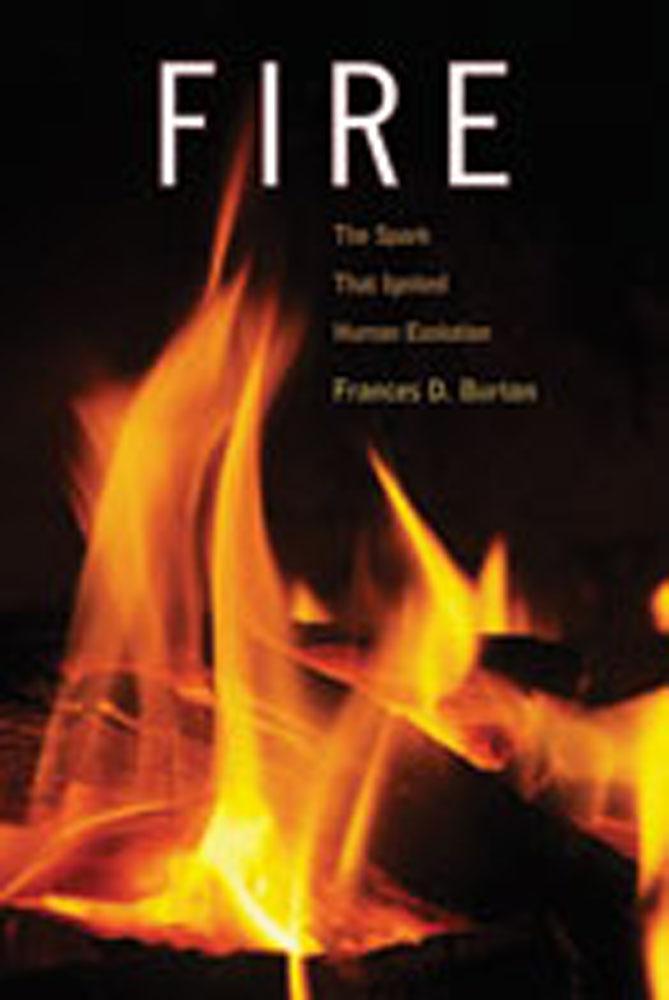
The association between our ancestors and fire, somewhere around six to four million years ago, had a tremendous impact on human evolution, transforming our earliest human ancestor, a being communicating without speech but with insight, reason, manual dexterity, highly developed social organization, and the capability of experimenting with this new technology. As it first associated with and then began to tame fire, this extraordinary being began to distance itself from its primate relatives, taking a path that would alter its environment, physiology, and self-image.
Based on her extensive research with nonhuman primates, anthropologist Frances Burton details the stages of the conquest of fire and the systems it affected. Her study examines the natural occurrence of fire and describes the effects light has on human physiology. She constructs possible variations of our earliest human ancestor and its way of life, utilizing archaeological and anthropological evidence of the earliest human-controlled fires to explore the profound physical and biological impacts fire had on human evolution.
Betal nemt med kort, Klarna, Apple Pay eller Google Pay. Ikke tilfreds? Du har altid 14 dages fortrydelsesret. Læs mere i vores vilkår. Har du spørgsmål, så send os en mail på hello@memmo.org.
Memmo gør det nemmere at studere – uanset hvor du er i verden. Hos os samler du dine kursusbøger og smarte studieværktøjer ét sted: resuméer, quizzer, podcasts og flashcards. Og så er der Ted, din studieven, der svarer på alt, du undrer dig over. Over 50 000 studerende studerer allerede her – bygget til at hjælpe dig med at lære hurtigere og stresse mindre.