
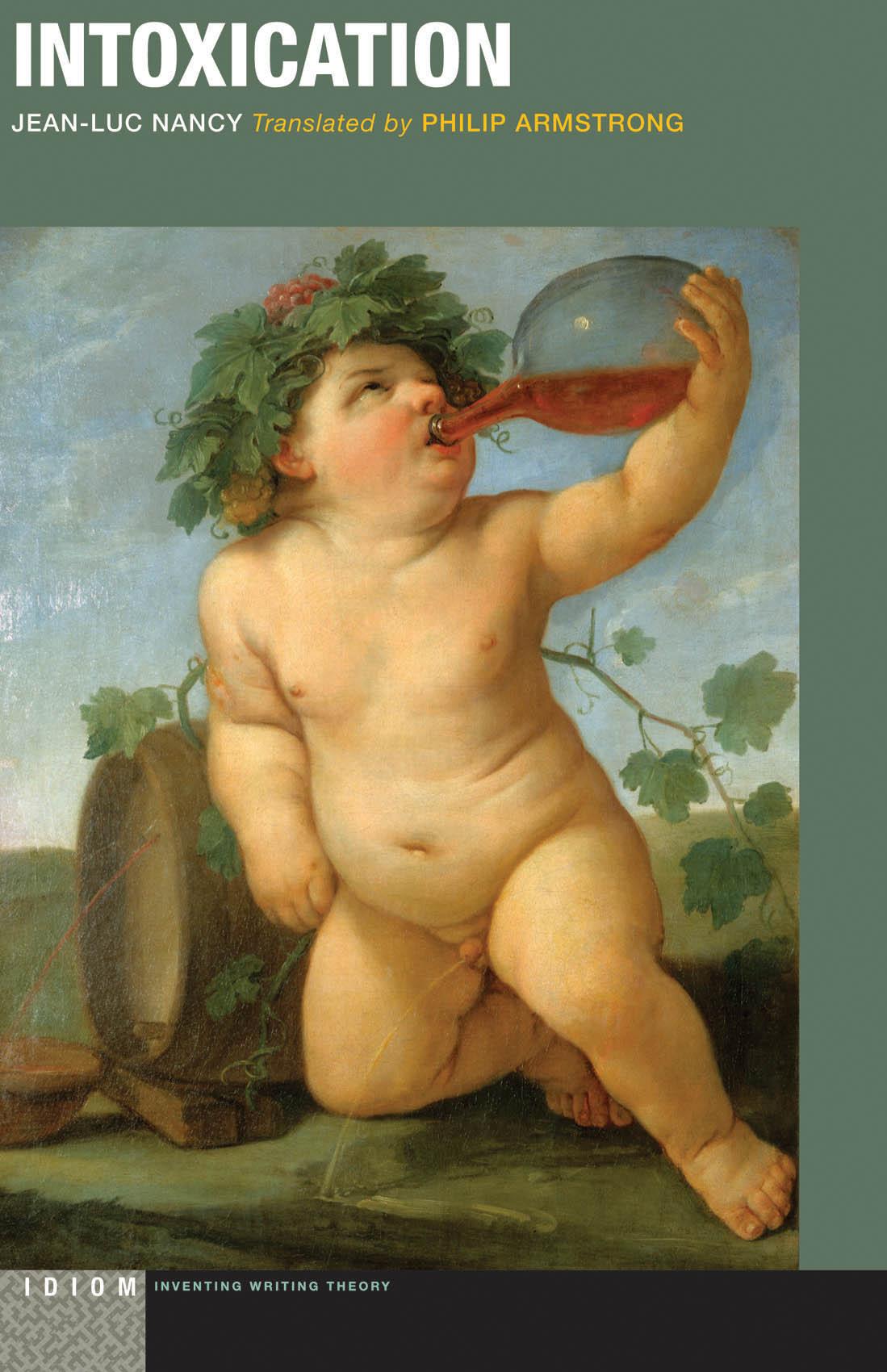
From Plato’s Symposium to Hegel’s truth as a “Bacchanalian revel,” from the Bacchae of Euripedes to Nietzsche, philosophy holds a deeply ambivalent relation to the pleasures of intoxication. At the same time, from Baudelaire to Lowry, from Proust to Dostoyevsky, literature and poetry are also haunted by scenes of intoxication, as if philosophy and literature share a theme that announces and navigates their proximities and differences.
For Nancy, intoxication constitutes an excess that both fascinates and questions philosophy’s sober ambitions for appropriate forms of philosophical behavior and conceptual lucidity. At the same time, intoxication displaces a number of established dualities—reason and passion, mind and body, rationality and desire, rigor and excess, clarity and confusion, logic and eros.
Taking its point of departure from Baudelaire’s categorical imperative to understand modernity—“be drunk always”—Nancy’s little book is composed in fragments, quotations, drunken asides, and inebriated repetitions. His contemporary “banquet” addresses a range of related themes, including the role of alcohol and intoxication in rituals, myths, divine sacrifice, and religious symbolism, all those toasts to the sacred “spirits” involving libations and different forms of speech and enunciation—to the gods, to modernity, to the Absolute. Affecting both mind and body, Nancy’s subject becomes intoxicated: Ego sum, ego existo ebrius—I am, I exist—drunk.
Betal nemt med kort, Klarna, Apple Pay eller Google Pay. Ikke tilfreds? Du har altid 14 dages fortrydelsesret. Læs mere i vores vilkår. Har du spørgsmål, så send os en mail på hello@memmo.org.
Memmo gør det nemmere at studere – uanset hvor du er i verden. Hos os samler du dine kursusbøger og smarte studieværktøjer ét sted: resuméer, quizzer, podcasts og flashcards. Og så er der Ted, din studieven, der svarer på alt, du undrer dig over. Over 50 000 studerende studerer allerede her – bygget til at hjælpe dig med at lære hurtigere og stresse mindre.