
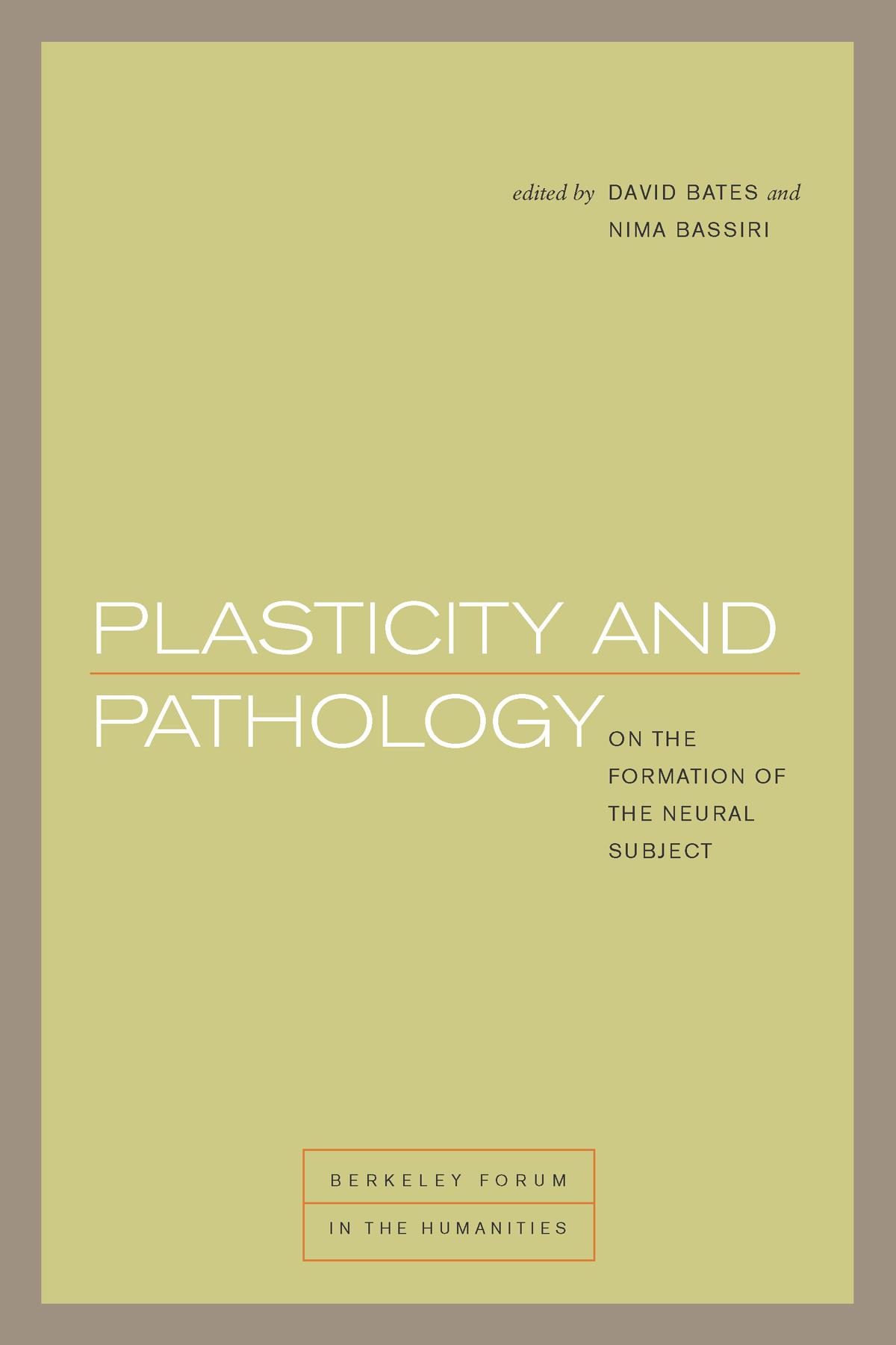
With the rise of cognitive science and the revolution in neuroscience, it is now commonplace to assume that the study of a human person—a thinking, feeling, acting subject—is ultimately the study of the human brain. In both Europe and the United States, massive state-funded research is focused on mapping the brain in all its remarkable complexity. The metaphors employed are largely technological: A wiring diagram of synaptic connectivity will lead to a better understanding of human behavior and perhaps insights into the breakdown of human personhood with diseases of the brain such as Alzheimer’s. Alongside this technologized discourse of the brain as locus of human subjectivity we find another perspective, one that emphasizes its essential plasticity—in both the developmental sense and as a response to traumas such as strokes, tumors, or gunshot wounds.
This collection of essays brings together a diverse range of scholars to investigate how the “neural subject” of the twenty-first century came to be. Taking approaches both historical and theoretical, they probe the possibilities and limits of neuroscientific understandings of human experience. Topics include landmark studies in the history of neuroscience, the relationship between neural and technological “pathologies,” and analyses of contemporary concepts of plasticity and pathology in cognitive neuroscience. Central to the volume is a critical examination of the relationship between pathology and plasticity. Because pathology is often the occasion for neural reorganization and adaptation, it exists not in opposition to the brain’s “normal” operation but instead as something intimately connected to our ways of being and understanding.
Betal nemt med kort, Klarna, Apple Pay eller Google Pay. Ikke tilfreds? Du har altid 14 dages fortrydelsesret. Læs mere i vores vilkår. Har du spørgsmål, så send os en mail på hello@memmo.org.
Memmo gør det nemmere at studere – uanset hvor du er i verden. Hos os samler du dine kursusbøger og smarte studieværktøjer ét sted: resuméer, quizzer, podcasts og flashcards. Og så er der Ted, din studieven, der svarer på alt, du undrer dig over. Over 50 000 studerende studerer allerede her – bygget til at hjælpe dig med at lære hurtigere og stresse mindre.