
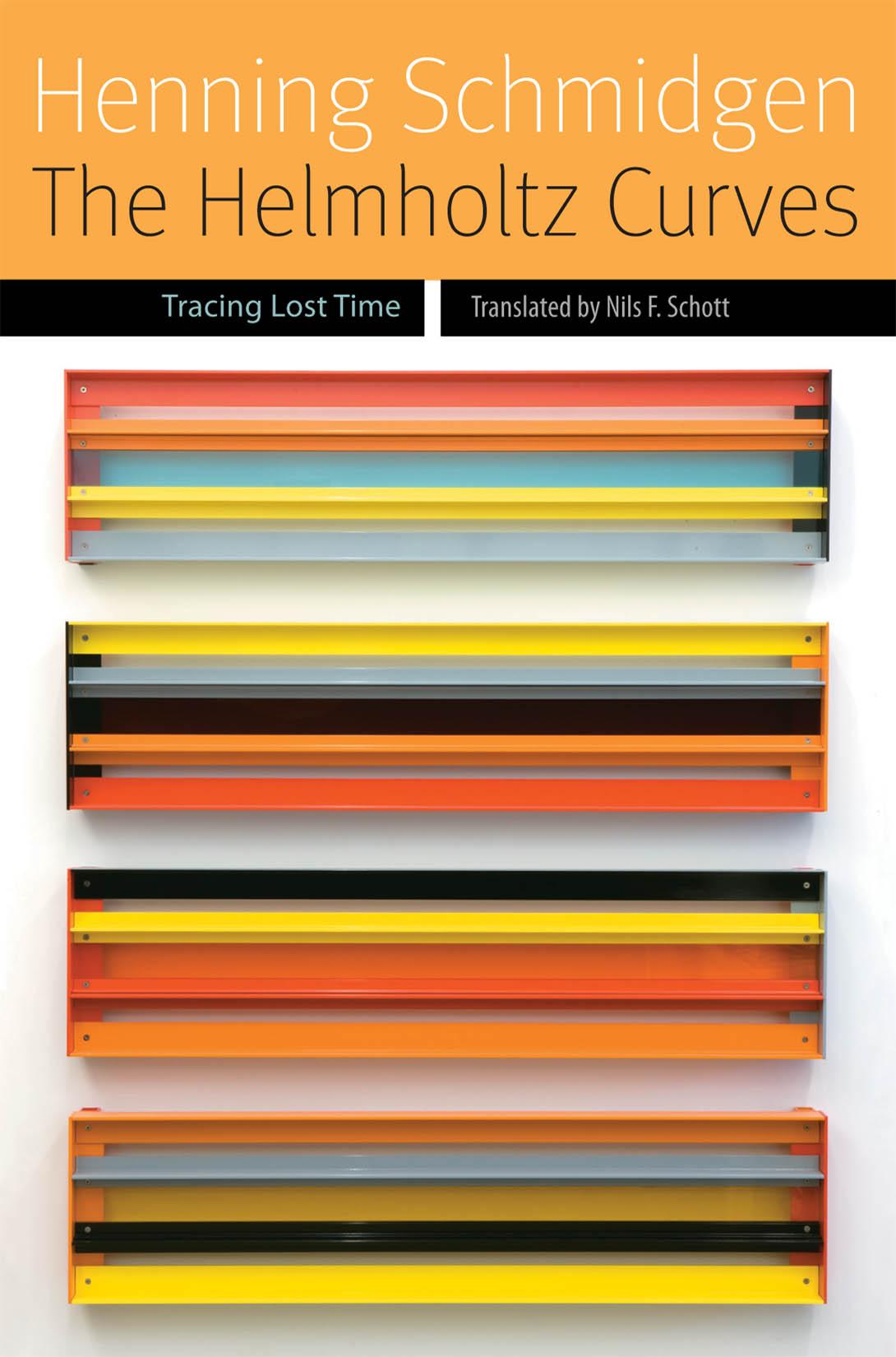
This book reconstructs the emergence of the phenomenon of “lost time” by engaging with two of the most significant time experts of the nineteenth century: the German physiologist Hermann von Helmholtz and the French writer Marcel Proust.
Its starting point is the archival discovery of curve images that Helmholtz produced in the context of pathbreaking experiments on the temporality of the nervous system in 1851. With a “frog drawing machine,” Helmholtz established the temporal gap between stimulus and response that has remained a core issue in debates between neuroscientists and philosophers.
When naming the recorded phenomena, Helmholtz introduced the term temps perdu, or lost time. Proust had excellent contacts with the biomedical world of late-nineteenth-century Paris, and he was familiar with this term and physiological tracing technologies behind it. Drawing on the machine philosophy of Deleuze, Schmidgen highlights the resemblance between the machinic assemblages and rhizomatic networks within which Helmholtz and Proust pursued their respective projects.
Betal nemt med kort, Klarna, Apple Pay eller Google Pay. Ikke tilfreds? Du har altid 14 dages fortrydelsesret. Læs mere i vores vilkår. Har du spørgsmål, så send os en mail på hello@memmo.org.
Memmo gør det nemmere at studere – uanset hvor du er i verden. Hos os samler du dine kursusbøger og smarte studieværktøjer ét sted: resuméer, quizzer, podcasts og flashcards. Og så er der Ted, din studieven, der svarer på alt, du undrer dig over. Over 50 000 studerende studerer allerede her – bygget til at hjælpe dig med at lære hurtigere og stresse mindre.