
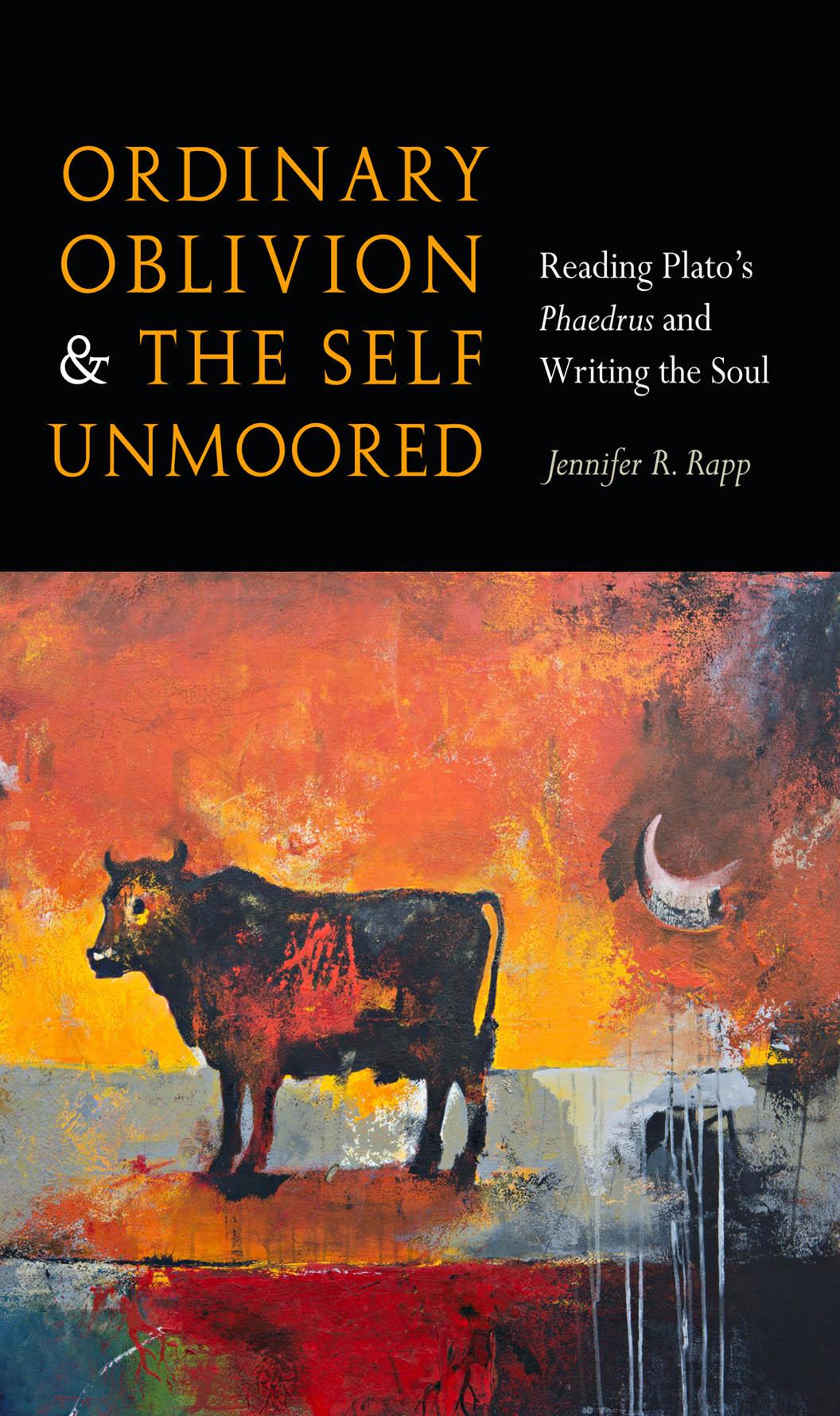
Rapp begins with a question posed by the poet Theodore Roethke: “Should we say that the self, once perceived, becomes a soul?” Through her examination of Plato’s Phaedrus and her insights about the place of forgetting in a life, Rapp answers Roethke’s query with a resounding Yes. In so doing, Rapp reimagines the Phaedrus, interprets anew Plato’s relevance to contemporary life, and offers an innovative account of forgetting as a fertile fragility constitutive of humanity.
Drawing upon poetry and comparisons with other ancient Greek and Daoist texts, Rapp brings to light overlooked features of the Phaedrus, disrupts longstanding interpretations of Plato as the facile champion of memory, and offers new lines of sight onto (and from) his corpus. Her attention to the Phaedrus and her meditative apprehension of the permeable character of human life leave our understanding of both Plato and forgetting inescapably altered. Unsettle everything you think you know about Plato, suspend the twentieth-century entreaty to “Never forget,” and behold here a new mode of critical reflection in which textual study and humanistic inquiry commingle to expansive effect.
Betal nemt med kort, Klarna, Apple Pay eller Google Pay. Ikke tilfreds? Du har altid 14 dages fortrydelsesret. Læs mere i vores vilkår. Har du spørgsmål, så send os en mail på hello@memmo.org.
Memmo gør det nemmere at studere – uanset hvor du er i verden. Hos os samler du dine kursusbøger og smarte studieværktøjer ét sted: resuméer, quizzer, podcasts og flashcards. Og så er der Ted, din studieven, der svarer på alt, du undrer dig over. Over 50 000 studerende studerer allerede her – bygget til at hjælpe dig med at lære hurtigere og stresse mindre.