
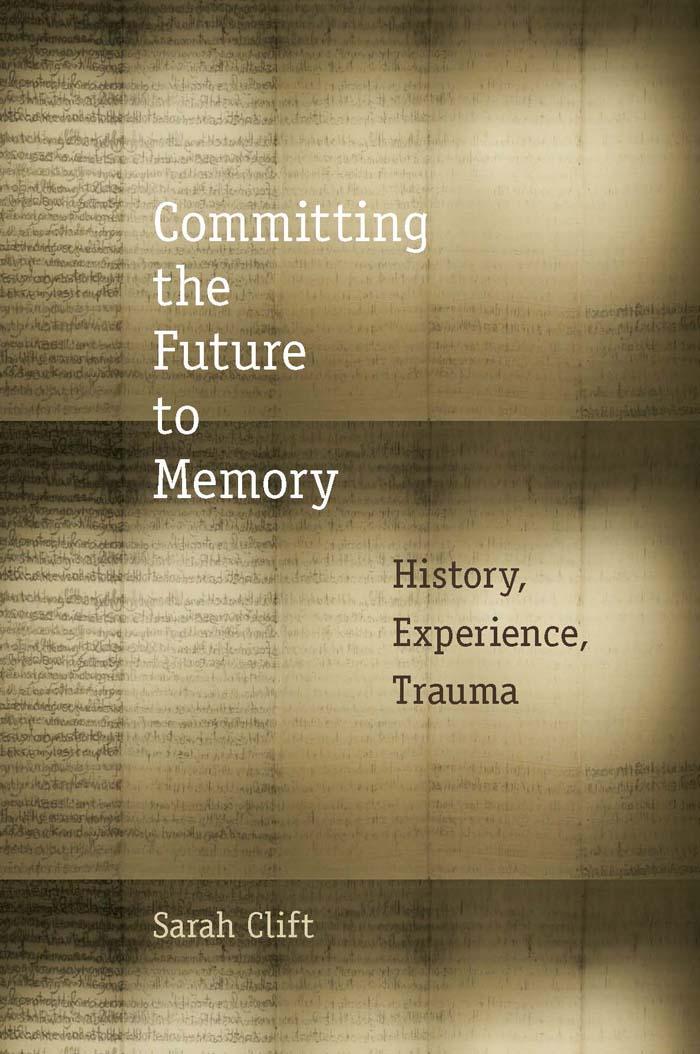
Whereas historical determinacy conceives the past as a complex and unstable network of causalities, this book asks how history can be related to a more radical future. To pose that question, it does not reject determinacy outright but rather seeks to explore how it works. In examining what it means to be “determined” by history, it also asks what kind of openings there might be in our encounters with history for interruptions, re-readings, and re-writings.
Engaging texts spanning multiple genres and several centuries—from John Locke to Maurice Blanchot, from Hegel to Benjamin—Clift looks at experiences of time that exceed the historical narration of experiences said to have occurred in time. She focuses on the co-existence of multiple temporalities and opens up the quintessentially modern notion of historical succession to other possibilities. The alternatives she draws out include the mediations of language and narration, temporal leaps, oscillations and blockages, and the role played by contingency in representation. She argues that such alternatives compel us to reassess the ways we understand history and identity in a traumatic, or indeed in a post-traumatic, age.
Betal nemt med kort, Klarna, Apple Pay eller Google Pay. Ikke tilfreds? Du har altid 14 dages fortrydelsesret. Læs mere i vores vilkår. Har du spørgsmål, så send os en mail på hello@memmo.org.
Memmo gør det nemmere at studere – uanset hvor du er i verden. Hos os samler du dine kursusbøger og smarte studieværktøjer ét sted: resuméer, quizzer, podcasts og flashcards. Og så er der Ted, din studieven, der svarer på alt, du undrer dig over. Over 50 000 studerende studerer allerede her – bygget til at hjælpe dig med at lære hurtigere og stresse mindre.