
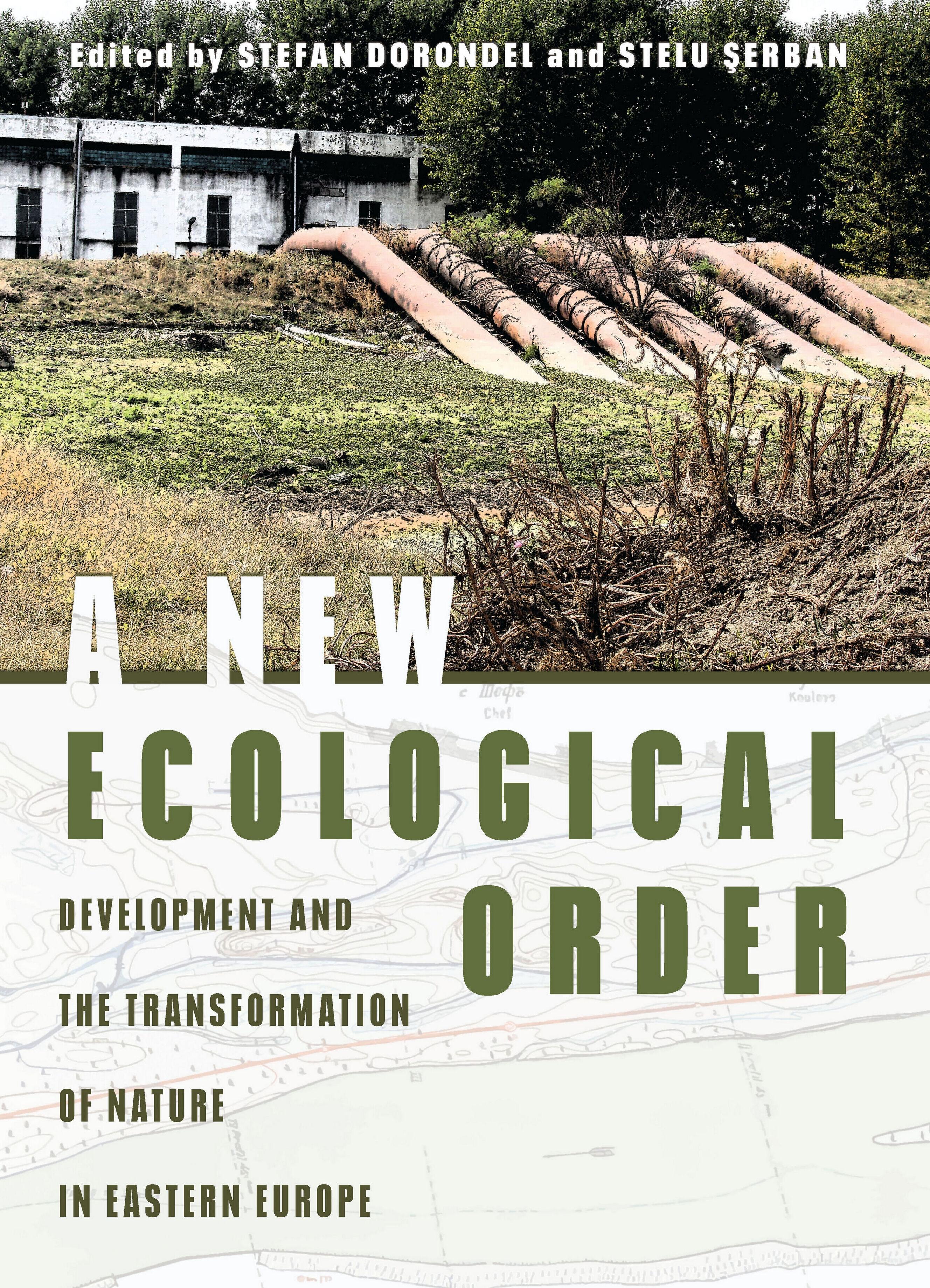
The rise of industrial capitalism in the nineteenth century forged a new ecological order in North American and Western European states, radically transforming the environment through science and technology in the name of human progress. Far less known are the dramatic environmental changes experienced by Eastern Europe, in many ways a terra incognita for environmental historians and anthropologists. A New Ecological Order explores, from a historical and ethnographic perspective, the role of state planners, bureaucrats, and experts—engineers, agricultural engineers, geographers, biologists, foresters, and architects—as agents of change in the natural world of Eastern Europe from 1870 to the early twenty-first century.
Contributors consider territories engulfed by empires, from the Habsburg to the Ottoman to tsarist Russia; territories belonging to disintegrating empires; and countries in the Balkan Peninsula, Central and Eastern Europe, and Eurasia. Together, they follow a rhetoric of “correcting nature,” a desire to exploit the natural environment and put its resources to work for the sake of developing the economies and infrastructures of modern states. They reveal an eagerness among newly established nation-states, after centuries of imperial economic and political impositions, to import scientific knowledge and new technologies from Western Europe that would aid in their economic development, and how those imports and ideas about nature ultimately shaped local projects and policies.
Contributors consider territories engulfed by empires, from the Habsburg to the Ottoman to tsarist Russia; territories belonging to disintegrating empires; and countries in the Balkan Peninsula, Central and Eastern Europe, and Eurasia. Together, they follow a rhetoric of “correcting nature,” a desire to exploit the natural environment and put its resources to work for the sake of developing the economies and infrastructures of modern states. They reveal an eagerness among newly established nation-states, after centuries of imperial economic and political impositions, to import scientific knowledge and new technologies from Western Europe that would aid in their economic development, and how those imports and ideas about nature ultimately shaped local projects and policies.
Kategori: Miljövetenskap & Klimat
e-ISBN: 9780822988847
Betal nemt med kort, Klarna, Apple Pay eller Google Pay. Ikke tilfreds? Du har altid 14 dages fortrydelsesret. Læs mere i vores vilkår. Har du spørgsmål, så send os en mail på hello@memmo.org.
Memmo gør det nemmere at studere – uanset hvor du er i verden. Hos os samler du dine kursusbøger og smarte studieværktøjer ét sted: resuméer, quizzer, podcasts og flashcards. Og så er der Ted, din studieven, der svarer på alt, du undrer dig over. Over 50 000 studerende studerer allerede her – bygget til at hjælpe dig med at lære hurtigere og stresse mindre.
Du kan måske også lide
Køb bogen0