
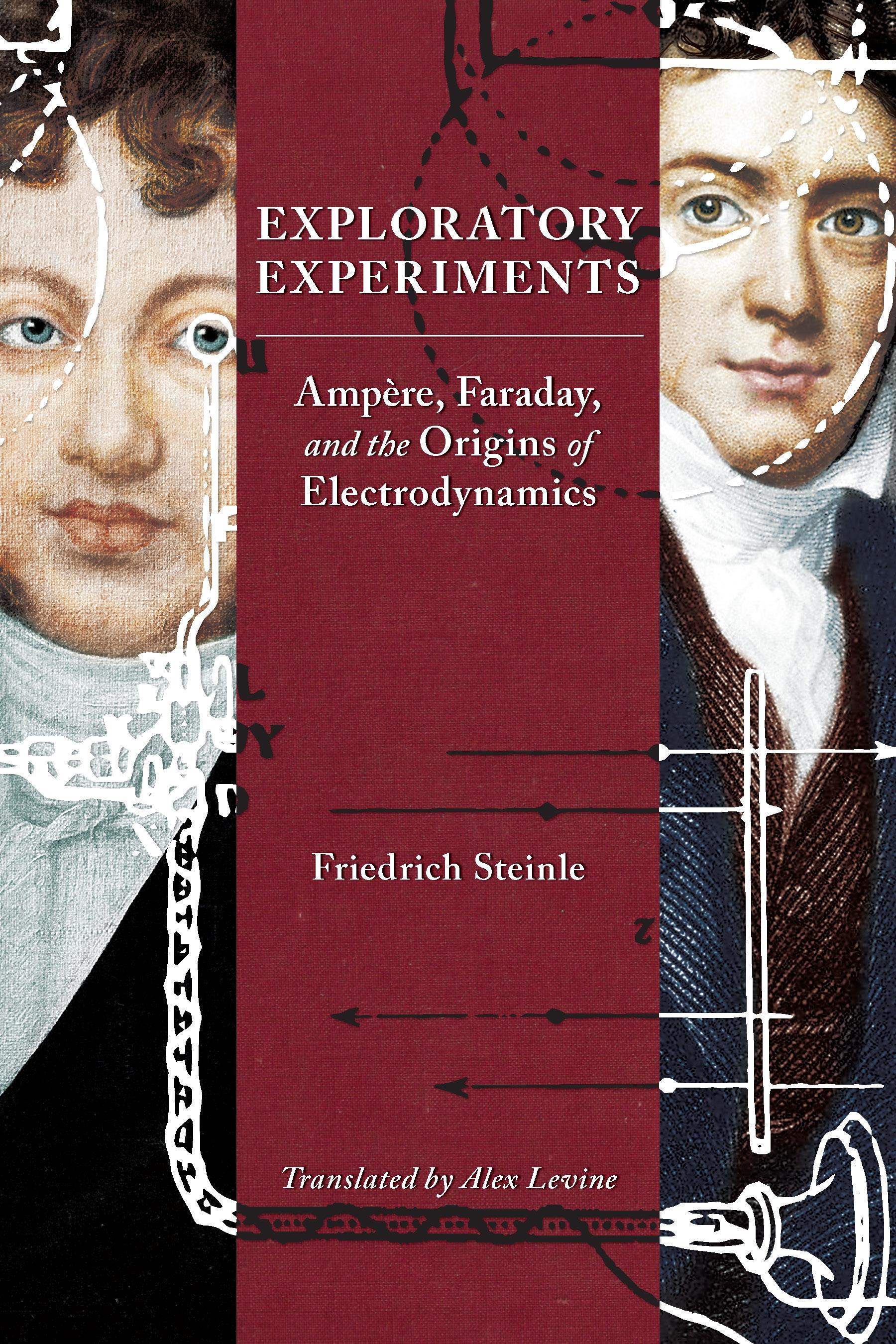
Translated by Alex Levine
The nineteenth century was a formative period for electromagnetism and electrodynamics. Hans Christian Orsted's groundbreaking discovery of the interaction between electricity and magnetism in 1820 inspired a wave of research, led to the science of electrodynamics, and resulted in the development of electromagnetic theory. Remarkably, in response, Andre-Marie Ampere and Michael Faraday developed two incompatible, competing theories. Although their approaches and conceptual frameworks were fundamentally different, together their work launched a technological revolution—laying the foundation for our modern scientific understanding of electricity—and one of the most important debates in physics, between electrodynamic action-at-a-distance and field theories.
In this foundational study, Friedrich Steinle compares the influential work of Ampere and Faraday to reveal the prominent role of exploratory experimentation in the development of science. While this exploratory phase was responsible for decisive conceptual innovations, it has yet to be examined in such great detail. Focusing on Ampere's and Faraday's research practices, reconstructed from previously unknown archival materials, including laboratory notes, diaries, letters, and interactions with instrument makers, this book considers both the historic and epistemological basis of exploratory experimentation and its importance to scientific development.
The nineteenth century was a formative period for electromagnetism and electrodynamics. Hans Christian Orsted's groundbreaking discovery of the interaction between electricity and magnetism in 1820 inspired a wave of research, led to the science of electrodynamics, and resulted in the development of electromagnetic theory. Remarkably, in response, Andre-Marie Ampere and Michael Faraday developed two incompatible, competing theories. Although their approaches and conceptual frameworks were fundamentally different, together their work launched a technological revolution—laying the foundation for our modern scientific understanding of electricity—and one of the most important debates in physics, between electrodynamic action-at-a-distance and field theories.
In this foundational study, Friedrich Steinle compares the influential work of Ampere and Faraday to reveal the prominent role of exploratory experimentation in the development of science. While this exploratory phase was responsible for decisive conceptual innovations, it has yet to be examined in such great detail. Focusing on Ampere's and Faraday's research practices, reconstructed from previously unknown archival materials, including laboratory notes, diaries, letters, and interactions with instrument makers, this book considers both the historic and epistemological basis of exploratory experimentation and its importance to scientific development.
Kategori: Vetenskapsteori och forskningsmetod
e-ISBN: 9780822981374
Betal nemt med kort, Klarna, Apple Pay eller Google Pay. Ikke tilfreds? Du har altid 14 dages fortrydelsesret. Læs mere i vores vilkår. Har du spørgsmål, så send os en mail på hello@memmo.org.
Memmo gør det nemmere at studere – uanset hvor du er i verden. Hos os samler du dine kursusbøger og smarte studieværktøjer ét sted: resuméer, quizzer, podcasts og flashcards. Og så er der Ted, din studieven, der svarer på alt, du undrer dig over. Over 50 000 studerende studerer allerede her – bygget til at hjælpe dig med at lære hurtigere og stresse mindre.
Du kan måske også lide
Køb bogen0