
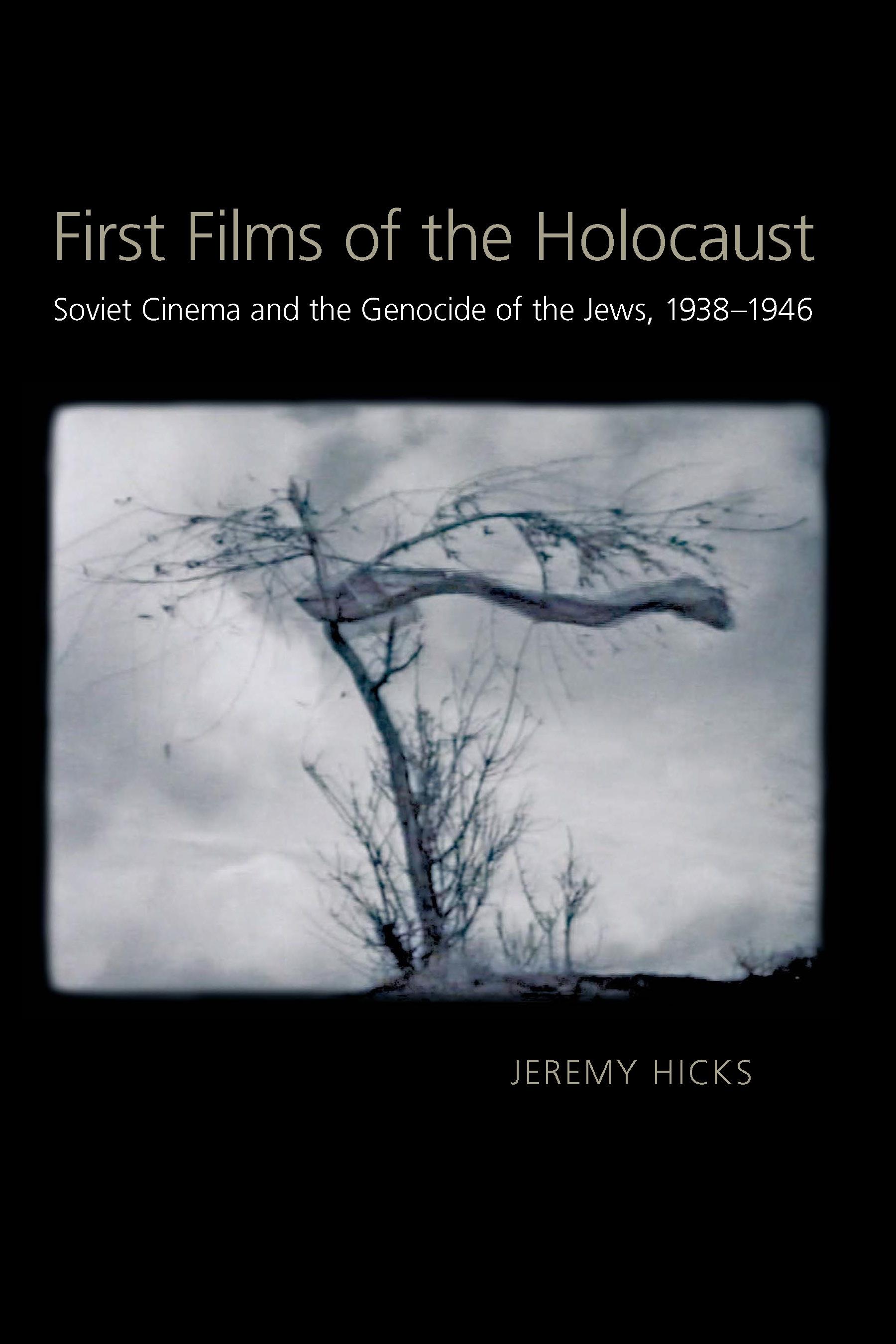
Most early Western perceptions of the Holocaust were based on newsreels filmed during the Allied liberation of Germany in 1945. Little, however, was reported of the initial wave of material from Soviet filmmakers, who were in fact the first to document these horrors. In First Films of the Holocaust, Jeremy Hicks presents a pioneering study of Soviet contributions to the growing public awareness of the horrors of Nazi rule.
Even before the war, the Soviet film Professor Mamlock, which premiered in the United States in 1938 and coincided with the Kristallnacht pogrom, helped reinforce anti-Nazi sentiment. Yet, Soviet films were often dismissed or even banned in the West as Communist propaganda. Ironically, in the brief 1939-1941 period of Nazi and Soviet alliance, such films were also banned in the Soviet Union, only to be reclaimed after the Nazi attack on the Soviet Union in 1941, and suppressed yet again during the Cold War.
Jeremy Hicks recovers much of the major film work in Soviet depictions of the Holocaust and views them within their political context, both locally and internationally. Overwhelmingly, wartime films were skewed to depict Soviet resistance, "Red funerals," and calls for vengeance, rather than the singling out of Jewish victims by the Nazis. Almost no personal testimony of victims or synchronous sound was recorded, furthering the disconnection of the viewer to the victims.
Hicks examines correspondence, scripts, reviews, and compares edited with unedited film to unearth the deliberately hidden Jewish aspects of Soviet depictions of the German invasion and occupation. To Hicks, it's in the silences, gaps, and ellipses that the films speak most clearly. Additionally, he details the reasons why Soviet Holocaust films have been subsequently erased from collective memory in the West and the Soviet Union: their graphic horror, their use as propaganda tools, and the postwar rise of the Red Scare in the United States and anti-Semitic campaigns in the Soviet Union.
Even before the war, the Soviet film Professor Mamlock, which premiered in the United States in 1938 and coincided with the Kristallnacht pogrom, helped reinforce anti-Nazi sentiment. Yet, Soviet films were often dismissed or even banned in the West as Communist propaganda. Ironically, in the brief 1939-1941 period of Nazi and Soviet alliance, such films were also banned in the Soviet Union, only to be reclaimed after the Nazi attack on the Soviet Union in 1941, and suppressed yet again during the Cold War.
Jeremy Hicks recovers much of the major film work in Soviet depictions of the Holocaust and views them within their political context, both locally and internationally. Overwhelmingly, wartime films were skewed to depict Soviet resistance, "Red funerals," and calls for vengeance, rather than the singling out of Jewish victims by the Nazis. Almost no personal testimony of victims or synchronous sound was recorded, furthering the disconnection of the viewer to the victims.
Hicks examines correspondence, scripts, reviews, and compares edited with unedited film to unearth the deliberately hidden Jewish aspects of Soviet depictions of the German invasion and occupation. To Hicks, it's in the silences, gaps, and ellipses that the films speak most clearly. Additionally, he details the reasons why Soviet Holocaust films have been subsequently erased from collective memory in the West and the Soviet Union: their graphic horror, their use as propaganda tools, and the postwar rise of the Red Scare in the United States and anti-Semitic campaigns in the Soviet Union.
Kategori: Film- & Medievetenskap
e-ISBN: 9780822978084
Betal nemt med kort, Klarna, Apple Pay eller Google Pay. Ikke tilfreds? Du har altid 14 dages fortrydelsesret. Læs mere i vores vilkår. Har du spørgsmål, så send os en mail på hello@memmo.org.
Memmo gør det nemmere at studere – uanset hvor du er i verden. Hos os samler du dine kursusbøger og smarte studieværktøjer ét sted: resuméer, quizzer, podcasts og flashcards. Og så er der Ted, din studieven, der svarer på alt, du undrer dig over. Over 50 000 studerende studerer allerede her – bygget til at hjælpe dig med at lære hurtigere og stresse mindre.
Du kan måske også lide
Køb bogen0