
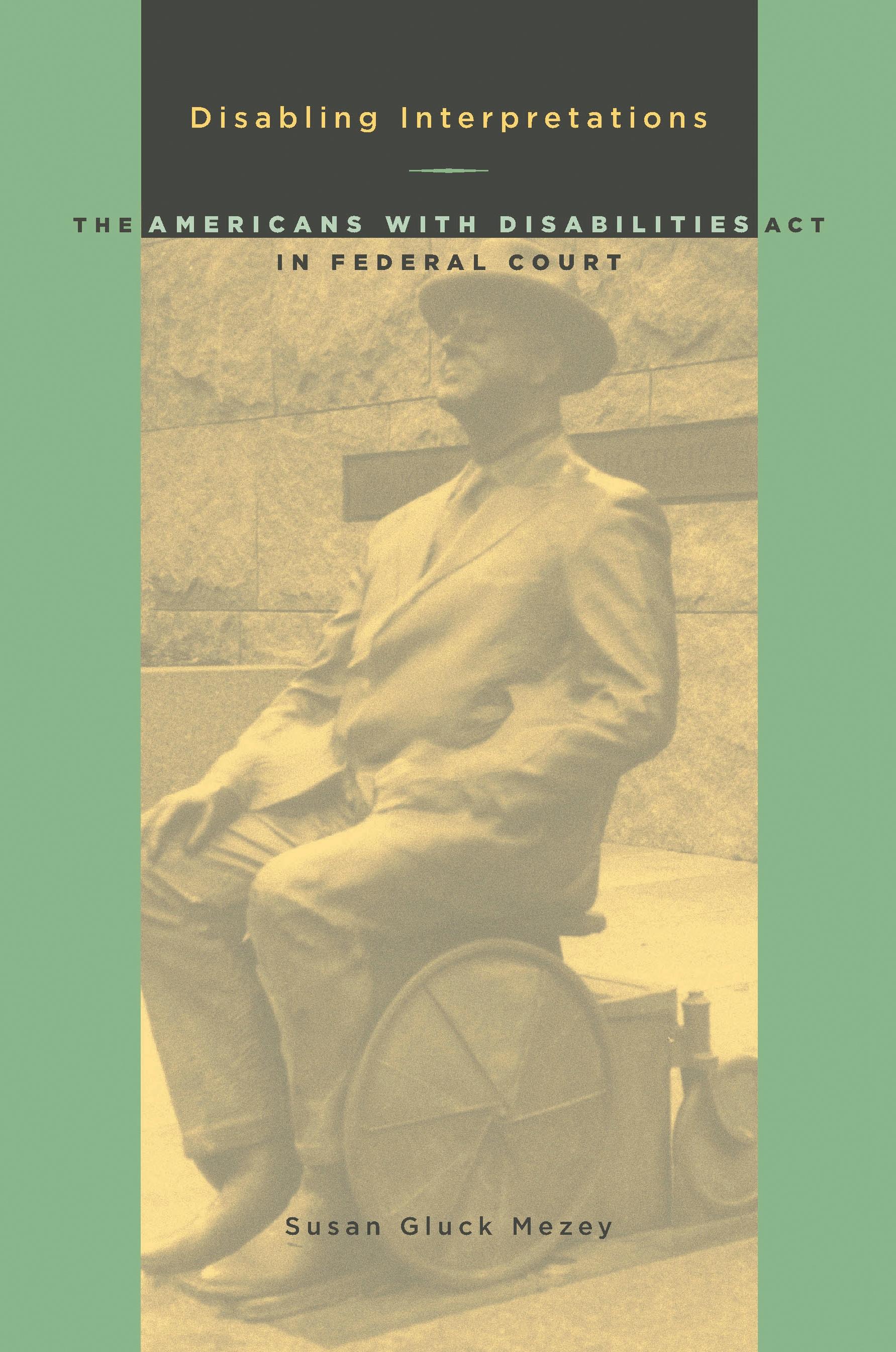
The Americans with Disabilities Act (ADA) of 1990 was intended to send a clear message to society that discrimination on the basis of disability is unacceptable. As with most civil rights laws, the courts were given primary responsibility for implementing disability rights policy.Mezey argues that the act has not fulfilled its potential primarily because of the judiciary's "disabling interpretations" in adjudicating ADA claims. In the decade of litigation following the enactment of the ADA, judicial interpretation of the law has largely constricted the parameters of disability rights and excluded large numbers of claimants from the reach of the law. The Supreme Court has not interpreted the act broadly, as was intended by Congress, and this method of decision making was for the most part mirrored by the courts below. The high court's rulings to expand state sovereign immunity and insulate states from liability in damage suits has also caused claimants to become enmeshed in litigation and has encouraged defendants to challenge other laws affecting disability rights. Despite the law's strong civil rights rhetoric, disability rights remain an imperfectly realized goal.
Kategori: Juridik
e-ISBN: 9780822972792
Betal nemt med kort, Klarna, Apple Pay eller Google Pay. Ikke tilfreds? Du har altid 14 dages fortrydelsesret. Læs mere i vores vilkår. Har du spørgsmål, så send os en mail på hello@memmo.org.
Memmo gør det nemmere at studere – uanset hvor du er i verden. Hos os samler du dine kursusbøger og smarte studieværktøjer ét sted: resuméer, quizzer, podcasts og flashcards. Og så er der Ted, din studieven, der svarer på alt, du undrer dig over. Over 50 000 studerende studerer allerede her – bygget til at hjælpe dig med at lære hurtigere og stresse mindre.
Du kan måske også lide
Køb bogen0