
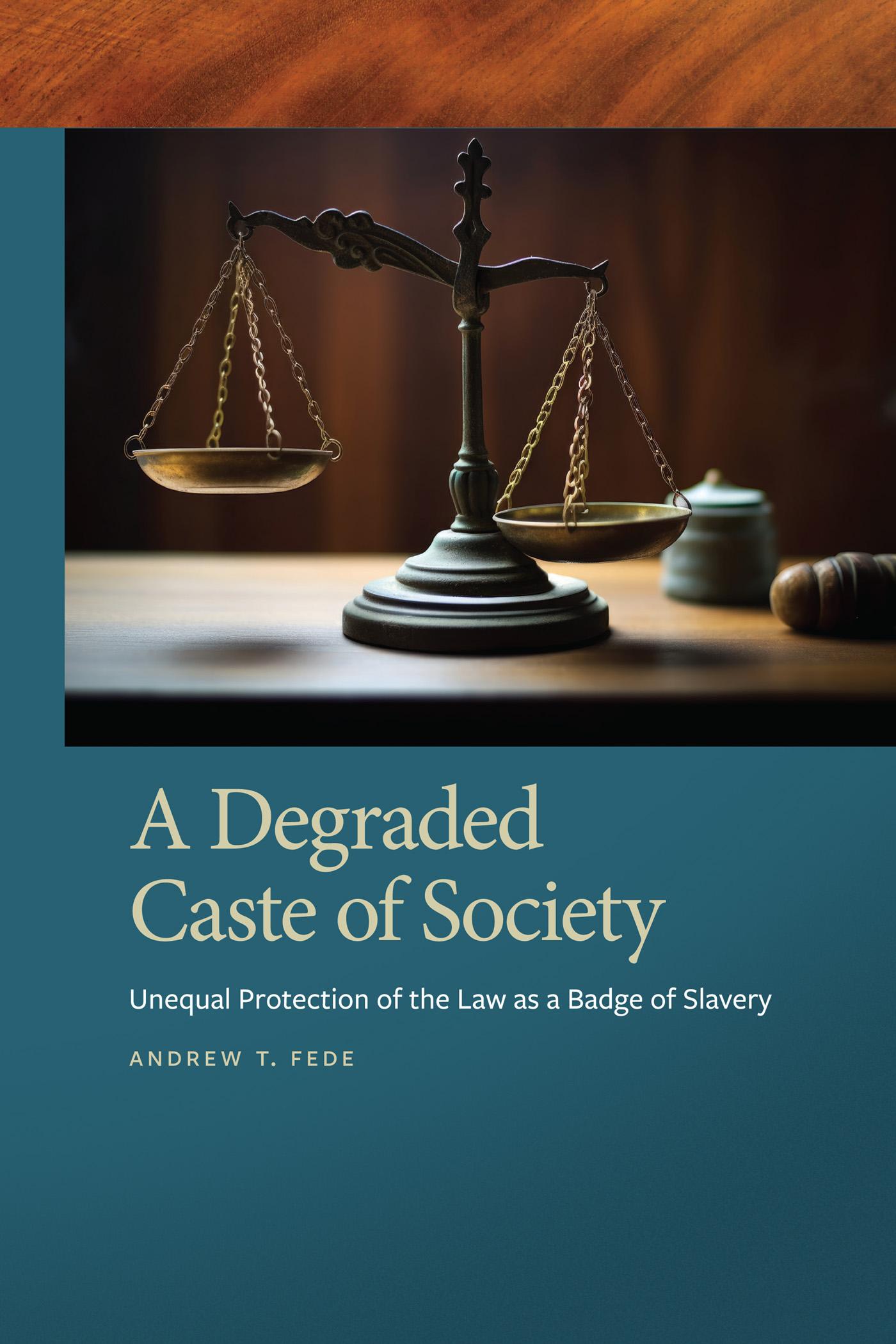
A Degraded Caste of Society traces the origins of twenty-first-century cases of interracial violence to the separate and unequal protection principles of the criminal law of enslavement in the southern United States. Andrew T. Fede explains how antebellum appellate court opinions and statutes, when read in a context that includes newspaper articles and trial court and census records, extended this doctrine to the South’s free Black people, consigning them to what South Carolina justice John Belton O’Neall called “a degraded caste of society,” in which they were “in no respect, on a perfect equality with the white man.”
This written law either criminalized Black insolence or privileged private white interracial violence, which became a badge of slavery that continued to influence the law in action, contrary to the Constitution’s mandate of equal protection of the criminal law. The U.S. Supreme Court enabled this denial of equal justice, as did Congress, which did not make all private white racially motivated violence a crime until 2009, when it adopted the Matthew Shepard and James Byrd Jr. Hate Crimes Prevention Act.
Fede’s analysis supports that law’s constitutionality under the Thirteenth Amendment, while suggesting why—during the Jim Crow era and beyond—equal protection of the criminal law was not always realized, and why the curse of interracial violence has been a lingering badge of slavery.
Betal nemt med kort, Klarna, Apple Pay eller Google Pay. Ikke tilfreds? Du har altid 14 dages fortrydelsesret. Læs mere i vores vilkår. Har du spørgsmål, så send os en mail på hello@memmo.org.
Memmo gør det nemmere at studere – uanset hvor du er i verden. Hos os samler du dine kursusbøger og smarte studieværktøjer ét sted: resuméer, quizzer, podcasts og flashcards. Og så er der Ted, din studieven, der svarer på alt, du undrer dig over. Over 50 000 studerende studerer allerede her – bygget til at hjælpe dig med at lære hurtigere og stresse mindre.