
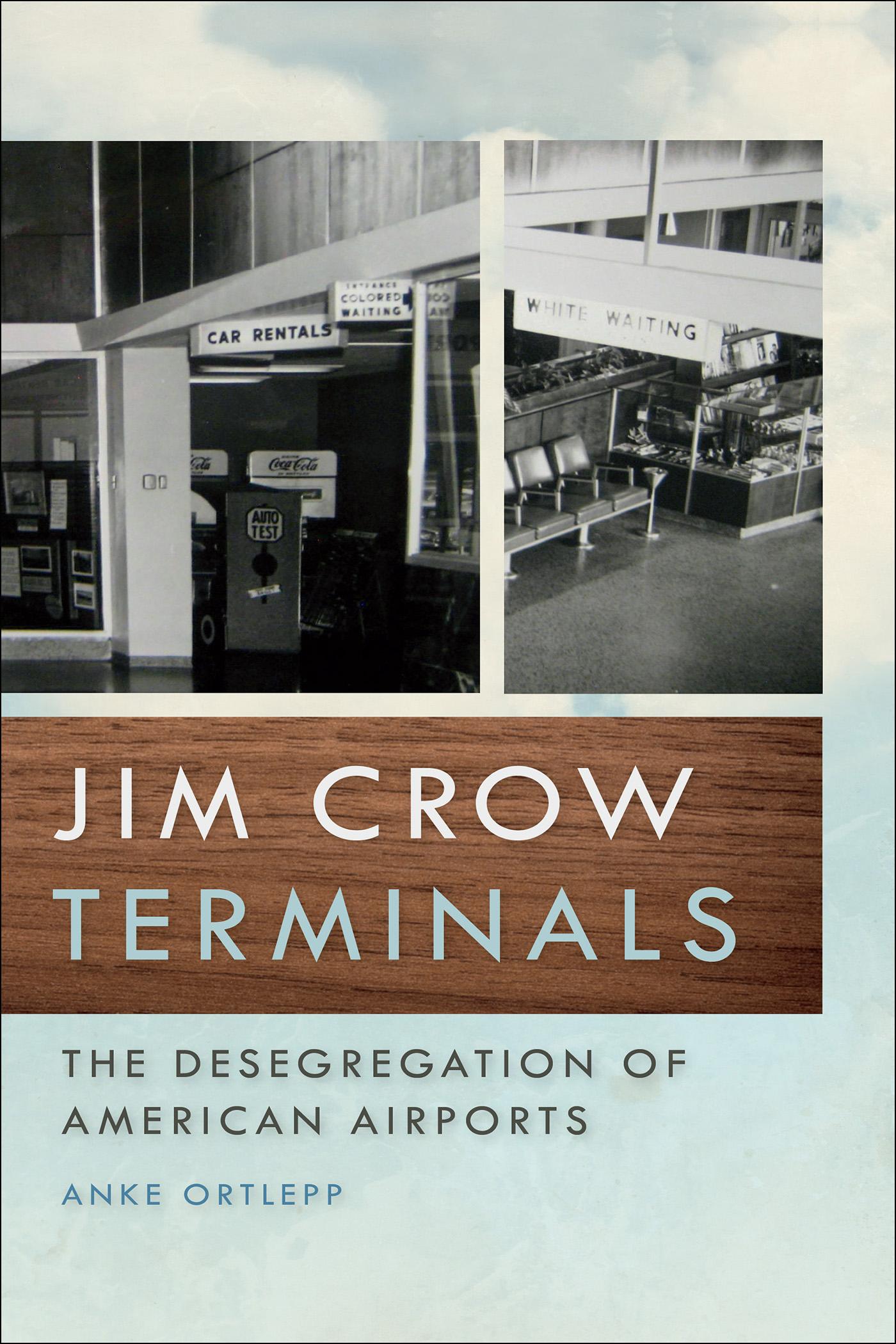
Historical accounts of racial discrimination in transportation have focused until now on trains, buses, and streetcars and their respective depots, terminals, stops, and other public accommodations. It is essential to add airplanes and airports to this narrative, says Anke Ortlepp. Air travel stands at the center of the twentieth century’s transportation revolution, and airports embodied the rapidly mobilizing, increasingly prosperous, and cosmopolitan character of the postwar United States. When segregationists inscribed local definitions of whiteness and blackness onto sites of interstate and even international transit, they not only brought the incongruities of racial separation into sharp relief but also obligated the federal government to intervene.
Ortlepp looks at African American passengers; civil rights organizations; the federal government and judiciary; and airport planners, architects, and managers as actors in shaping aviation’s legal, cultural, and built environments. She relates the struggles of black travelers—to enjoy the same freedoms on the airport grounds that they enjoyed in the aircraft cabin—in the context of larger shifts in the postwar social, economic, and political order. Jim Crow terminals, Ortlepp shows us, were both spatial expressions of sweeping change and sites of confrontation over the renegotiation of racial identities. Hence, this new study situates itself in the scholarly debate over the multifaceted entanglements of “race” and “space.”
Betal nemt med kort, Klarna, Apple Pay eller Google Pay. Ikke tilfreds? Du har altid 14 dages fortrydelsesret. Læs mere i vores vilkår. Har du spørgsmål, så send os en mail på hello@memmo.org.
Memmo gør det nemmere at studere – uanset hvor du er i verden. Hos os samler du dine kursusbøger og smarte studieværktøjer ét sted: resuméer, quizzer, podcasts og flashcards. Og så er der Ted, din studieven, der svarer på alt, du undrer dig over. Over 50 000 studerende studerer allerede her – bygget til at hjælpe dig med at lære hurtigere og stresse mindre.