
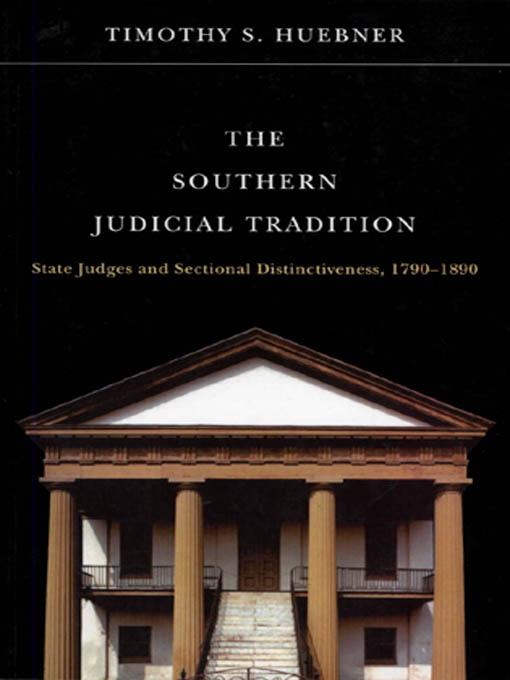
This first book to examine the lives and work of nineteenth-century southern judges explores the emergence of a southern judiciary and the effects of regional peculiarities and attitudes on legal development. Drawing on the judicial opinions and private correspondence of six chief justices whose careers span both the region and the century, Timothy S. Huebner analyzes their conceptions of their roles and the substance of their opinions related to cases involving homicide, economic development, federalism, and race. Examining judges both on and off the bench—as formulators of law and as citizens whose lives were intertwined with southern values—Huebner reveals the tensions that sometimes arose out of loyalties to sectional principles and national professional consciousness. He exposes the myth of southern leniency in appellate homicide decisions and also shows how the southern judiciary contributed to and reflected larger trends in American legal development. This book adds to our understanding of both southern distinctiveness and American legal culture.
Betal nemt med kort, Klarna, Apple Pay eller Google Pay. Ikke tilfreds? Du har altid 14 dages fortrydelsesret. Læs mere i vores vilkår. Har du spørgsmål, så send os en mail på hello@memmo.org.
Memmo gør det nemmere at studere – uanset hvor du er i verden. Hos os samler du dine kursusbøger og smarte studieværktøjer ét sted: resuméer, quizzer, podcasts og flashcards. Og så er der Ted, din studieven, der svarer på alt, du undrer dig over. Over 50 000 studerende studerer allerede her – bygget til at hjælpe dig med at lære hurtigere og stresse mindre.
Du kan måske også lide
Køb bogen0