
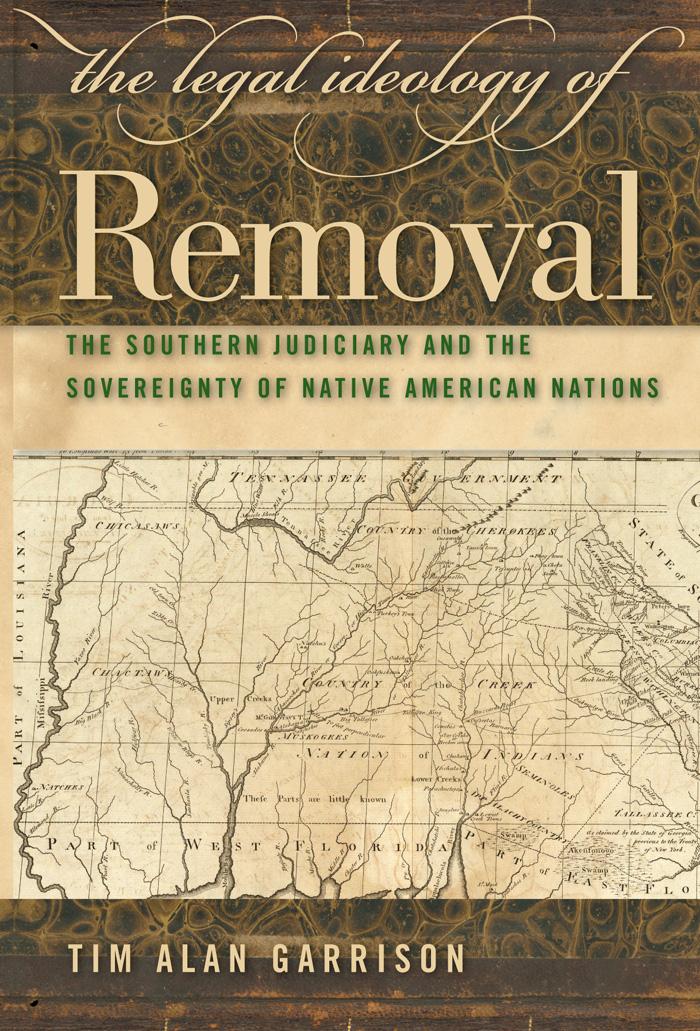
This study is the first to show how state courts enabled the mass expulsion of Native Americans from their southern homelands in the 1830s. Our understanding of that infamous period, argues Tim Alan Garrison, is too often molded around the towering personalities of the Indian removal debate, including President Andrew Jackson, Cherokee leader John Ross, and United States Supreme Court Justice John Marshall. This common view minimizes the impact on Indian sovereignty of some little-known legal cases at the state level.
Because the federal government upheld Native American self-dominion, southerners bent on expropriating Indian land sought a legal toehold through state supreme court decisions. As Garrison discusses Georgia v. Tassels (1830), Caldwell v. Alabama (1831), Tennessee v. Forman (1835), and other cases, he shows how proremoval partisans exploited regional sympathies. By casting removal as a states' rights, rather than a moral, issue, they won the wide support of a land-hungry southern populace. The disastrous consequences to Cherokees, Creeks, Choctaws, Chickasaws, and Seminoles are still unfolding.
Important in its own right, jurisprudence on Indian matters in the antebellum South also complements the legal corpus on slavery. Readers will gain a broader perspective on the racial views of the southern legal elite, and on the logical inconsistencies of southern law and politics in the conceptual period of the anti-Indian and proslavery ideologies.
Betal nemt med kort, Klarna, Apple Pay eller Google Pay. Ikke tilfreds? Du har altid 14 dages fortrydelsesret. Læs mere i vores vilkår. Har du spørgsmål, så send os en mail på hello@memmo.org.
Memmo gør det nemmere at studere – uanset hvor du er i verden. Hos os samler du dine kursusbøger og smarte studieværktøjer ét sted: resuméer, quizzer, podcasts og flashcards. Og så er der Ted, din studieven, der svarer på alt, du undrer dig over. Over 50 000 studerende studerer allerede her – bygget til at hjælpe dig med at lære hurtigere og stresse mindre.