
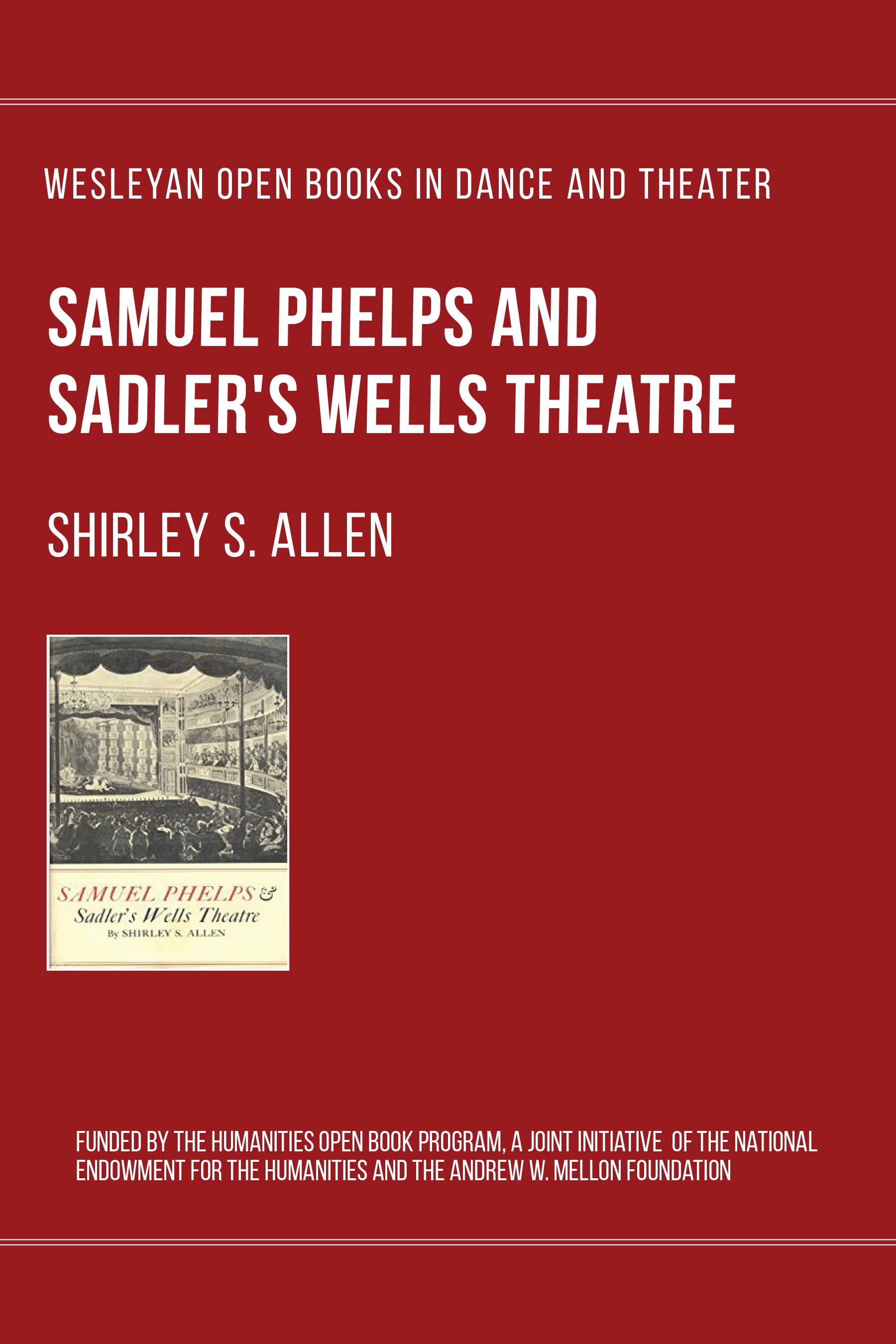
This is the definitive biography of the actor Samuel Phelps (1804-1878) who brought the Shakespeare’s original plays back to the forefront of theatre after over 100 years of derived versions, and revolutionized theater design in the 20th Century. In an era when performances of Shakespeare’s works had been replaced with derived versions of themselves, Phelps became known for his exquisite productions of Shakespeare that were faithful to their original versions. Phelps revolutionized Shakespearean theatre when he took over management of Sadler’s Wells Theatre. As manager and director, he brought to each production—whether of Shakespeare or of Restoration or contemporary pieces—his own total concept, in which acting, setting, and staging were integrated under his supervision to produce fresh, striking effects. He preserved the best of the traditional past; he pioneered in directions the theatre would follow for decades afterward.
This carefully researched and fluently written book covers the full range of Phelps’s half-century career, with special emphasis on his fruitful decades at Sadler’s Wells and on his work as performer and producer of Shakespearian drama. Scholar Shirley S. Allen presents the background against which Phelps worked: the theatrical monopoly, traditional techniques of acting, the repertory system, the advent of melodrama, and the social milieu. She also examines Phelps’s important contemporaries in the theatre—Macready, Charles Kean, Ben Webster, Mrs. Warner, and more—especially as their careers were intertwined with his. This book, first published in 1971, is widely considered the definitive work on Phelps and adds substantially to our understanding of the London stage and of Victorian England.
This carefully researched and fluently written book covers the full range of Phelps’s half-century career, with special emphasis on his fruitful decades at Sadler’s Wells and on his work as performer and producer of Shakespearian drama. Scholar Shirley S. Allen presents the background against which Phelps worked: the theatrical monopoly, traditional techniques of acting, the repertory system, the advent of melodrama, and the social milieu. She also examines Phelps’s important contemporaries in the theatre—Macready, Charles Kean, Ben Webster, Mrs. Warner, and more—especially as their careers were intertwined with his. This book, first published in 1971, is widely considered the definitive work on Phelps and adds substantially to our understanding of the London stage and of Victorian England.
Betal nemt med kort, Klarna, Apple Pay eller Google Pay. Ikke tilfreds? Du har altid 14 dages fortrydelsesret. Læs mere i vores vilkår. Har du spørgsmål, så send os en mail på hello@memmo.org.
Memmo gør det nemmere at studere – uanset hvor du er i verden. Hos os samler du dine kursusbøger og smarte studieværktøjer ét sted: resuméer, quizzer, podcasts og flashcards. Og så er der Ted, din studieven, der svarer på alt, du undrer dig over. Over 50 000 studerende studerer allerede her – bygget til at hjælpe dig med at lære hurtigere og stresse mindre.
Du kan måske også lide
Køb bogen0