
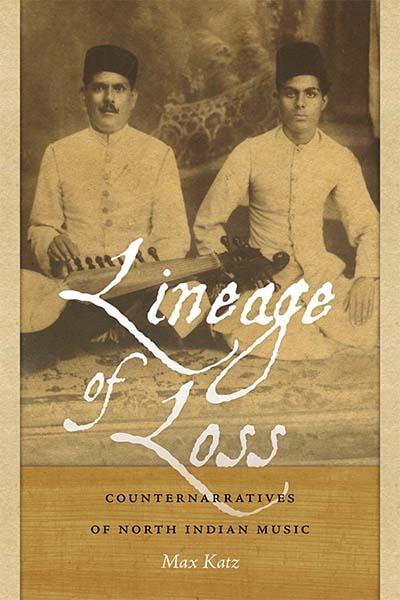
In the middle of the nineteenth century a new family of hereditary musicians emerged in the royal court of Lucknow and subsequently rose to the heights of renown throughout North India. Today this musical lineage, or ghar n, lives on in the music and memories of only a small handful of descendants and players of the family instrument, the sarod. Drawing on six years of ethnographic and archival research, and fifteen years of musical apprenticeship, Max Katz explores the oral history and written record of the Lucknow ghar n ,tracing its displacement, loss of prestige, and erasure from the collective memory. In doing so he illuminates a hidden history of ideological and social struggle in North Indian music culture, intervenes in ongoing debates over the anti-Muslim agenda of Hindustani music's reform movement, and reanimates a lost vision in which Muslim scholar-artists defined the music of the nation. An interdisciplinary, postmodern counter-history, Lineage of Loss offers a new and unsettling narrative of Hindustani music's encounter with modernity.
Betal nemt med kort, Klarna, Apple Pay eller Google Pay. Ikke tilfreds? Du har altid 14 dages fortrydelsesret. Læs mere i vores vilkår. Har du spørgsmål, så send os en mail på hello@memmo.org.
Memmo gør det nemmere at studere – uanset hvor du er i verden. Hos os samler du dine kursusbøger og smarte studieværktøjer ét sted: resuméer, quizzer, podcasts og flashcards. Og så er der Ted, din studieven, der svarer på alt, du undrer dig over. Over 50 000 studerende studerer allerede her – bygget til at hjælpe dig med at lære hurtigere og stresse mindre.