
"Writing in a clear and comprehensive writing style, [the authors] show how the U.S. political, social, and economic environments make disinformation believable to large numbers of people and difficult to stop or prevent." - Library Journal, Starred Review
"Everyone, whether they work in the public sector or are private citizens, will find this book invaluable.” - Booklist, Starred Review
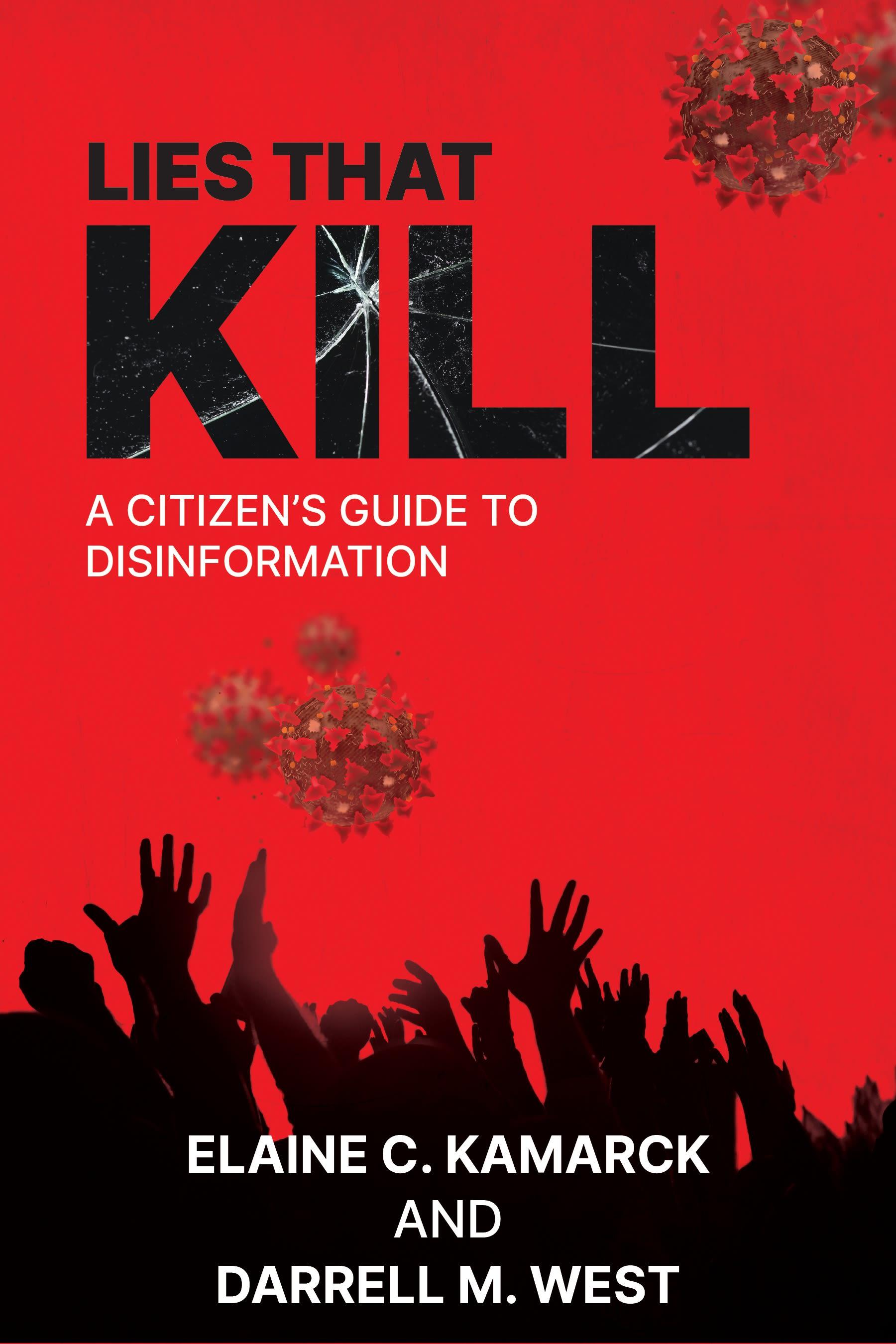
Disinformation made possible by rapid advances in cheap, digital technology, and promoted by organized networks, thrives in the toxic political environment that exists within the United States and around the world. In Lies that Kill, two noted experts take readers inside the world of disinformation campaigns to show concerned citizens how to recognize disinformation, understand it, and protect themselves and others. Using case studies of elections, climate change, public health, race, war, and governance, Elaine Kamarck and Darrell West demonstrate in plain language how our political, social, and economic environment makes disinformation believable to large numbers of people.
Karmarck and West argue that we are not doomed to live in an apocalyptic, post-truth world but instead can take actions that are consistent with long-held free speech values. Citizen education can go a long way towards making us more discerning consumers of online materials and we can reduce disinformation risks through digital literacy programs, regulation, legislation, and negotiation with other countries.
"Everyone, whether they work in the public sector or are private citizens, will find this book invaluable.” - Booklist, Starred Review
Disinformation made possible by rapid advances in cheap, digital technology, and promoted by organized networks, thrives in the toxic political environment that exists within the United States and around the world. In Lies that Kill, two noted experts take readers inside the world of disinformation campaigns to show concerned citizens how to recognize disinformation, understand it, and protect themselves and others. Using case studies of elections, climate change, public health, race, war, and governance, Elaine Kamarck and Darrell West demonstrate in plain language how our political, social, and economic environment makes disinformation believable to large numbers of people.
Karmarck and West argue that we are not doomed to live in an apocalyptic, post-truth world but instead can take actions that are consistent with long-held free speech values. Citizen education can go a long way towards making us more discerning consumers of online materials and we can reduce disinformation risks through digital literacy programs, regulation, legislation, and negotiation with other countries.
Betal nemt med kort, Klarna, Apple Pay eller Google Pay. Ikke tilfreds? Du har altid 14 dages fortrydelsesret. Læs mere i vores vilkår. Har du spørgsmål, så send os en mail på hello@memmo.org.
Memmo gør det nemmere at studere – uanset hvor du er i verden. Hos os samler du dine kursusbøger og smarte studieværktøjer ét sted: resuméer, quizzer, podcasts og flashcards. Og så er der Ted, din studieven, der svarer på alt, du undrer dig over. Over 50 000 studerende studerer allerede her – bygget til at hjælpe dig med at lære hurtigere og stresse mindre.