
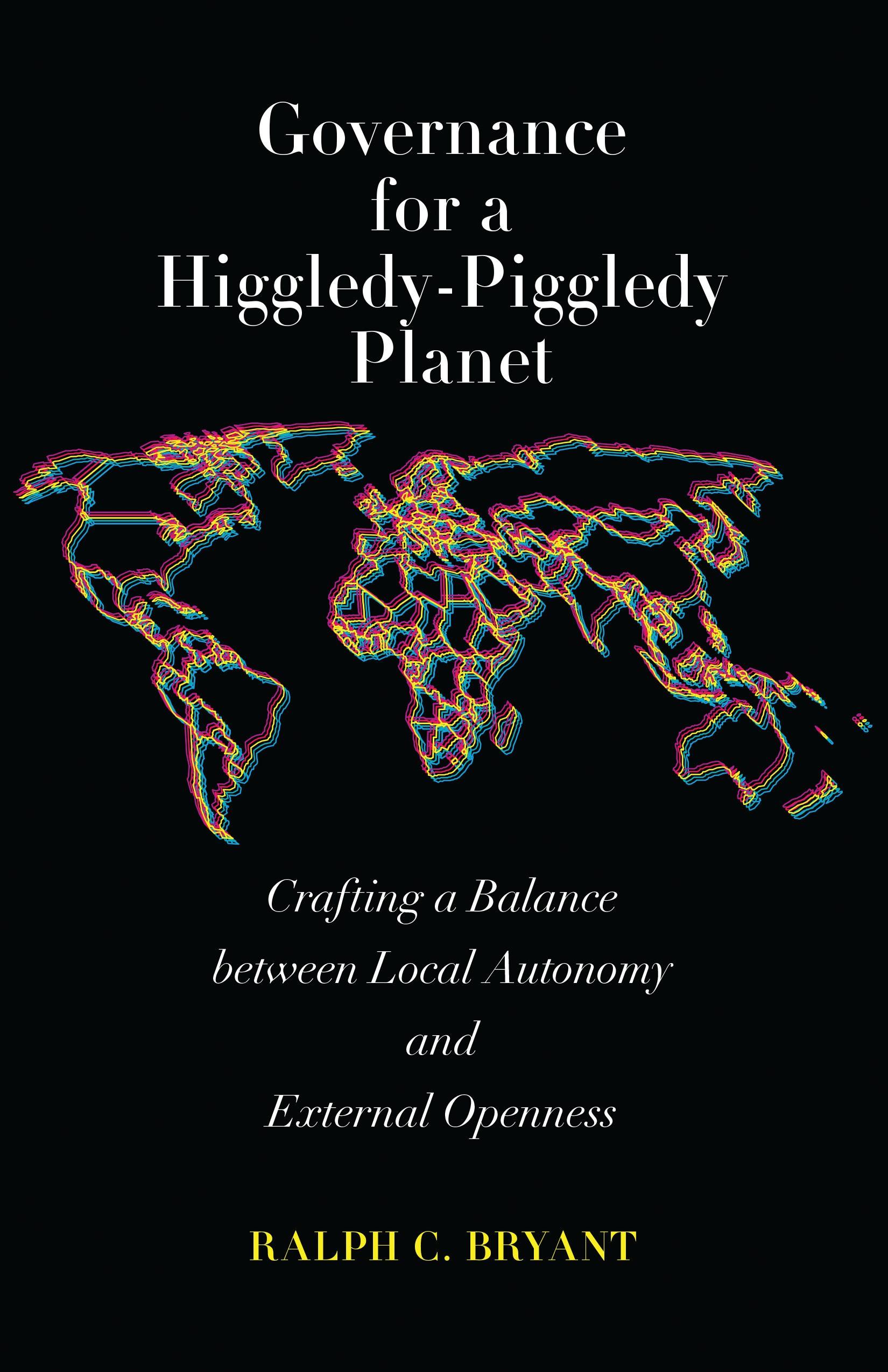
The world's governing structures are higgledy-piggledy: disorderly, heads and tails in any or every direction. Such disorder fosters deficient governance. Decisions by noncooperating nations can generate damaging crossborder outcomes. Muddles destabilize mutual well-being.
Public debate is often mired in superficial arguments about globalization. This insightful book by economist Ralph C. Bryant instead emphasizes that the world's nations need to craft better middle-ground compromises to improve governance and manage increasing integration. Individual nations, Bryant argues, should fashion a balance between local autonomy and external openness, avoiding the extremes of rigid localism and unfettered openness. And nations need to act together collectively. Cooperative governance can encourage orderliness that mitigates disarray undermining mutual goals.
The global challenge of the coronavirus pandemic is a vivid reminderthat international cooperation is becoming progressively more essential. Do nations and their leaders have sufficient foresight to use borders not as barriers but as catalysts for international cooperation? Could national migration policies find sustainable middle ground between the unrealistic extreme of unfettered freedom for people to cross borders and the inhumane exclusion of foreign refugees? Could augmented cross-border cooperation mitigate dangers from recurring financial instability? Could the world community foster collective actions to reduce the severe risks of global climate change? The answer to such questions can and should be yes. Wiser cross-border collective action nurtures a mutually supportive order offsetting the threats of disorder that may otherwise prevail. A healthy evolution of our planet requiresrequires!more orderly national governance and more ambitious cross-border cooperation.
Public debate is often mired in superficial arguments about globalization. This insightful book by economist Ralph C. Bryant instead emphasizes that the world's nations need to craft better middle-ground compromises to improve governance and manage increasing integration. Individual nations, Bryant argues, should fashion a balance between local autonomy and external openness, avoiding the extremes of rigid localism and unfettered openness. And nations need to act together collectively. Cooperative governance can encourage orderliness that mitigates disarray undermining mutual goals.
The global challenge of the coronavirus pandemic is a vivid reminderthat international cooperation is becoming progressively more essential. Do nations and their leaders have sufficient foresight to use borders not as barriers but as catalysts for international cooperation? Could national migration policies find sustainable middle ground between the unrealistic extreme of unfettered freedom for people to cross borders and the inhumane exclusion of foreign refugees? Could augmented cross-border cooperation mitigate dangers from recurring financial instability? Could the world community foster collective actions to reduce the severe risks of global climate change? The answer to such questions can and should be yes. Wiser cross-border collective action nurtures a mutually supportive order offsetting the threats of disorder that may otherwise prevail. A healthy evolution of our planet requiresrequires!more orderly national governance and more ambitious cross-border cooperation.
Sider: 178
Kategori: Statsvetenskap & Politik
e-ISBN: 9780815738725
Forsendelsesvægt: 1.2 kg
Sendes inden for: 1-2 dage
Betal nemt med kort, Klarna, Apple Pay eller Google Pay. Ikke tilfreds? Du har altid 14 dages fortrydelsesret. Læs mere i vores vilkår. Har du spørgsmål, så send os en mail på hello@memmo.org.
Memmo gør det nemmere at studere – uanset hvor du er i verden. Hos os samler du dine kursusbøger og smarte studieværktøjer ét sted: resuméer, quizzer, podcasts og flashcards. Og så er der Ted, din studieven, der svarer på alt, du undrer dig over. Over 50 000 studerende studerer allerede her – bygget til at hjælpe dig med at lære hurtigere og stresse mindre.