
Predatory lending: A problem rooted in the past that continues today.
Looking for an investment return that could exceed 500 percent annually; maybe even twice that much?
Private, unregulated lending to high-risk borrowers is the answer, or at least it was in the United States for much of the period from the Civil War to the onset of the early decades of the twentieth century. Newspapers called the practice loan sharking” because lenders employed the same ruthlessness as the great predators in the ocean. Slowly state and federal governments adopted laws and regulations curtailing the practice, but organized crime continued to operate much of the business. In the end, lending to high-margin investors contributed directly to the Wall Street crash of 1929.
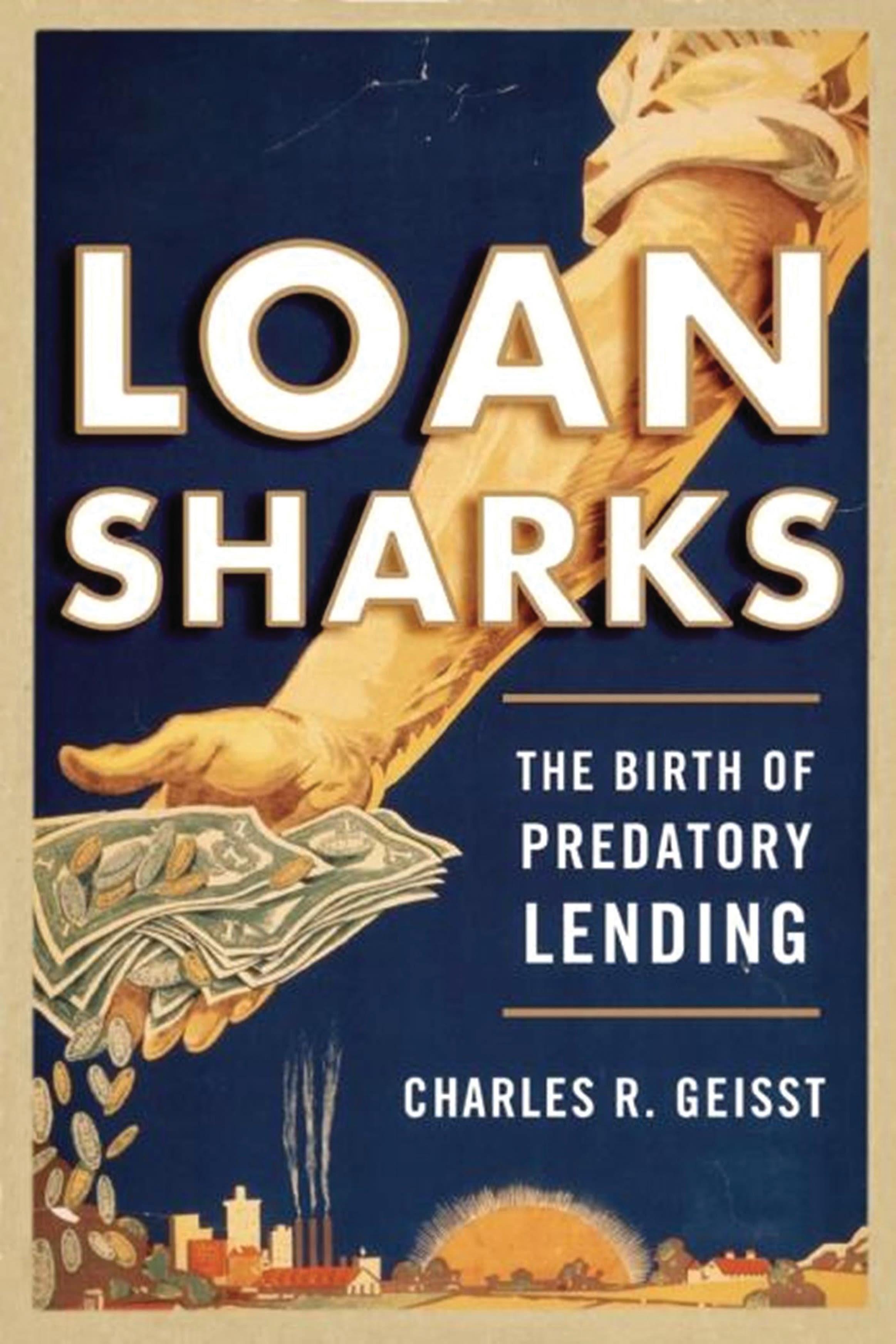
Loan Sharks is the first history of predatory lending in the United States. It traces the origins of modern consumer lending to such older practices as salary buying and hidden interest charges. Yet, as Geisst shows, no-holds barred loan sharking is not a thing of the past. Many current lending practices employed today by credit card companies, payday lenders, and providers of consumer loans would have been easily recognizable at the end of the nineteenth century. Geisst demonstrates the still prevalent custom of lenders charging high interest rates, especially to risky borrowers, despite attempts to control the practice by individual states. Usury and loan sharking have not disappeared a century and a half after the predatory practices first raised public concern.
Looking for an investment return that could exceed 500 percent annually; maybe even twice that much?
Private, unregulated lending to high-risk borrowers is the answer, or at least it was in the United States for much of the period from the Civil War to the onset of the early decades of the twentieth century. Newspapers called the practice loan sharking” because lenders employed the same ruthlessness as the great predators in the ocean. Slowly state and federal governments adopted laws and regulations curtailing the practice, but organized crime continued to operate much of the business. In the end, lending to high-margin investors contributed directly to the Wall Street crash of 1929.
Loan Sharks is the first history of predatory lending in the United States. It traces the origins of modern consumer lending to such older practices as salary buying and hidden interest charges. Yet, as Geisst shows, no-holds barred loan sharking is not a thing of the past. Many current lending practices employed today by credit card companies, payday lenders, and providers of consumer loans would have been easily recognizable at the end of the nineteenth century. Geisst demonstrates the still prevalent custom of lenders charging high interest rates, especially to risky borrowers, despite attempts to control the practice by individual states. Usury and loan sharking have not disappeared a century and a half after the predatory practices first raised public concern.
Betal nemt med kort, Klarna, Apple Pay eller Google Pay. Ikke tilfreds? Du har altid 14 dages fortrydelsesret. Læs mere i vores vilkår. Har du spørgsmål, så send os en mail på hello@memmo.org.
Memmo gør det nemmere at studere – uanset hvor du er i verden. Hos os samler du dine kursusbøger og smarte studieværktøjer ét sted: resuméer, quizzer, podcasts og flashcards. Og så er der Ted, din studieven, der svarer på alt, du undrer dig over. Over 50 000 studerende studerer allerede her – bygget til at hjælpe dig med at lære hurtigere og stresse mindre.