
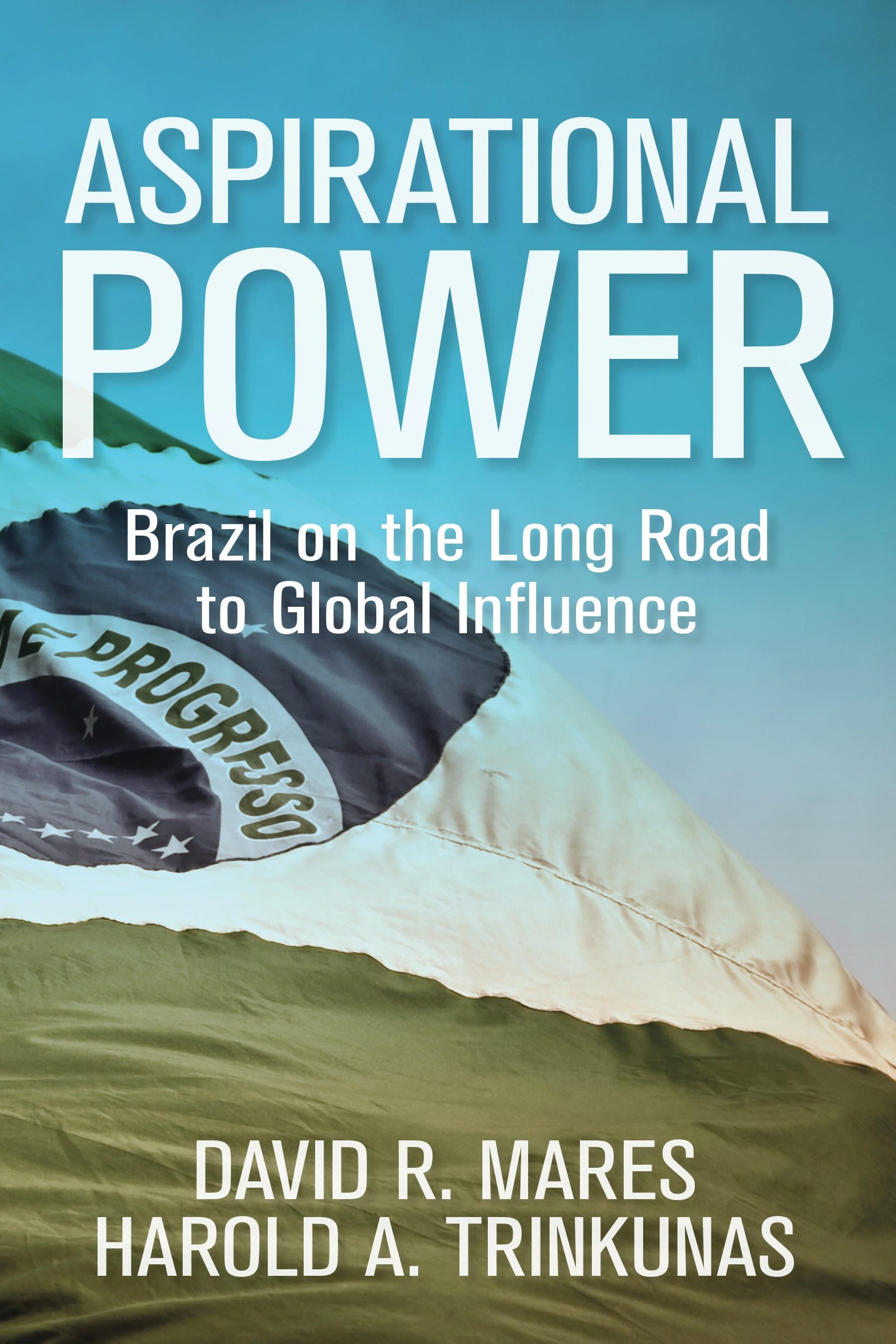
As the largest country in South America by land mass and population, Brazil has been marked since its’ independence by a belief that it has a potential to be more than merely a very large country. Set apart from the rest of the hemisphere by culture, language and history, Brazil has also been viewed by its neighbors as a potential great power, and at times, a threat. But even though domestic aspirations and foreign perceptions have held out the prospect for Brazil becoming a major power, the country has lacked the capabilities particularly on the military and economic dimensions to pursue a traditional path to greatness.
Aspirational Power examines Brazil as a rising power. It explains Brazil’s predilection for soft power through a historical analysis of Brazil’s three previous attempts to achieve major power status, each of which shaped its present strategy. Though Brazil’s efforts to rise have fallen short it will continue to try to overcome the obstacles to its rise, whether those obstacles are domestic or international.
Aspirational Power examines Brazil as a rising power. It explains Brazil’s predilection for soft power through a historical analysis of Brazil’s three previous attempts to achieve major power status, each of which shaped its present strategy. Though Brazil’s efforts to rise have fallen short it will continue to try to overcome the obstacles to its rise, whether those obstacles are domestic or international.
Betal nemt med kort, Klarna, Apple Pay eller Google Pay. Ikke tilfreds? Du har altid 14 dages fortrydelsesret. Læs mere i vores vilkår. Har du spørgsmål, så send os en mail på hello@memmo.org.
Memmo gør det nemmere at studere – uanset hvor du er i verden. Hos os samler du dine kursusbøger og smarte studieværktøjer ét sted: resuméer, quizzer, podcasts og flashcards. Og så er der Ted, din studieven, der svarer på alt, du undrer dig over. Over 50 000 studerende studerer allerede her – bygget til at hjælpe dig med at lære hurtigere og stresse mindre.