
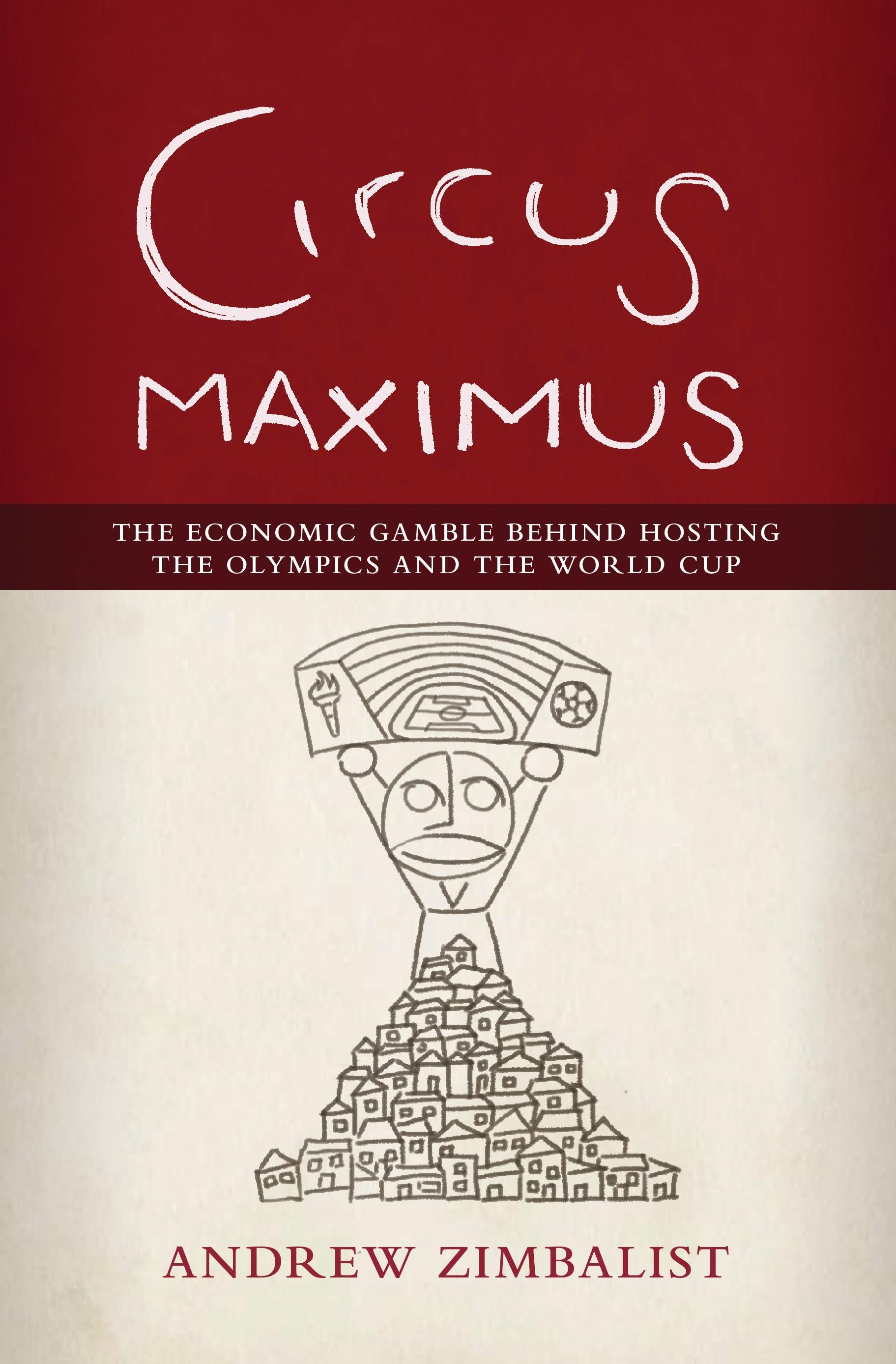
Athletes compete for national honor in Olympic and World Cup games. But the road to these mega events is paved by big business. We all know who the winners on the field arebut who wins off the field?
The numbers are staggering: China spent $40 billion to host the 2008 Summer Olympic Games in Beijing and Russia spent $50 billion for the 2014 Sochi Winter Games. Brazil's total expenditures are thought to have been as much as $20 billion for the World Cup this summer and Qatar, which will be the site of the 2022 World Cup, is estimating that it will spend $200 billion.
How did we get here? And is it worth it? Those are among the questions noted sports economist Andrew Zimbalist answers in Circus Maximus: The Economic Gamble Behind Hosting the Olympics and the World Cup. Both the Olympics and the World Cup are touted as major economic boons for the countries that host them, and the competition is fierce to win hosting rights. Developing countries especially see the events as a chance to stand in the world's spotlight.
Circus Maximus traces the path of the Olympic Games and the World Cup from noble sporting events to exhibits of excess. It exposes the hollowness of the claims made by their private industry boosters and government supporters, all illustrated through a series of case studies ripping open the experiences of Barcelona, Sochi, Rio, and London. Zimbalist finds no net economic gains for the countries that have played host to the Olympics or the World Cup. While the wealthy may profit, those in the middle and lower income brackets do not, and Zimbalist predicts more outbursts of political anger like that seen in Brazil surrounding the 2014 World Cup.
The numbers are staggering: China spent $40 billion to host the 2008 Summer Olympic Games in Beijing and Russia spent $50 billion for the 2014 Sochi Winter Games. Brazil's total expenditures are thought to have been as much as $20 billion for the World Cup this summer and Qatar, which will be the site of the 2022 World Cup, is estimating that it will spend $200 billion.
How did we get here? And is it worth it? Those are among the questions noted sports economist Andrew Zimbalist answers in Circus Maximus: The Economic Gamble Behind Hosting the Olympics and the World Cup. Both the Olympics and the World Cup are touted as major economic boons for the countries that host them, and the competition is fierce to win hosting rights. Developing countries especially see the events as a chance to stand in the world's spotlight.
Circus Maximus traces the path of the Olympic Games and the World Cup from noble sporting events to exhibits of excess. It exposes the hollowness of the claims made by their private industry boosters and government supporters, all illustrated through a series of case studies ripping open the experiences of Barcelona, Sochi, Rio, and London. Zimbalist finds no net economic gains for the countries that have played host to the Olympics or the World Cup. While the wealthy may profit, those in the middle and lower income brackets do not, and Zimbalist predicts more outbursts of political anger like that seen in Brazil surrounding the 2014 World Cup.
Sider: 174
Kategori: Ekonomi & Utveckling
e-ISBN: 9780815726524
Forsendelsesvægt: 1.2 kg
Sendes inden for: 1-2 dage
Betal nemt med kort, Klarna, Apple Pay eller Google Pay. Ikke tilfreds? Du har altid 14 dages fortrydelsesret. Læs mere i vores vilkår. Har du spørgsmål, så send os en mail på hello@memmo.org.
Memmo gør det nemmere at studere – uanset hvor du er i verden. Hos os samler du dine kursusbøger og smarte studieværktøjer ét sted: resuméer, quizzer, podcasts og flashcards. Og så er der Ted, din studieven, der svarer på alt, du undrer dig over. Over 50 000 studerende studerer allerede her – bygget til at hjælpe dig med at lære hurtigere og stresse mindre.