
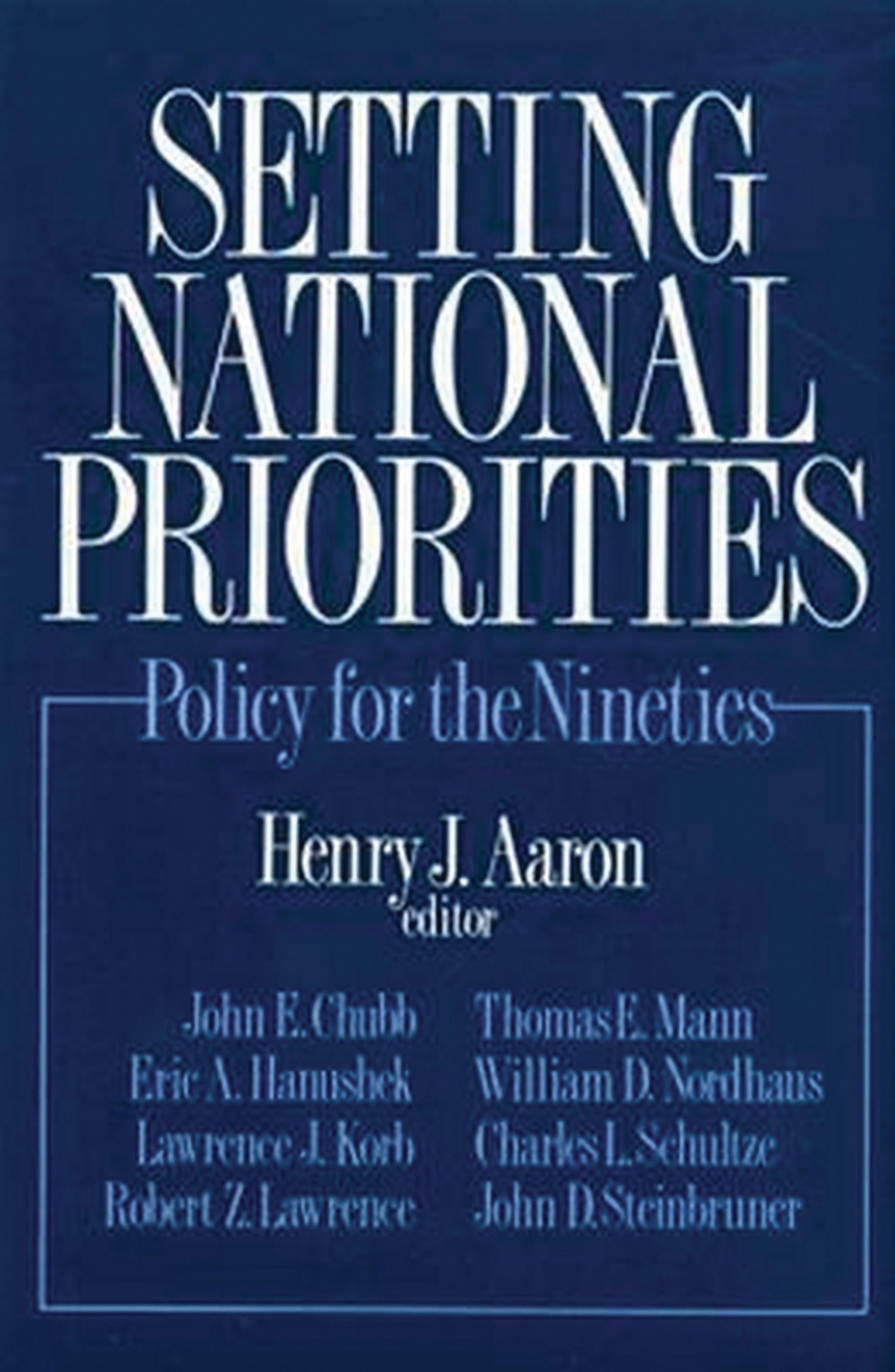
Setting National Priorities continues the highly acclaimed and influential series of books that examine domestic and foreign policy choices confronting the United States. Members of the Brookings staff join outside experts to evaluate America's course through the next decade.
In clear and nontechnical terms the contributors explain and evaluate options for the United States in the 1990s, consider whether the federal government's current pollicies are consistent with long-term objectives, and explain what action could best achieve those goals.
Charles L. Schultze shows why it is important to solve the problem of the federal budget deficit and how it can be done: John D. Steinbruner addresses the revolution taking place in American foreign policy and explains how the United States can be more secure with lower defense spending; Lawrence J. Korb evaluates President Bush's defense budget and suggests possible improvements; Robert Z. Lawrence describes how the U.S. government and private industry should respond to the competitive challenge from foreign companies; William D. Nordhaus explains the risks form global warming and presents a policy to meet them; John E. Chubb and Eric A. Hanshek chart new directions of American elementary and secondary education; Henry J. Aaron identifies the major problems with the financing of healthcare and describes how they can be solved; and Thomas E. Mann considers how political institutions and public preferences constrain our ability to enact needed policy changes and what might be done to overcome those obstacles.
In clear and nontechnical terms the contributors explain and evaluate options for the United States in the 1990s, consider whether the federal government's current pollicies are consistent with long-term objectives, and explain what action could best achieve those goals.
Charles L. Schultze shows why it is important to solve the problem of the federal budget deficit and how it can be done: John D. Steinbruner addresses the revolution taking place in American foreign policy and explains how the United States can be more secure with lower defense spending; Lawrence J. Korb evaluates President Bush's defense budget and suggests possible improvements; Robert Z. Lawrence describes how the U.S. government and private industry should respond to the competitive challenge from foreign companies; William D. Nordhaus explains the risks form global warming and presents a policy to meet them; John E. Chubb and Eric A. Hanshek chart new directions of American elementary and secondary education; Henry J. Aaron identifies the major problems with the financing of healthcare and describes how they can be solved; and Thomas E. Mann considers how political institutions and public preferences constrain our ability to enact needed policy changes and what might be done to overcome those obstacles.
Sider: 333
Kategori: Statsvetenskap & Politik
e-ISBN: 9780815719441
Forsendelsesvægt: 1.2 kg
Sendes inden for: 1-2 dage
Betal nemt med kort, Klarna, Apple Pay eller Google Pay. Ikke tilfreds? Du har altid 14 dages fortrydelsesret. Læs mere i vores vilkår. Har du spørgsmål, så send os en mail på hello@memmo.org.
Memmo gør det nemmere at studere – uanset hvor du er i verden. Hos os samler du dine kursusbøger og smarte studieværktøjer ét sted: resuméer, quizzer, podcasts og flashcards. Og så er der Ted, din studieven, der svarer på alt, du undrer dig over. Over 50 000 studerende studerer allerede her – bygget til at hjælpe dig med at lære hurtigere og stresse mindre.