
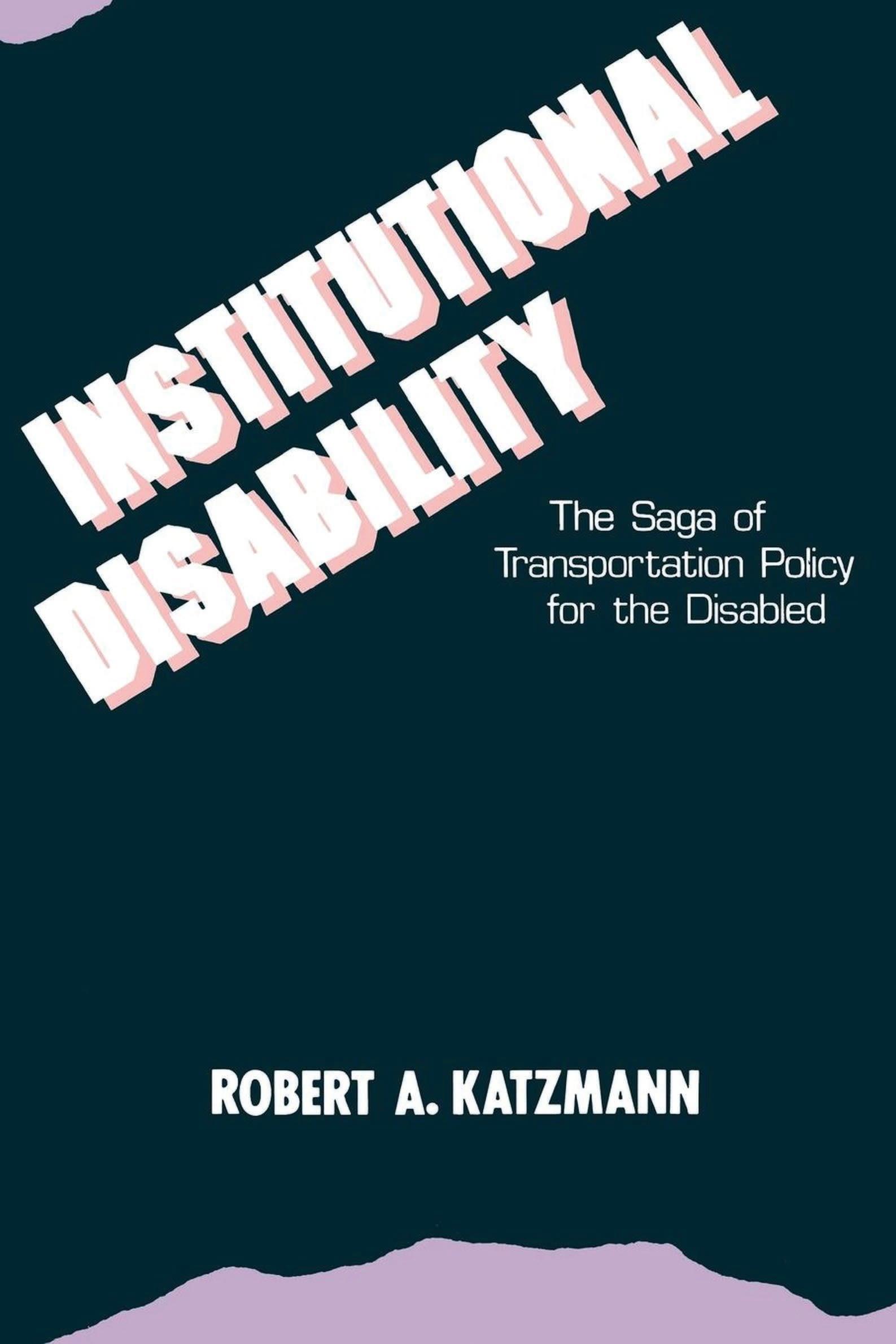
This case study of transportation policy for disabled people illustrates the flaws in policymaking that lead many Americans to believe government is not working as it should. Robert A. Katzmann examines the workings of the legislative, administrative, and judicial processes, both separately and in interaction, as he relates the erratic path of transportation policy for the disabled over two decades. An estimated 13.4 million people in this country have difficulty using public transportation, but the federal response to their problems of mobility is of fairly recent vintage, beginning with legislation in the early 1970s. Since then, there have been many twists and turns in policy, involving a wide array of governmental institutions. These constant shifts have confused state and local governments, the transit industry, and the disabled community. Assessing why policy was so erratic, Katzmann concludes that in part the confusion resulted from the inability to choose between conflicting approaches to the problem--one oriented toward the rights of equal access for the disabled, and the other favoring effective mobility by any practical means. In addition, the conflict between these two policy approaches was compounded by increasing fragmentation within and among national institutions.
Sider: 211
Kategori: Statsvetenskap & Politik
e-ISBN: 9780815716280
Forsendelsesvægt: 1.2 kg
Sendes inden for: 1-2 dage
Betal nemt med kort, Klarna, Apple Pay eller Google Pay. Ikke tilfreds? Du har altid 14 dages fortrydelsesret. Læs mere i vores vilkår. Har du spørgsmål, så send os en mail på hello@memmo.org.
Memmo gør det nemmere at studere – uanset hvor du er i verden. Hos os samler du dine kursusbøger og smarte studieværktøjer ét sted: resuméer, quizzer, podcasts og flashcards. Og så er der Ted, din studieven, der svarer på alt, du undrer dig over. Over 50 000 studerende studerer allerede her – bygget til at hjælpe dig med at lære hurtigere og stresse mindre.