
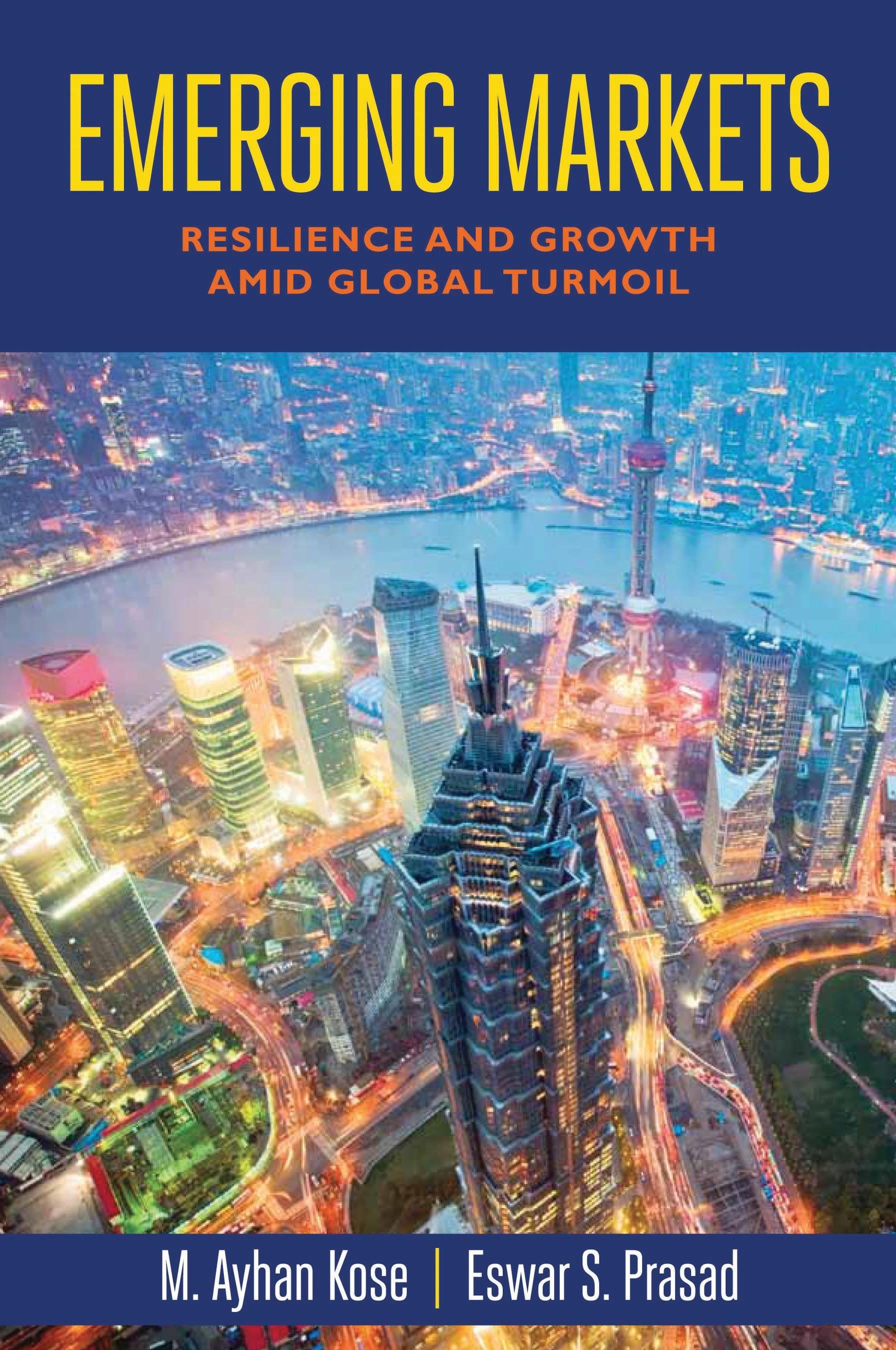
Emerging market economies (EMEs) have become the darlings of international investors and the focus of enormous attention in academic, media, and policy circles. M. Ayhan Kose and Eswar Prasad present the definitive account of the evolution of EMEs and use the lens of the global financial crisis to evaluate their strengths and weaknesses.
Led by a set of large and dynamic countriesincluding Brazil, China, India, and RussiaEMEs have become a dominant presence in the world economy. They now account for a substantial share of world output and have been a major driver of global growth during the past decade. They are significant players in international trade and financial flows and are beginning to exert rising clout in global policy debates. However, the financial crisis of 200709 and the worldwide recession that followed cast a pall over the notion that EMEs had become self-reliant and ""decoupled"" from demand conditions in and financial flows from advanced countries.
Kose and Prasad, prominent experts on emerging market economies and globalization, draw on their extensive research to assess the resilience of EMEs in the face of the global financial crisis. Their analysis shows that EMEs, as a group, weathered the crisis much better than the advanced countries, and most of these economies have bounced back rapidly from the global recession. The authors track down the reasons for this resilience and explain why some countries in this group have done better than others. Based on this analysis, they draw lessons for the durability and sustainability of these economies' long-term growth. This book is important reading for anyone trying to anticipate the future growth of emerging markets or contemplating business opportunities in these economies.
Led by a set of large and dynamic countriesincluding Brazil, China, India, and RussiaEMEs have become a dominant presence in the world economy. They now account for a substantial share of world output and have been a major driver of global growth during the past decade. They are significant players in international trade and financial flows and are beginning to exert rising clout in global policy debates. However, the financial crisis of 200709 and the worldwide recession that followed cast a pall over the notion that EMEs had become self-reliant and ""decoupled"" from demand conditions in and financial flows from advanced countries.
Kose and Prasad, prominent experts on emerging market economies and globalization, draw on their extensive research to assess the resilience of EMEs in the face of the global financial crisis. Their analysis shows that EMEs, as a group, weathered the crisis much better than the advanced countries, and most of these economies have bounced back rapidly from the global recession. The authors track down the reasons for this resilience and explain why some countries in this group have done better than others. Based on this analysis, they draw lessons for the durability and sustainability of these economies' long-term growth. This book is important reading for anyone trying to anticipate the future growth of emerging markets or contemplating business opportunities in these economies.
Betal nemt med kort, Klarna, Apple Pay eller Google Pay. Ikke tilfreds? Du har altid 14 dages fortrydelsesret. Læs mere i vores vilkår. Har du spørgsmål, så send os en mail på hello@memmo.org.
Memmo gør det nemmere at studere – uanset hvor du er i verden. Hos os samler du dine kursusbøger og smarte studieværktøjer ét sted: resuméer, quizzer, podcasts og flashcards. Og så er der Ted, din studieven, der svarer på alt, du undrer dig over. Over 50 000 studerende studerer allerede her – bygget til at hjælpe dig med at lære hurtigere og stresse mindre.