
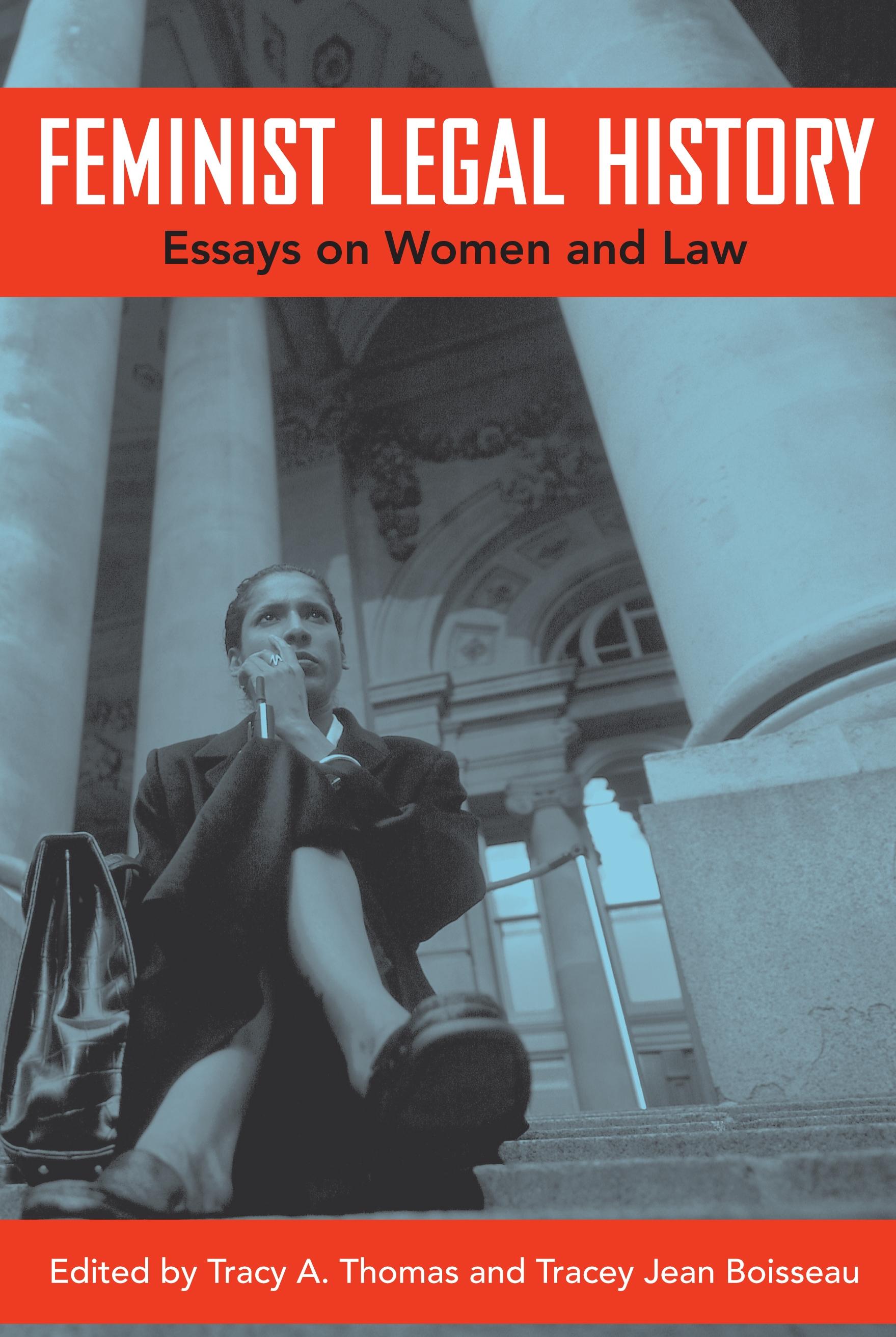
Attuned to the social contexts within which laws are created, feminist lawyers, historians, and activists have long recognized the discontinuities and contradictions that lie at the heart of efforts to transform the law in ways that fully serve women’s interests. At its core, the nascent field of feminist legal history is driven by a commitment to uncover women’s legal agency and how women, both historically and currently, use law to obtain individual and societal empowerment.
Feminist Legal History represents feminist legal historians’ efforts to define their field, by showcasing historical research and analysis that demonstrates how women were denied legal rights, how women used the law proactively to gain rights, and how, empowered by law, women worked to alter the law to try to change gendered realities. Encompassing two centuries of American history, thirteen original essays expose the many ways in which legal decisions have hinged upon ideas about women or gender as well as the ways women themselves have intervened in the law, from Elizabeth Cady Stanton’s notion of a legal class of gender to the deeply embedded inequities involved in Ledbetter v. Goodyear, a 2007 Supreme Court pay discrimination case.
Contributors: Carrie N. Baker, Felice Batlan, Tracey Jean Boisseau, Eileen Boris, Richard H. Chused, Lynda Dodd, Jill Hasday, Gwen Hoerr Jordan, Maya Manian, Melissa Murray, Mae C. Quinn, Margo Schlanger, Reva Siegel, Tracy A. Thomas, and Leti Volpp
Betal nemt med kort, Klarna, Apple Pay eller Google Pay. Ikke tilfreds? Du har altid 14 dages fortrydelsesret. Læs mere i vores vilkår. Har du spørgsmål, så send os en mail på hello@memmo.org.
Memmo gør det nemmere at studere – uanset hvor du er i verden. Hos os samler du dine kursusbøger og smarte studieværktøjer ét sted: resuméer, quizzer, podcasts og flashcards. Og så er der Ted, din studieven, der svarer på alt, du undrer dig over. Over 50 000 studerende studerer allerede her – bygget til at hjælpe dig med at lære hurtigere og stresse mindre.