
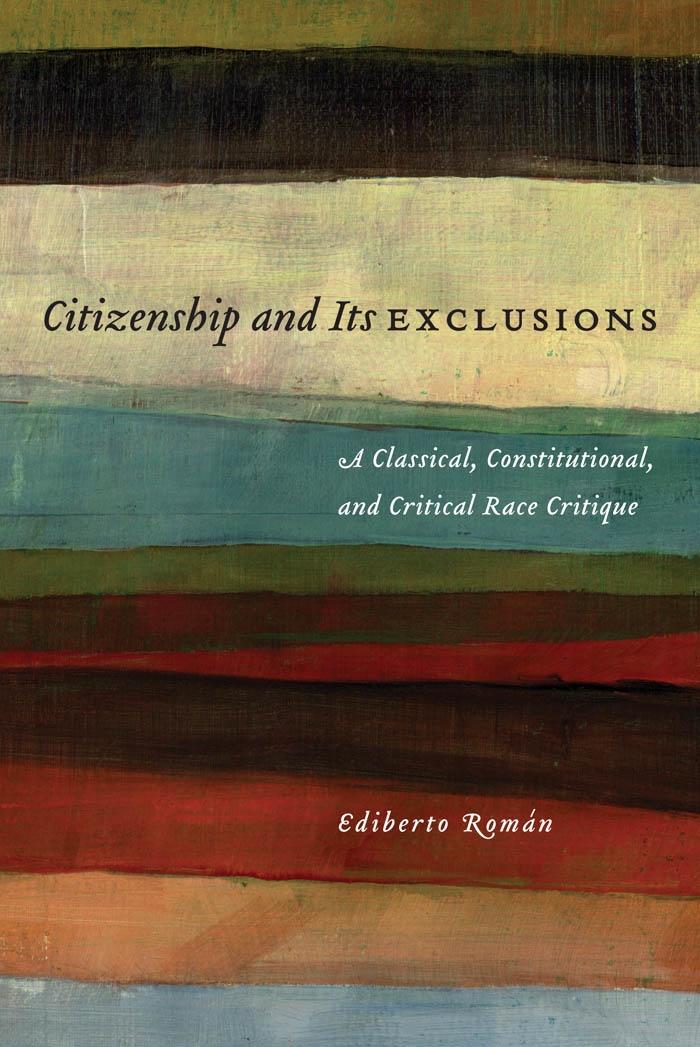
Citizenship is generally viewed as the most desired legal status an individual can attain, invoking the belief that citizens hold full inclusion in a society, and can exercise and be protected by the Constitution. Yet this membership has historically been exclusive and illusive for many, and in Citizenship and Its Exclusions, Ediberto Román offers a sweeping, interdisciplinary analysis of citizenship’s contradictions.
Román offers an exploration of citizenship that spans from antiquity to the present, and crosses disciplines from history to political philosophy to law, including constitutional and critical race theories. Beginning with Greek and Roman writings on citizenship, he moves on to late-medieval and Renaissance Europe, then early Modern Western law, and culminates his analysis with an explanation of how past precedents have influenced U.S. law and policy regulating the citizenship status of indigenous and territorial island people, as well as how different levels of membership have created a de facto subordinate citizenship status for many members of American society, often lumped together as the “underclass.”
Betal nemt med kort, Klarna, Apple Pay eller Google Pay. Ikke tilfreds? Du har altid 14 dages fortrydelsesret. Læs mere i vores vilkår. Har du spørgsmål, så send os en mail på hello@memmo.org.
Memmo gør det nemmere at studere – uanset hvor du er i verden. Hos os samler du dine kursusbøger og smarte studieværktøjer ét sted: resuméer, quizzer, podcasts og flashcards. Og så er der Ted, din studieven, der svarer på alt, du undrer dig over. Over 50 000 studerende studerer allerede her – bygget til at hjælpe dig med at lære hurtigere og stresse mindre.