
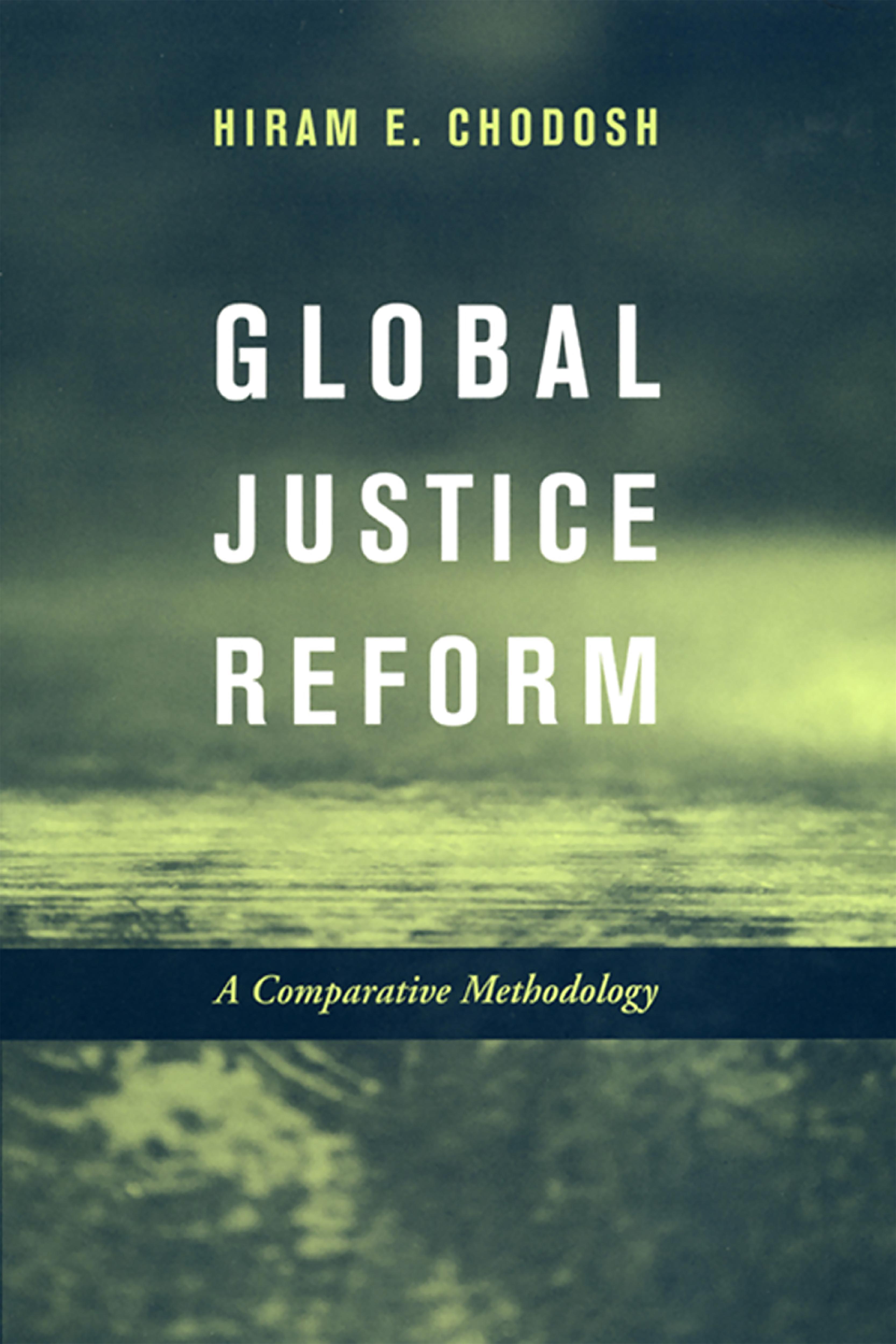
Global Justice Reform critiques and rethinks two neglected subjects: the nature of comparison in the field of comparative law and the struggles of national judicial systems to meet global rule of law objectives. Hiram Chodosh offers a candid look at the surprisingly underdeveloped methodology of comparative legal studies, and provides a creative conceptual framework for defining and understanding the whys, whats, and hows of comparison. Additionally, Chodosh demonstrates how theories of comparative law translate into practice, using contemporary global justice reform initiatives as a case study, with a particular focus on Indonesia and India. Chodosh highlights the gap between the critical role of judicial institutions and their poor performance (for example, political interference, corruption, backlog, and delay), discussing why reform is so elusive, and demonstrating the unavoidable and essential role of comparison in reform proposals.
Throughout the book, Chodosh identifies several sources of comparative misunderstanding that impede successful reforms and identifies the many predicaments reformers face, detailing a wide variety of designs, methods, and social dilemmas. In response to these seemingly insurmountable challenges, Chodosh advances some novel conceptual strategies, first by drawing on a body of non-legal scholarship on self-regulating, emergent systems, and then by identifying a series of anti-dilemma strategies that draw upon insights about the nature of comparison.
Betal nemt med kort, Klarna, Apple Pay eller Google Pay. Ikke tilfreds? Du har altid 14 dages fortrydelsesret. Læs mere i vores vilkår. Har du spørgsmål, så send os en mail på hello@memmo.org.
Memmo gør det nemmere at studere – uanset hvor du er i verden. Hos os samler du dine kursusbøger og smarte studieværktøjer ét sted: resuméer, quizzer, podcasts og flashcards. Og så er der Ted, din studieven, der svarer på alt, du undrer dig over. Over 50 000 studerende studerer allerede her – bygget til at hjælpe dig med at lære hurtigere og stresse mindre.