
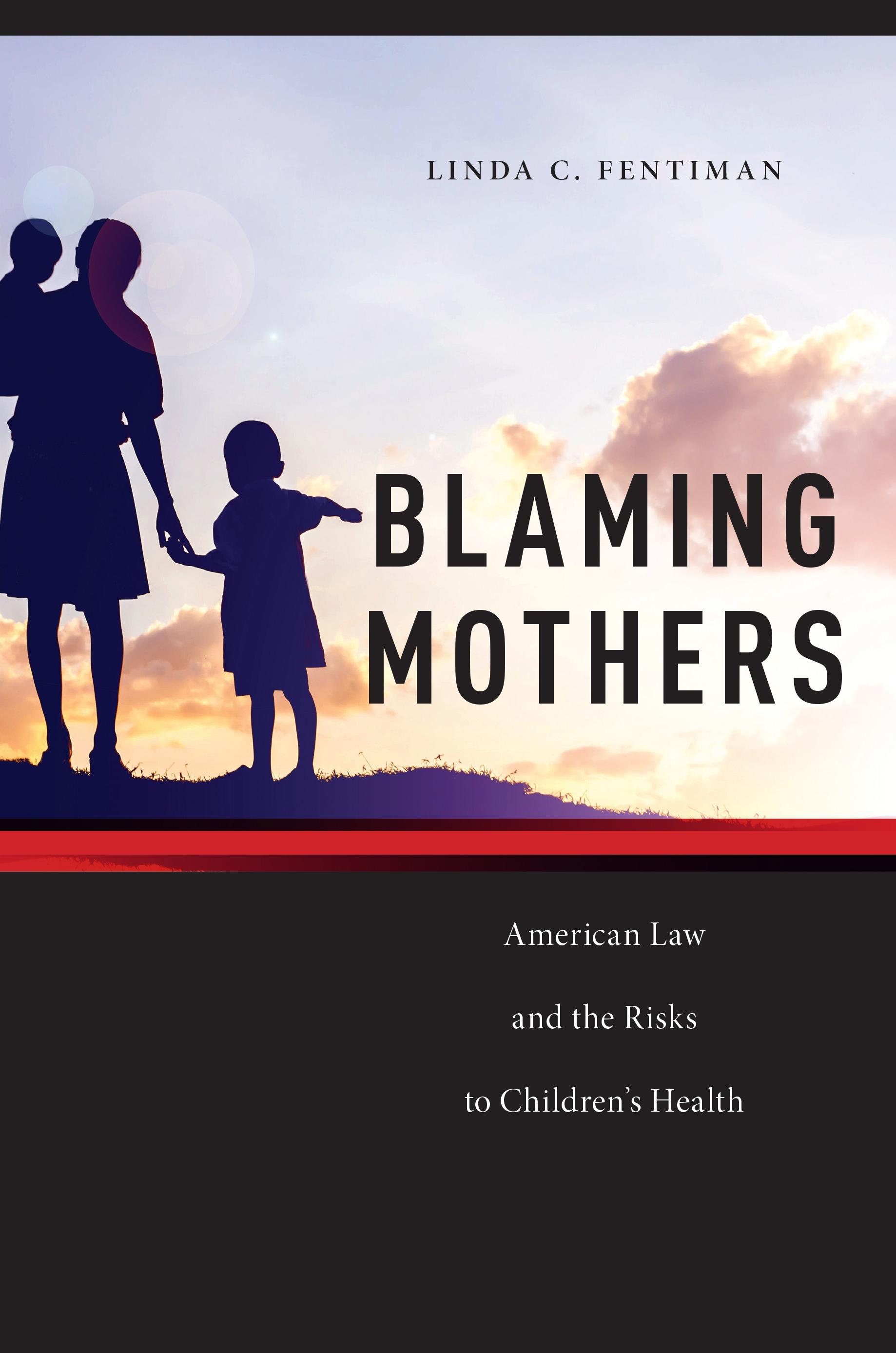
A gripping explanation of the biases that lead to the blaming of pregnant women and mothers.
Are mothers truly a danger to their children’s health? In 2004, a mentally disabled young woman in Utah was charged by prosecutors with murder after she declined to have a Caesarian section and subsequently delivered a stillborn child. In 2010, a pregnant woman who attempted suicide when the baby’s father abandoned her was charged with murder and attempted feticide after the daughter she delivered prematurely died. These are just two of the many cases that portray mothers as the major source of health risk for their children. The American legal system is deeply shaped by unconscious risk perception that distorts core legal principles to punish mothers who “fail to protect” their children.
In Blaming Mothers, Professor Fentiman explores how mothers became legal targets. She explains the psychological processes we use to confront tragic events and the unconscious race, class, and gender biases that affect our perceptions and influence the decisions of prosecutors, judges, and jurors. Fentiman examines legal actions taken against pregnant women in the name of “fetal protection” including court ordered C-sections and maintaining brain-dead pregnant women on life support to gestate a fetus, as well as charges brought against mothers who fail to protect their children from an abusive male partner. She considers the claims of physicians and policymakers that refusing to breastfeed is risky to children’s health. And she explores the legal treatment of lead-poisoned children, in which landlords and lead paint manufacturers are not held responsible for exposing children to high levels of lead, while mothers are blamed for their children’s injuries.
Blaming Mothers is a powerful call to reexamine who - and what - we consider risky to children’s health. Fentiman offers an important framework for evaluating childhood risk that, rather than scapegoating mothers, provides concrete solutions that promote the health of all of America’s children.
Read a piece by Linda Fentiman on shaming and blaming mothers under the law on The Gender Policy Report.
Betal nemt med kort, Klarna, Apple Pay eller Google Pay. Ikke tilfreds? Du har altid 14 dages fortrydelsesret. Læs mere i vores vilkår. Har du spørgsmål, så send os en mail på hello@memmo.org.
Memmo gør det nemmere at studere – uanset hvor du er i verden. Hos os samler du dine kursusbøger og smarte studieværktøjer ét sted: resuméer, quizzer, podcasts og flashcards. Og så er der Ted, din studieven, der svarer på alt, du undrer dig over. Over 50 000 studerende studerer allerede her – bygget til at hjælpe dig med at lære hurtigere og stresse mindre.