
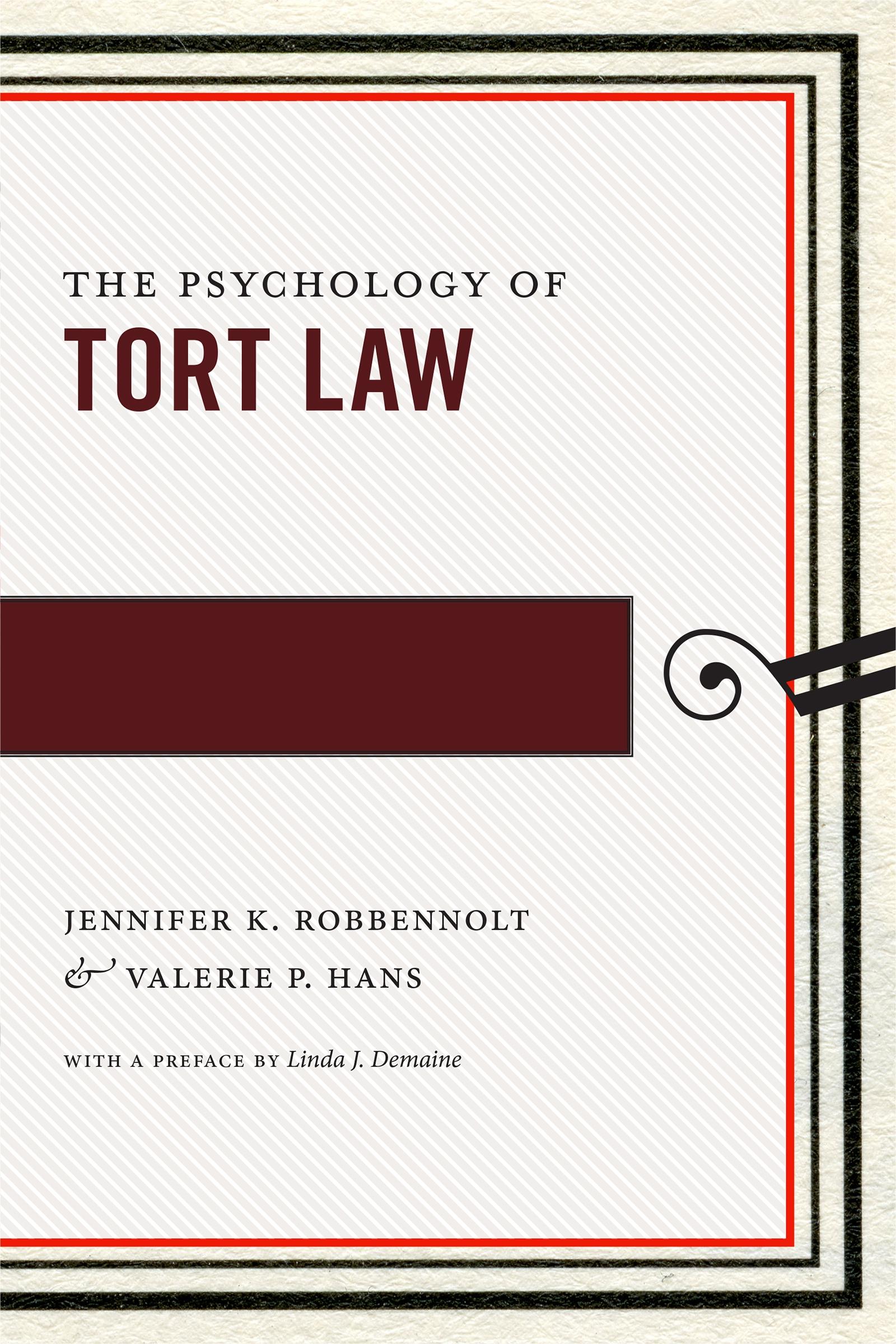
Tort law regulates most human activities: from driving a car to using consumer products to providing or receiving medical care. Injuries caused by dog bites, slips and falls, fender benders, bridge collapses, adverse reactions to a medication, bar fights, oil spills, and more all implicate the law of torts. The rules and procedures by which tort cases are resolved engage deeply-held intuitions about justice, causation, intentionality, and the obligations that we owe to one another. Tort rules and procedures also generate significant controversy—most visibly in political debates over tort reform.
The Psychology of Tort Law explores tort law through the lens of psychological science. Drawing on a wealth of psychological research and their own experiences teaching and researching tort law, Jennifer K. Robbennolt and Valerie P. Hans examine the psychological assumptions that underlie doctrinal rules. They explore how tort law influences the behavior and decision-making of potential plaintiffs and defendants, examining how doctors and patients, drivers, manufacturers and purchasers of products, property owners, and others make decisions against the backdrop of tort law. They show how the judges and jurors who decide tort claims are influenced by psychological phenomena in deciding cases. And they reveal how plaintiffs, defendants, and their attorneys resolve tort disputes in the shadow of tort law.
Robbennolt and Hans here shed fascinating light on the tort system, and on the psychological dynamics which undergird its functioning.
Betal nemt med kort, Klarna, Apple Pay eller Google Pay. Ikke tilfreds? Du har altid 14 dages fortrydelsesret. Læs mere i vores vilkår. Har du spørgsmål, så send os en mail på hello@memmo.org.
Memmo gør det nemmere at studere – uanset hvor du er i verden. Hos os samler du dine kursusbøger og smarte studieværktøjer ét sted: resuméer, quizzer, podcasts og flashcards. Og så er der Ted, din studieven, der svarer på alt, du undrer dig over. Over 50 000 studerende studerer allerede her – bygget til at hjælpe dig med at lære hurtigere og stresse mindre.