
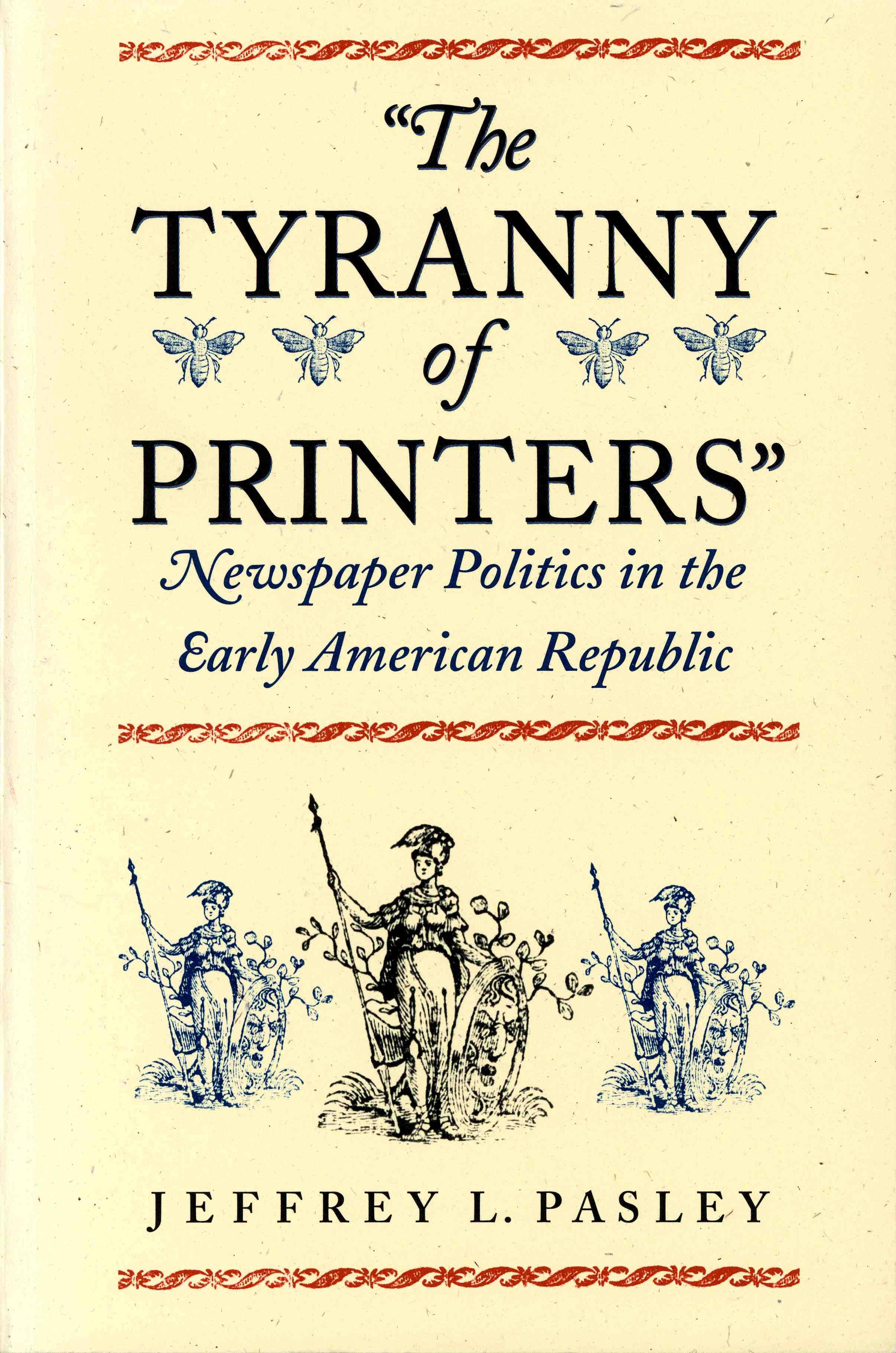
Although frequently attacked for their partisanship and undue political influence, the American media of today are objective and relatively ineffectual compared to their counterparts of two hundred years ago. From the late eighteenth to the late nineteenth century, newspapers were the republic's central political institutions, working components of the party system rather than commentators on it.
The Tyranny of Printers narrates the rise of this newspaper-based politics, in which editors became the chief party spokesmen and newspaper offices often served as local party headquarters. Beginning when Thomas Jefferson enlisted a Philadelphia editor to carry out his battle with Alexander Hamilton for the soul of the new republic (and got caught trying to cover it up), the centrality of newspapers in political life gained momentum after Jefferson's victory in 1800, which was widely credited to a superior network of papers. Jeffrey L. Pasley tells the rich story of this political culture and its culmination in Jacksonian democracy, enlivening his narrative with accounts of the colorful but often tragic careers of individual editors.
Betal nemt med kort, Klarna, Apple Pay eller Google Pay. Ikke tilfreds? Du har altid 14 dages fortrydelsesret. Læs mere i vores vilkår. Har du spørgsmål, så send os en mail på hello@memmo.org.
Memmo gør det nemmere at studere – uanset hvor du er i verden. Hos os samler du dine kursusbøger og smarte studieværktøjer ét sted: resuméer, quizzer, podcasts og flashcards. Og så er der Ted, din studieven, der svarer på alt, du undrer dig over. Over 50 000 studerende studerer allerede her – bygget til at hjælpe dig med at lære hurtigere og stresse mindre.