
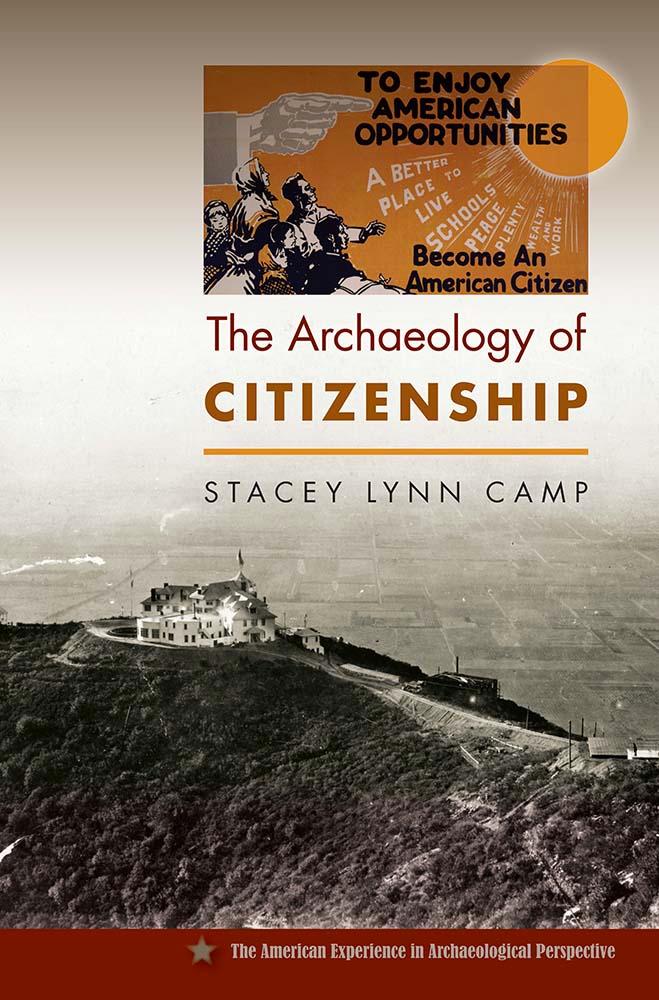
Since the founding of the United States, the rights to citizenship have been carefully crafted and policed by the Europeans who originally settled and founded the country. Immigrants have been extended and denied citizenship in various legal and cultural ways.
While the subject of citizenship has often been examined from a sociological, historical, or legal perspective, historical archaeologists have yet to fully explore the material aspects of these social boundaries. The Archaeology of Citizenship uses the material record to explore what it means to be an American.
Using a late-nineteenth-century California resort as a case study, Stacey Camp discusses how the parameters of citizenship and national belonging have been defined and redefined since Europeans arrived on the continent. In a unique and powerful contribution to the field of historical archaeology, Camp uses the remnants of material culture to reveal how those in power sought to mold the composition of the United States and how those on the margins of American society carved out their own definitions of citizenship.
Betal nemt med kort, Klarna, Apple Pay eller Google Pay. Ikke tilfreds? Du har altid 14 dages fortrydelsesret. Læs mere i vores vilkår. Har du spørgsmål, så send os en mail på hello@memmo.org.
Memmo gør det nemmere at studere – uanset hvor du er i verden. Hos os samler du dine kursusbøger og smarte studieværktøjer ét sted: resuméer, quizzer, podcasts og flashcards. Og så er der Ted, din studieven, der svarer på alt, du undrer dig over. Over 50 000 studerende studerer allerede her – bygget til at hjælpe dig med at lære hurtigere og stresse mindre.
Du kan måske også lide
Køb bogen0