
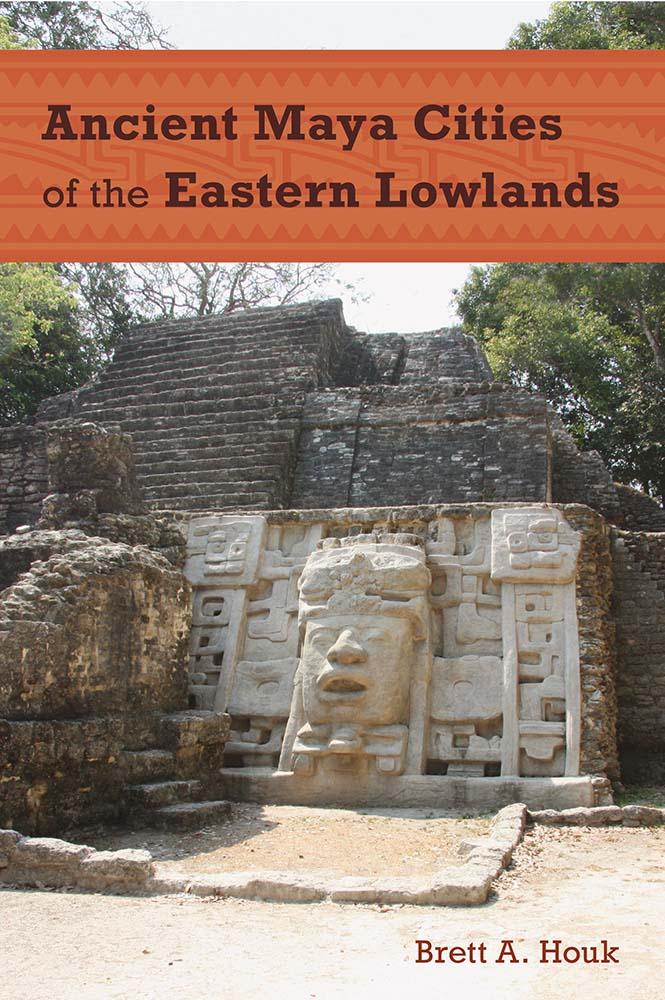
For more than a century researchers have studied Maya ruins, and sites like Tikal, Palenque, Copán, and Chichén Itzá have shaped our understanding of the Maya. Yet cities of the eastern lowlands of Belize, an area that was home to a rich urban tradition that persisted and evolved for almost 2,000 years, are treated as peripheral to these great Classic period sites. The hot and humid climate and dense forests are inhospitable and make preservation of the ruins difficult, but this oft-ignored area reveals much about Maya urbanism and culture.
Using data collected from different sites throughout the lowlands, including the Vaca Plateau and the Belize River Valley, Brett Houk presents the first synthesis of these unique ruins and discusses methods for mapping and excavating them. Considering the sites through the analytical lenses of the built environment and ancient urban planning, Houk vividly reconstructs their political history, considers how they fit into the larger political landscape of the Classic Maya, and examines what they tell us about Maya city building.
Betal nemt med kort, Klarna, Apple Pay eller Google Pay. Ikke tilfreds? Du har altid 14 dages fortrydelsesret. Læs mere i vores vilkår. Har du spørgsmål, så send os en mail på hello@memmo.org.
Memmo gør det nemmere at studere – uanset hvor du er i verden. Hos os samler du dine kursusbøger og smarte studieværktøjer ét sted: resuméer, quizzer, podcasts og flashcards. Og så er der Ted, din studieven, der svarer på alt, du undrer dig over. Over 50 000 studerende studerer allerede her – bygget til at hjælpe dig med at lære hurtigere og stresse mindre.