
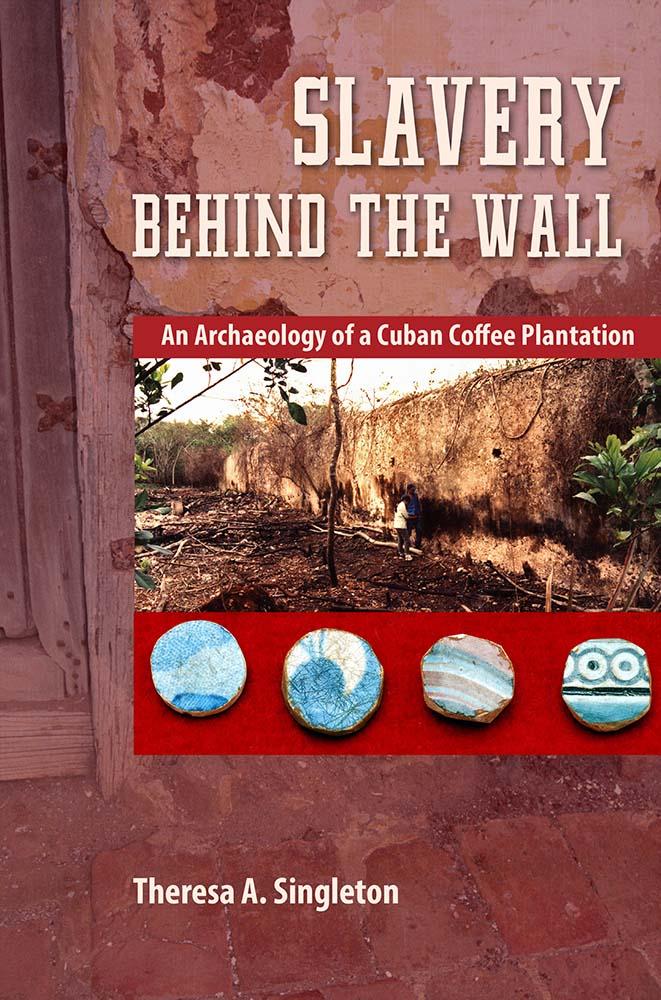
Cuba had the largest slave society of the Spanish colonial empire. At Santa Ana de Biajacas the plantation owner sequestered slaves behind a massive masonry wall. In the first archaeological investigation of a Cuban plantation by an English speaker, Theresa Singleton explores how elite Cuban planters used the built environment to impose a hierarchical social order upon slave laborers. Behind the wall, slaves reclaimed the space as their own, forming communities, building their own houses, celebrating, gambling, and even harboring slave runaways. What emerged there is not just an identity distinct from other North American and Caribbean plantations, but a unique slave culture that thrived despite a spartan lifestyle.
Singleton's study provides insight into the larger historical context of the African diaspora, global patterns of enslavement, and the development of Cuba as an integral member of the larger Atlantic World.
Betal nemt med kort, Klarna, Apple Pay eller Google Pay. Ikke tilfreds? Du har altid 14 dages fortrydelsesret. Læs mere i vores vilkår. Har du spørgsmål, så send os en mail på hello@memmo.org.
Memmo gør det nemmere at studere – uanset hvor du er i verden. Hos os samler du dine kursusbøger og smarte studieværktøjer ét sted: resuméer, quizzer, podcasts og flashcards. Og så er der Ted, din studieven, der svarer på alt, du undrer dig over. Over 50 000 studerende studerer allerede her – bygget til at hjælpe dig med at lære hurtigere og stresse mindre.