
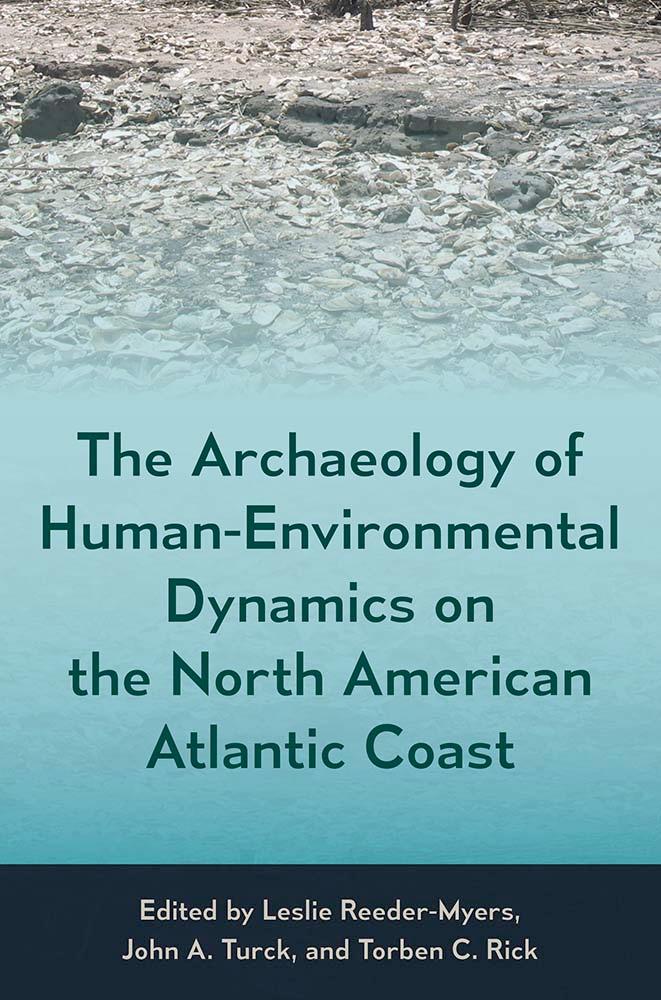
Using archaeology as a tool for understanding long-term ecological and climatic change, this volume synthesizes current knowledge about the ways Native Americans interacted with their environments along the Atlantic Coast of North America over the past 10,000 years.
Leading scholars discuss how the region’s indigenous peoples grappled with significant changes to shorelines and estuaries, from sea level rise to shifting plant and animal distributions to European settlement and urbanization. Together, they provide a valuable perspective spanning millennia on the diverse marine and nearshore ecosystems of the entire Eastern Seaboard—the icy waters of Newfoundland and the Gulf of Maine, the Middle Atlantic regions of the New York Bight and the Chesapeake Bay, and the warm shallows of the St. Johns River and the Florida Keys. This broad comparative outlook brings together populations and areas previously studied in isolation.
Today, the Atlantic Coast is home to tens of millions of people who inhabit ecosystems that are in dramatic decline. The research in this volume not only illuminates the past, but also provides important tools for managing coastal environments into an uncertain future.
A volume in the series Society and Ecology in Island and Coastal Archaeology, edited by Victor D. Thompson
Betal nemt med kort, Klarna, Apple Pay eller Google Pay. Ikke tilfreds? Du har altid 14 dages fortrydelsesret. Læs mere i vores vilkår. Har du spørgsmål, så send os en mail på hello@memmo.org.
Memmo gør det nemmere at studere – uanset hvor du er i verden. Hos os samler du dine kursusbøger og smarte studieværktøjer ét sted: resuméer, quizzer, podcasts og flashcards. Og så er der Ted, din studieven, der svarer på alt, du undrer dig over. Over 50 000 studerende studerer allerede her – bygget til at hjælpe dig med at lære hurtigere og stresse mindre.
Du kan måske også lide
Køb bogen0