
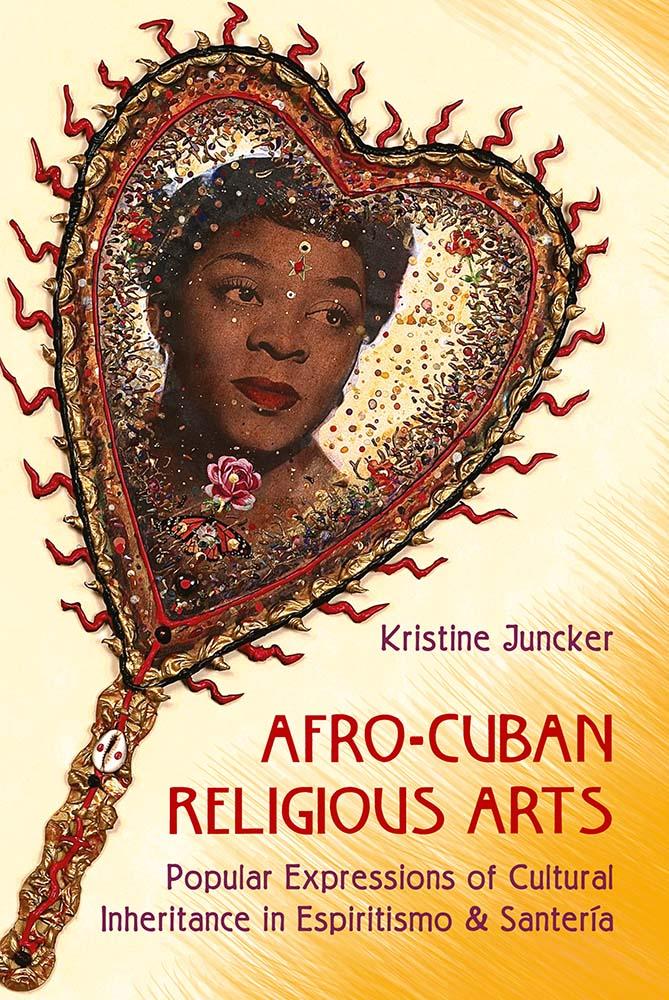
This book profiles four generations of women from one Afro-Cuban religious family. From a plantation in Havana Province in the 1890s to a religious center in Spanish Harlem in the 1960s, these women were connected by their prominent roles as leaders in the religions they practiced and the dramatic ritual artwork they created. Each woman was a medium in Espiritismo—communicating with dead ancestors for guidance or insight—and also a santera, or priest of Santería, who could intervene with the oricha pantheon.
Kristine Juncker argues that, by creating art for more than one religion, these women shatter the popular assumption that Afro-Caribbean religions are exclusive organizations. Most remarkably, the portraiture, sculptures, and photographs in Afro-Cuban Religious Arts offer rare glimpses into the rituals and iconography of these religions. Santería altars are closely guarded, limited to initiates, and typically destroyed upon the death of the santera, while Espiritismo artifacts are rarely considered valuable enough to pass on. The unique and protean cultural legacy detailed here reveals insights into how ritual art became popular imagery, sparked a wider dialogue about culture inheritance, attracted new practitioners, and enabled the movement to explode internationally.
Betal nemt med kort, Klarna, Apple Pay eller Google Pay. Ikke tilfreds? Du har altid 14 dages fortrydelsesret. Læs mere i vores vilkår. Har du spørgsmål, så send os en mail på hello@memmo.org.
Memmo gør det nemmere at studere – uanset hvor du er i verden. Hos os samler du dine kursusbøger og smarte studieværktøjer ét sted: resuméer, quizzer, podcasts og flashcards. Og så er der Ted, din studieven, der svarer på alt, du undrer dig over. Over 50 000 studerende studerer allerede her – bygget til at hjælpe dig med at lære hurtigere og stresse mindre.