
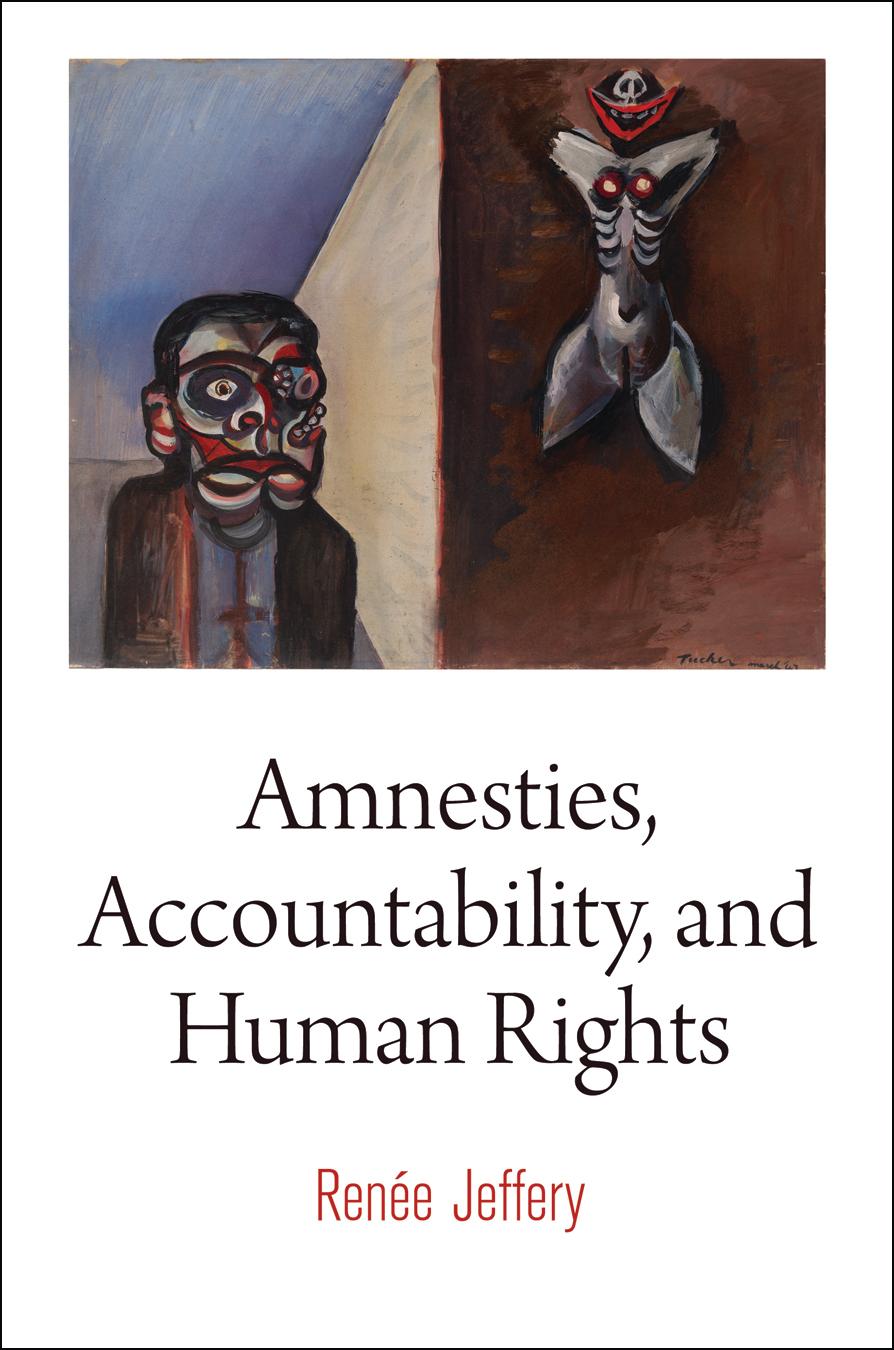
For the last thirty years, documented human rights violations have been met with an unprecedented rise in demands for accountability. This trend challenges the use of amnesties which typically foreclose opportunities for criminal prosecutions that some argue are crucial to transitional justice. Recent developments have seen amnesties circumvented, overturned, and resisted by lawyers, states, and judiciaries committed to ending impunity for human rights violations. Yet, despite this global movement, the use of amnesties since the 1970s has not declined.
Amnesties, Accountability, and Human Rights examines why and how amnesties persist in the face of mounting pressure to prosecute the perpetrators of human rights violations. Drawing on more than 700 amnesties instituted between 1970 and 2005, Renée Jeffery maps out significant trends in the use of amnesty and offers a historical account of how both the use and the perception of amnesty has changed. As mechanisms to facilitate transitions to democracy, to reconcile divided societies, or to end violent conflicts, amnesties have been adapted to suit the competing demands of contemporary postconflict politics and international accountability norms. Through the history of one evolving political instrument, Amnesties, Accountability, and Human Rights sheds light on the changing thought, practice, and goals of human rights discourse generally.
Betal nemt med kort, Klarna, Apple Pay eller Google Pay. Ikke tilfreds? Du har altid 14 dages fortrydelsesret. Læs mere i vores vilkår. Har du spørgsmål, så send os en mail på hello@memmo.org.
Memmo gør det nemmere at studere – uanset hvor du er i verden. Hos os samler du dine kursusbøger og smarte studieværktøjer ét sted: resuméer, quizzer, podcasts og flashcards. Og så er der Ted, din studieven, der svarer på alt, du undrer dig over. Over 50 000 studerende studerer allerede her – bygget til at hjælpe dig med at lære hurtigere og stresse mindre.