
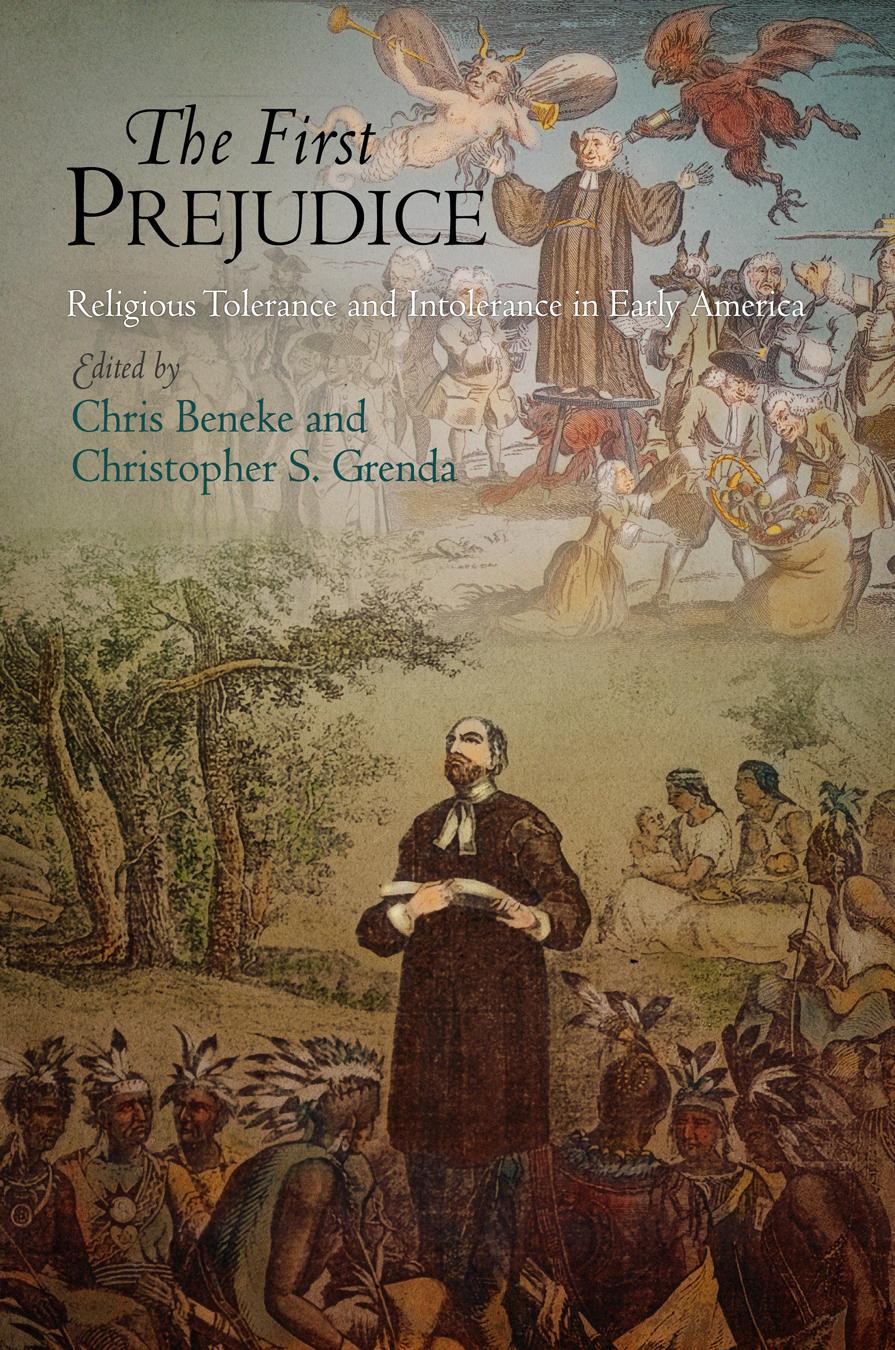
In many ways, religion was the United States' first prejudice—both an early source of bigotry and the object of the first sustained efforts to limit its effects. Spanning more than two centuries across colonial British America and the United States, The First Prejudice offers a groundbreaking exploration of the early history of persecution and toleration. The twelve essays in this volume were composed by leading historians with an eye to the larger significance of religious tolerance and intolerance. Individual chapters examine the prosecution of religious crimes, the biblical sources of tolerance and intolerance, the British imperial context of toleration, the bounds of Native American spiritual independence, the nuances of anti-Semitism and anti-Catholicism, the resilience of African American faiths, and the challenges confronted by skeptics and freethinkers.
The First Prejudice presents a revealing portrait of the rhetoric, regulations, and customs that shaped the relationships between people of different faiths in seventeenth- and eighteenth-century America. It relates changes in law and language to the lived experience of religious conflict and religious cooperation, highlighting the crucial ways in which they molded U.S. culture and politics. By incorporating a broad range of groups and religious differences in its accounts of tolerance and intolerance, The First Prejudice opens a significant new vista on the understanding of America's long experience with diversity.
Betal nemt med kort, Klarna, Apple Pay eller Google Pay. Ikke tilfreds? Du har altid 14 dages fortrydelsesret. Læs mere i vores vilkår. Har du spørgsmål, så send os en mail på hello@memmo.org.
Memmo gør det nemmere at studere – uanset hvor du er i verden. Hos os samler du dine kursusbøger og smarte studieværktøjer ét sted: resuméer, quizzer, podcasts og flashcards. Og så er der Ted, din studieven, der svarer på alt, du undrer dig over. Over 50 000 studerende studerer allerede her – bygget til at hjælpe dig med at lære hurtigere og stresse mindre.